Aeration depth and frequency guide principles determine whether your lawn develops deep roots or remains trapped in compacted soil. Many homeowners aerate without understanding how deep cores should penetrate or how often the process should occur. Incorrect timing or shallow aeration reduces effectiveness and wastes effort.
Compacted soil restricts oxygen flow, limits water absorption, and prevents nutrient movement. Proper aeration restores soil structure, improves root expansion, and strengthens turf resilience. Understanding the science behind aeration allows property owners to apply it strategically rather than routinely.
This guide explains optimal aeration depth, scheduling frequency, and region-specific timing to support long-term lawn performance.
Why Aeration Matters for Lawn Health
Healthy turf requires oxygen, water, and nutrients at the root zone. Compaction compresses soil particles and eliminates air pockets. Without oxygen exchange, root systems weaken and microbial activity declines.
Core aeration removes small plugs of soil to relieve compaction and improve infiltration. The process enhances root growth and strengthens turf structure.
Following a structured aeration depth and frequency guide ensures that soil improvement reaches the active root zone rather than remaining superficial.
What Is Core Aeration?
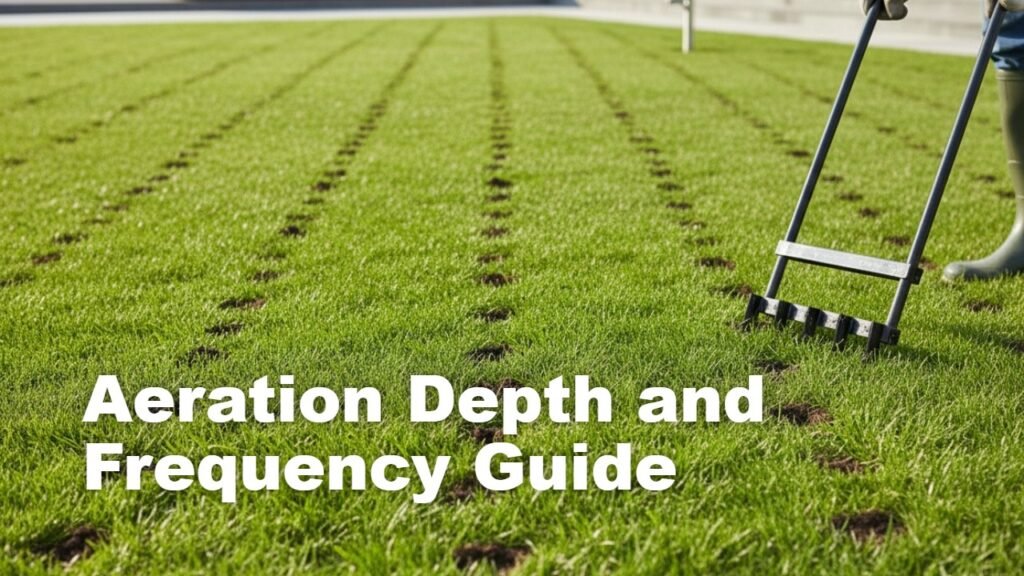
Core aeration uses hollow tines to extract cylindrical plugs of soil from the lawn. These plugs typically measure half an inch in diameter. Removing cores creates channels that allow oxygen, water, and nutrients to move downward.
Solid-tine aeration simply punctures the soil without removing plugs. While helpful in light compaction, it does not relieve heavy soil compression as effectively.
Core aeration remains the preferred method for long-term soil health improvement.
Ideal Aeration Depth: How Deep Should You Go?
Depth determines whether aeration reaches the active root system. Shallow penetration provides limited benefits. Proper core depth improves root expansion and water infiltration.
Recommended Core Depth
Most lawns benefit from cores that penetrate:
- 2 to 4 inches deep
- Through the thatch layer
- Into the compacted soil zone
For heavily compacted lawns, deeper penetration within this range delivers stronger results.
An effective aeration depth and frequency guide always prioritizes reaching the root zone rather than focusing solely on surface disruption.
How Soil Type Affects Aeration Depth
This YouTube video below from Justin Brereton explains soil aeration and why it improves lawn health. It shows how aeration reduces compaction and boosts root growth. The overview helps readers improve water movement and turf strength.
Soil composition influences aeration performance.
Clay Soil
Clay soils compact easily and require deeper penetration. Core aeration at 3 to 4 inches is often necessary to break dense layers.
Sandy Soil
Sandy soils drain quickly and compact less severely. Aeration depth may remain closer to 2 to 3 inches.
Loamy Soil
Loam provides balanced structure. Standard 2 to 3 inch cores typically suffice.
Adjusting depth based on soil type ensures effective soil relief.
How Often Should You Aerate?
This YouTube video below from Garden Questions Answered explains how often you should aerate your lawn. It covers timing based on soil type and turf use. The guidance helps readers maintain healthy roots and better water absorption.
Frequency depends on soil condition, lawn usage, and climate. Annual aeration is common, but high-traffic lawns may require more frequent attention.
Standard Recommendation
Most residential lawns benefit from aeration:
- Once per year
- During peak growing season
This schedule maintains consistent soil structure and prevents chronic compaction.
High-Traffic Lawns
Lawns with heavy foot traffic, pets, or recreational use may require aeration:
- Twice per year
- Spring and fall for cool-season grasses
- Late spring and early summer for warm-season grasses
Following an appropriate aeration depth and frequency guide prevents soil degradation in high-use environments.
Regional Timing Considerations
Aeration timing must align with active turf growth. Performing the process during dormancy reduces recovery potential.
Cool-Season Regions
Best timing:
- Early fall
- Early spring
Fall remains ideal because grass actively grows and recovers quickly.
Warm-Season Regions
Best timing:
- Late spring
- Early summer
Aerate once grass fully greens up and begins vigorous growth.
Proper seasonal timing maximizes root regeneration.
Signs Your Lawn Needs Aeration
Visual symptoms often signal compaction issues.
Common indicators include:
- Water pooling after rainfall
- Thinning turf
- Increased weed invasion
- Hard soil surface
- Difficulty inserting a screwdriver into soil
These signs confirm the need to consult your aeration depth and frequency guide and schedule service promptly.
Benefits of Proper Aeration Depth
This YouTube video below from SpringGreen explains the benefits of core aeration for lawn health. It shows how aeration improves airflow, water movement, and root growth. The overview helps readers understand why aeration supports stronger turf.
Correct depth improves more than surface appearance.
Key advantages include:
- Enhanced oxygen exchange
- Improved nutrient uptake
- Deeper root growth
- Reduced thatch accumulation
- Stronger drought resistance
Shallow aeration fails to produce these long-term improvements.
Should You Remove the Soil Plugs?
After aeration, soil plugs remain on the surface. Many homeowners question whether to remove them.
In most cases, leave plugs in place. They break down naturally and return nutrients to the soil. Light raking can accelerate breakdown if appearance is a concern.
Leaving plugs supports microbial activity and soil integration.
Aeration and Overseeding
Aeration creates ideal conditions for overseeding. Open soil channels allow seed-to-soil contact and improve germination rates.
For cool-season lawns, combine fall aeration with overseeding for maximum density improvement.
Integrating overseeding into your aeration depth and frequency guide enhances turf renovation results.
Aeration and Fertilization
Post-aeration fertilization improves nutrient penetration. The open soil structure allows fertilizers to reach the root zone efficiently.
Apply balanced fertilizer shortly after aeration for best results. Avoid heavy nitrogen applications during extreme heat.
Equipment Options: Manual vs Mechanical Aerators
Choosing the right equipment affects core depth consistency.
Manual Aerators
Best suited for small lawns. Depth may vary depending on soil moisture and operator pressure.
Mechanical Core Aerators
Recommended for larger properties. These machines provide consistent depth and spacing.
Professional equipment ensures reliable results aligned with your aeration depth and frequency guide.
Common Aeration Mistakes to Avoid
Improper execution reduces effectiveness.
Avoid these common errors:
- Aerating dry soil
- Aerating during dormancy
- Using shallow penetration
- Skipping annual scheduling
- Ignoring soil moisture levels
Moist soil improves tine penetration and core extraction.
Practical Aeration Tips
Maximize results with structured preparation and follow-up care.
- Water lawn one day before aeration
- Mark irrigation heads
- Aerate in multiple passes for heavy compaction
- Apply compost topdressing afterward
- Resume mowing once plugs break down
Consistency strengthens long-term soil health.
Frequently Asked Questions
How deep should aeration cores be?
Most lawns require 2 to 4 inch core depth for effective compaction relief.
Can you aerate too often?
Yes. Excessive aeration may stress turf. Follow recommended annual or biannual schedules.
Should I water after aerating?
Light watering supports recovery and helps nutrients move into soil channels.
Is fall better than spring for aeration?
For cool-season grasses, fall typically delivers stronger recovery and root growth.
Does aeration fix drainage issues?
Aeration improves infiltration but may not resolve severe drainage problems caused by grading or heavy clay layers.
Conclusion
Soil compaction silently limits turf performance. Without proper oxygen exchange and root expansion, lawns struggle to maintain density and resilience. Core aeration restores balance by relieving compression and improving nutrient movement.
Following a structured aeration depth and frequency guide ensures that the process targets the active root zone and aligns with seasonal growth patterns. Strategic depth, proper timing, and consistent scheduling create stronger turf and long-term soil stability.
Evaluate your lawn’s traffic level and soil condition carefully, then implement an aeration strategy designed to protect and strengthen your turf year after year.