Choosing the wrong irrigation system costs more than just money. It wastes water. It damages plants. And over time, it quietly ruins soil health. Most homeowners compare drip, spray, and pop-up sprinklers based on price alone. That’s a mistake. The real difference is how water moves through soil, how evenly it’s applied, and how much gets lost before roots ever see it. This guide breaks it all down. Plain language. Real numbers. No fluff. By the end, you’ll know exactly which system fits your lawn, garden, and budget.
How Are Drip, Spray, and Pop-Up Sprinklers Actually Different?
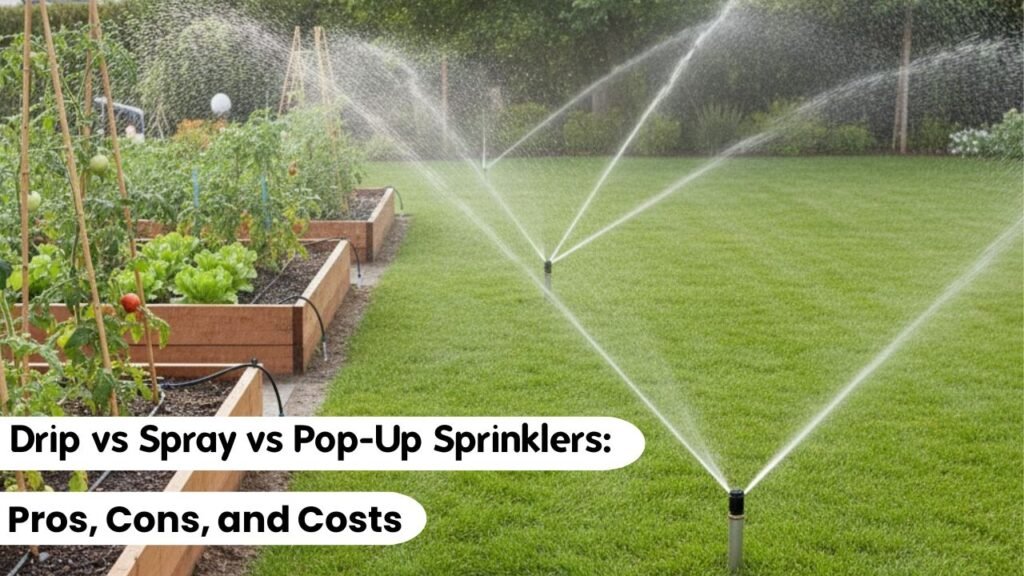
The main difference between drip, spray, and pop-up sprinklers is how fast water is applied and how evenly it’s distributed across plants and soil.
- Drip irrigation applies water slowly at the root zone, usually 0.2–0.6 inches per hour, with Distribution Uniformity (DU) above 90%.
- Pop-up sprinklers apply water faster, around 1.0–1.5 inches per hour, with DU between 60–70% when designed correctly.
- Spray sprinklers release water the fastest, often 1.5–2.0 inches per hour, which increases runoff, misting, and overspray.
Matching application rate to soil absorption is what prevents waste. That’s the part most guides skip.
Drip Irrigation: Pros, Cons, and Real-World Costs
Drip irrigation is a form of micro-irrigation that delivers water directly to plant roots using emitters along lateral poly tubing. Water spreads underground through capillary action, not surface flooding.
Why Drip Irrigation Works So Well
- Water efficiency: Pressure-compensating (PC) dripline keeps flow consistent, even on slopes.
- Plant-level control: Emitters per plant can be matched to shrubs, trees, or perennials.
- Weed reduction: Dry soil between plants limits weed germination.
- Soil protection: Prevents erosion, runoff, and surface crusting.
Drip systems are ideal for:
- Perennials and veggie gardens
- Ornamental grasses
- Native desert plants like succulents and agave
- Xeriscaping layouts
Common Pitfalls
- Clogged emitters: Always install a filter and pressure regulator.
- Pressure loss: Follow the 200/200 Rule. Limit ½-inch poly tubing to 200 feet or 200 GPH.
- Physical damage: Shovels, pets, or rodents can puncture exposed lines.
Drip Irrigation Cost Breakdown
- Materials: $0.50–$1.00 per foot
- DIY kits: Often under $100
- Labor: Can rise for complex beds and emitter layout
While parts are cheap, professional-grade systems (like Netafim or Rain Bird) use PC emitters that deliver the same flow to every plant, from first to last on the line. That’s where long-term value comes from.
👉 Related reading: drip-irrigation-system-installation-guide
👉 Also helpful: how-to-fix-clogged-drip-emitters
Pop-Up Sprinklers: Pros, Cons, and Lawn Performance
Pop-up sprinklers are built for turf. Heads rise during operation and retract flush with the ground after watering.
Why Pop-Up Sprinklers Are Still Popular
- Head-to-head coverage: Each sprinkler throws water to the next head.
- Matched Precipitation Rate (MPR) nozzles: Keeps zones evenly watered.
- Durability: Gear-driven rotary nozzles last for years.
- Low-head drainage control: Check valves stop downhill puddling.
They work best for:
- Large lawns
- Sports turf
- Grass types like Kentucky Bluegrass or Bermuda Grass
Where Pop-Ups Fail
- Misting: High pressure turns water into fog.
- Uneven overlap: Missed overlap causes brown spots fast.
- Labor costs: Trenching and mainline connections aren’t DIY-friendly.
Pop-Up Sprinkler Costs
- Materials: Moderate
- Labor: High due to trenching
- Total install: Often $2,500–$5,000 for a full yard
Pop-up systems usually require a licensed installer and proper backflow protection, such as Pressure Vacuum Breakers (PVB) or Reduced Pressure Zone (RPZ) valves, which are standard in many building codes.
👉 Related reading: sprinkler-system-installation-cost-guide
Spray Sprinklers: Pros, Cons, and When They Make Sense
Spray sprinklers use fixed heads that release a fan-shaped pattern of water.
When Spray Systems Work
- Small side yards
- Narrow strips
- Flower boxes
- Flat areas with short run times
Problems to Expect
- Overspray: Sidewalks and driveways get soaked.
- Misting/fogging: Wind steals water mid-air.
- Low uniformity: DU often stays under 60%.
They are cheap upfront, but expensive in water loss over time.
👉 Related reading: spray-sprinkler-heads-pros-and-cons
Cost Comparison Table
| System Type | Avg Total Cost | Water Efficiency | Best Use Case |
|---|---|---|---|
| Drip Irrigation | $1.50–$4.00 / sq. ft. | 90–95% | Perennials, xeriscaping, veggie gardens |
| Pop-Up Sprinklers | $2,500–$5,000 | 60–70% | Large lawns, sports turf |
| Spray Sprinklers | $1,500–$3,500 | 50–60% | Side yards, flower boxes |
How to Identify Irrigation Inefficiency
If your system isn’t performing, the signs are obvious once you know them.
- Brown spots: Usually caused by poor overlap or low pressure.
- Mushy soil: Application rate exceeds soil absorption.
- Dry plants near the end of the line: Pressure loss or clogged emitters.
- Leaking valves: Often caused by debris or worn diaphragms.
- Uneven growth: Low Distribution Uniformity across the zone.
Fixing these early saves water and prevents expensive repairs later.
Professional vs DIY: What’s Worth Doing Yourself?
- Drip irrigation: Very DIY-friendly. Easy to retrofit.
- Pop-up systems: Usually require professional trenching and valve setup.
- Spray systems: DIY possible, but efficiency suffers without proper design.
Smart controllers certified by EPA WaterSense can reduce water use even more, especially when paired with drip zones.
👉 Related reading: smart-irrigation-controller-benefits
Final Thoughts
A hybrid irrigation design is the most efficient residential water solution. Drip irrigation delivers water precisely to plant roots. Pop-up sprinklers maintain healthy turf coverage. Spray sprinklers fill small, low-priority spaces. When systems are zoned correctly and pressure is controlled, water waste drops, plants thrive, and long-term costs stay predictable. That’s what actually works.