Hiring an irrigation company is not like hiring a cleaner or a landscaper. This is a system tied to your water supply, your property value, and your long-term utility costs. Pick wrong, and you may deal with broken pipes, brown patches, or even water safety issues. Pick right, and the system quietly works for years with very little drama. This guide is written as a vetted advisory, not a sales pitch. It answers the real questions homeowners ask when searching near me, and it focuses on avoiding mistakes before they get expensive.
How to Spot a Reliable Irrigation Company
Before you read anything else, a trustworthy irrigation contractor should clearly provide:
- Active license for irrigation or plumbing work
- Proof of insurance (General Liability + Worker’s Compensation)
- Smart controller expertise with EPA WaterSense products
- Written proposal with zone layout and parts list
- Service warranty for labor and materials
- Seasonal maintenance like spring start-ups and blow-outs
If two or more items are missing, pause. That’s usually a red flag.
What Is the Best Irrigation Company?
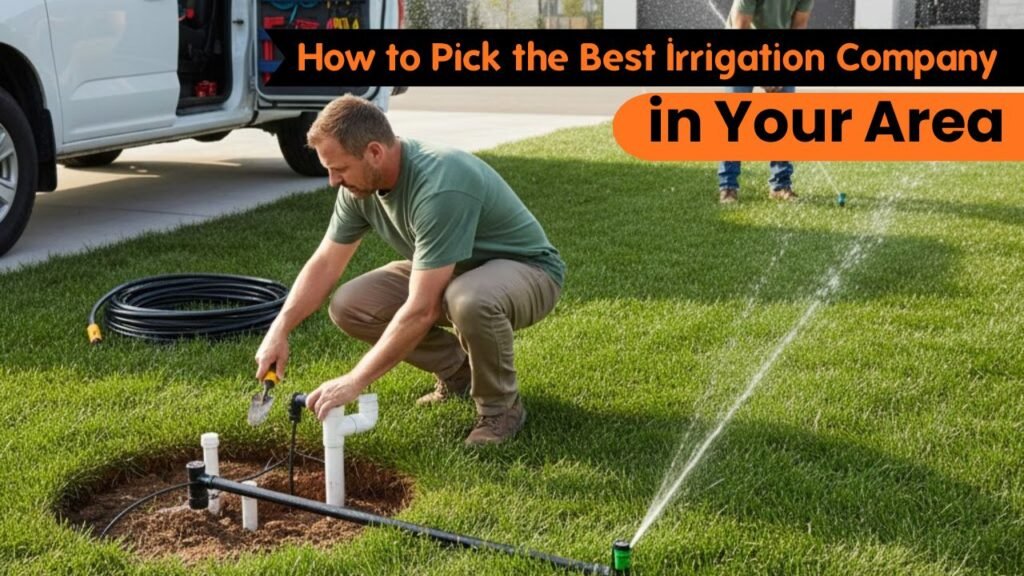
The best irrigation company is a vetted, licensed, and insured contractor that designs water-efficient systems using EPA WaterSense-labeled technology, follows code requirements, and supports the system long after installation with maintenance, audits, and clear warranties.
Anything less is a gamble.
Licensing and Insurance: The Non-Negotiables
There is a clear difference between a professional firm and a contractor working out of a pickup truck. A real irrigation company will carry:
- General Liability Insurance (protects your property)
- Worker’s Compensation Insurance (protects you from injury claims)
If a worker gets hurt on your property and the company lacks Worker’s Comp, liability can fall on you. This happens more than people think. Always ask for certificates. Pros never argue about it.
Local Code Knowledge and “Near Me” Expertise
Once legal basics are confirmed, local knowledge matters a lot. The best irrigation companies understand:
- Municipal watering-day restrictions
- Permit requirements for new systems
- Backflow Assembly Testing (BAT) filing rules
They also handle Call Before You Dig (811) themselves. A professional contractor always coordinates utility marking before trenching. If they ask you to call 811 on your own, that’s a serious warning sign.
Industry Certifications Show Real Skill
Licenses prove legality. Certifications prove skill. Look for companies associated with the Irrigation Association (IA). Preferred credentials include:
- Certified Irrigation Contractor (CIC)
- Certified Irrigation Designer (CID)
These professionals understand hydraulics, pressure regulation, pipe sizing, and distribution uniformity. They don’t just install parts. They design systems that last.
Design Philosophy: How They Save Water
After credentials, pay attention to how the company talks about design. High-quality contractors discuss:
- Hydrozoning (grouping plants with similar water needs)
- Matched Precipitation Rates
- Distribution Uniformity
- Pressure regulation at valves and heads
They explain how these choices reduce runoff and overspray, often cutting water use by 30–50%. If the pitch is only about price or speed, efficiency is usually an afterthought.
Smart Controllers and Water Intelligence
Modern irrigation depends on data, not guesswork. A professional company installs Weather-Based Irrigation Controllers (WBIC) that use Evapotranspiration (ET) data. ET measures how much water plants actually lose. This ensures the system only replaces the water the plant has actually lost, not more.
Many systems also include:
- Soil moisture sensors
- Rain sensors
- Seasonal scheduling measured in inches per hour
Always confirm the controller is EPA WaterSense certified. That label matters for performance and rebates.
Written Proposals: Where Quality Shows Up
A proper proposal should never be vague. Look for:
- A scaled irrigation design map
- Zone counts with estimated Gallons Per Minute (GPM)
- Specific sprinkler head and valve models
- Location of the Backflow Preventer
- Clear payment schedule and timeline
Brand Strategy Matters
Professional companies usually standardize on one main manufacturer like Hunter Industries, Rain Bird, or Toro. This ensures part compatibility and easier long-term maintenance. Random brand mixing often creates repair headaches later.
Professional Contractors vs. Budget Installers
| Feature | Professional Contractor | Budget Installer |
|---|---|---|
| System Life | 15–20+ years | 5–8 years |
| Water Bills | Optimized | Often higher |
| Mainline Material | Schedule 40 PVC | Thin-wall pipe |
| Head Connections | Swing Pipe / Funny Pipe | Direct-tapped |
| Legal Protection | Fully insured | Often limited |
| Warranty | Written | Verbal |
Professional installers use Schedule 40 PVC for mainlines and swing pipe at heads. Swing pipe absorbs impact and prevents breakage. Direct-tapping heads into laterals is cheaper, and it fails sooner.
Backflow Prevention Is About Safety, Not Just Code
A Backflow Preventer protects drinking water. A top-tier company does more than install it. They either have:
- A Certified Backflow Tester on staff, or
- A partner who handles initial certification
A professional also understands Cross-Connection Control. This ensures fertilizers, pet waste, or chemicals cannot be siphoned back into your home’s water supply during a pressure drop. This is a serious health issue, not a small detail.
Seasonal Service and Maintenance Plans
Irrigation systems are not set-and-forget. Reliable companies offer:
- Spring start-ups
- Mid-season adjustments
- Blow-outs (winterization)
- Ongoing service plans
Good maintenance plans include system audits, where nozzle alignment, pressure, and sensor batteries are checked each season. This separates irrigation specialists from “mow and blow” crews.
How to Compare Two Different Quotes
If one quote is 30% lower, look closely before celebrating.
Check:
- Zone count (fewer zones = stretched coverage)
- Head spacing (over-stretching throw causes dry spots)
- Missing pressure regulation or swing pipe
Cheap quotes often save money by spacing heads too far apart. That leads to brown patches and higher water use later.
3 Smart Questions to Ask During the Estimate
Ask these directly:
- Do you install a master valve to prevent constant mainline pressure?
- Will you provide a zone-by-zone runtime chart after installation?
- Do you trench or pull pipe under established lawns, and why?
Clear answers show experience. Vague answers usually don’t.
Post-Install Documentation
High-quality companies provide:
- A laminated zone map near the controller
- A winterization tag attached to the backflow
- Controller login details and scheduling notes
This documentation matters years later when service is needed.
Final Thoughts
The best irrigation company is not the cheapest. It’s the one that protects your water supply, follows code, designs for efficiency, and supports the system for years. Look for licensing, insurance, EPA WaterSense alignment, professional materials, and real maintenance plans. When those pieces line up, the system works quietly and reliably. Choose carefully. This is one decision you don’t want to redo.