Spring startup is the most important moment of the irrigation year. More damage happens now than in mid-summer. Pipes are empty. Air is trapped. One rushed valve turn can create pressure spikes strong enough to crack PVC underground. You may not see the damage right away, but you’ll pay for it later. This Spring Startup Guide for Irrigation Systems is written to answer one clear question: How do you turn your system back on safely after winter without breaking anything? The steps below work whether you’re doing it yourself or checking that a professional did it right.
How to Turn On Your Sprinkler System in 7 Steps
Follow this order exactly. Sequence matters more than speed.
- Inspect the main shut-off valve and backflow preventer for freeze damage
- Close all drain valves and test cocks left open after winterization
- Slowly open the main water supply valve to avoid water hammer
- Manually activate each zone from the controller, one at a time
- Inspect, clean, and realign sprinkler heads for proper spray patterns
- Check for leaks in lateral lines, valve boxes, and turf areas
- Program the controller for spring conditions using seasonal adjust
Most spring failures happen when one of these steps is skipped or rushed.
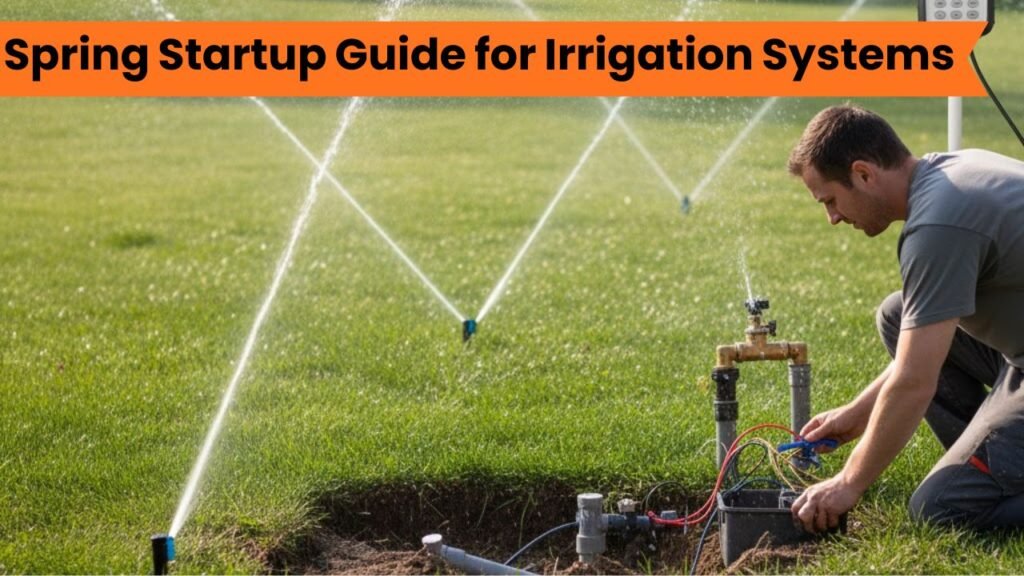
What Is Water Hammer in Irrigation Systems?
Water Hammer is a pressure surge caused when moving water is forced to stop or change direction suddenly. During spring startups, opening the main valve too fast sends a wall of water into empty pipes. That surge can exceed 500 PSI, far beyond what PVC joints are designed to handle. The result is cracked fittings, blown joints, or hidden underground leaks. This is why “slow fill” is not optional.
When Should You Do a Spring Irrigation Startup?
The best time for a spring irrigation startup is after the last frost date for your region and once soil temperatures stay consistently above freezing. You can find average last frost dates through NOAA climate data or a local Extension Office. Starting too early risks refreeze damage and frost heave issues that undo all your work.
Pre-Flight Inspection: Hardware Comes First
Before turning on any water, walk the system.
Main Shut-Off Valve
Confirm the valve is fully closed before startup. Look for corrosion, stiffness, or seepage around the stem.
Backflow Preventer (PVB or RPZ)
Most systems use a Pressure Vacuum Breaker (PVB) or Reduced Pressure Zone (RPZ) assembly. Check for:
- Freeze cracks in brass or plastic
- Loose unions
- Broken caps or test ports
Critical Detail: Test Cocks
Backflow preventers have four test cocks (small slotted valves on the side). Before turning on the water, ensure the slot on each test cock is perpendicular to the valve body. Perpendicular means closed. Parallel means open. These are often left at a 45-degree angle during winterization to prevent freezing. Forgetting this step causes leaks and pressure loss that confuse many homeowners.
The Slow Fill Process
This is where systems are protected or destroyed.
Why Air Displacement Is Important
When water enters empty pipes, trapped air must escape. If air has nowhere to go, pressure spikes instantly.
Pro move:
Manually open the highest or furthest irrigation zone from the water source before opening the main valve. This gives air a planned exit path.
How to Open the Valve Safely
Turn the main shut-off ¼ turn at a time, waiting 30–60 seconds between turns. Listen for air hissing from sprinkler heads. That sound is good. It means air is leaving safely. Rushing this step defeats the entire startup process.
Testing Zones One by One (Walk the System)
Once pressure is stable, go to the controller. Manually run each zone and walk it while it’s active.
Look for:
- Heads not popping up fully
- Sideways sprays from clogged nozzles
- “Donuting” (heavy spray on edges, dry center)
- Sunken or tilted heads
Frost Heave and Head Realignment
Freeze-thaw cycles push heads upward. Reset them so the top sits flush with the soil. This prevents mower damage and restores proper spray direction during the first spring cut.
Post-Startup Cleanup Tip
Trim back overgrown turf or thatch around each head. Grass blocking retraction is a common cause of stripped gears and broken risers in spring.
Matched Precipitation Rates Still Apply
When replacing nozzles, match the original flow rate. Replacing a 1.0 GPM nozzle with a 3.0 GPM nozzle breaks Matched Precipitation Rates. That creates wet and dry spots in the same zone and forces longer run times.
Master Valve Insight for Leak Detection
Some systems include a Master Valve, which is simply a solenoid valve installed at the beginning of the system. Why this matters:
- If the water meter spins only when a zone is running, leaks are likely in lateral lines
- If the meter spins constantly, you may have a mainline leak
This quick check saves a lot of guessing.
Check for Lateral Line and Valve Leaks
While zones are running, watch the ground. Red flags include:
- Soggy areas that never dry
- Bubbling soil near heads
- Standing water in valve boxes
These often point to freeze-damaged fittings or cracked lateral lines.
Backflow Testing and Compliance
In many states, irrigation systems require annual certified backflow testing. This ensures Cross-Connection Control, preventing fertilizers, soil bacteria, or pet waste from being siphoned back into drinking water during a pressure drop. Spring startup is the right time to schedule this if required.
Utility Safety Reminder: Call 811 Before Digging
If you plan to dig for head resets or pipe repairs, remember Call Before You Dig (811).
Utility marking through 811 is free in the USA and legally required before excavation. Even shallow digging can hit buried gas, electric, or communication lines.
Controller Programming and Seasonal Adjust
After hardware checks out, move to programming.
Basic Controller Checks
- Replace the backup battery
- Confirm date and time
- Switch from “Off” to “Run”
Seasonal Adjust Settings
Start conservative in spring:
- 50%–70% in early spring
- Increase gradually toward 100% by mid-summer
This prevents runoff while roots are still shallow.
Smart Controllers and ET
Smart controllers use Evapotranspiration (ET) data to calculate watering needs. This ensures the system only replaces the water the plant has actually lost, improving efficiency and turf health. Test rain sensors and soil moisture sensors before relying on them.
Optional but Powerful: Catch Cup Test
A Catch Cup Test measures real-world performance. Place cups evenly across a zone. Run it for 10–15 minutes. Measure collected water. The goal is high Distribution Uniformity (DU). Low DU means you must overwater the whole lawn just to fix one dry spot.
Spring Startup: Professional vs. DIY Checklist
| Task | DIY Startup | Professional Startup |
|---|---|---|
| Visual inspection | ✓ | ✓ |
| Slow-fill mainline | ✓ | ✓ |
| Zone walk-through | ✓ | ✓ |
| Backflow certification | — | ✓ |
| Catch cup audit (DU) | — | ✓ |
| Controller optimization | Basic | Advanced |
This table helps decide when DIY is enough and when a pro adds value.
Common Spring Startup Mistakes
- Opening the main valve too fast
- Leaving test cocks partially open
- Ignoring frost-heaved heads
- Forgetting seasonal adjust settings
- Skipping leak checks
Most irrigation damage happens quietly. These mistakes are why.
Final Thoughts
A spring irrigation startup is about patience, not speed. Inspect first. Fill slowly. Test every zone. Program with intent. Whether you handle it yourself or verify professional work, understanding this process protects your system, your lawn, and your water bill all season long.