Seasonal fertilization timing by region determines how effectively turfgrass absorbs nutrients and maintains year-round performance. Fertilizer applied at the wrong time wastes money and can weaken root systems. Correct timing strengthens growth cycles, improves color, and builds resilience against drought and disease.
Homeowners and property managers often follow generic schedules that ignore climate differences. Regional temperature patterns and grass type determine when turf actively absorbs nutrients. Aligning fertilization with growth cycles produces stronger, healthier lawns and reduces environmental impact.
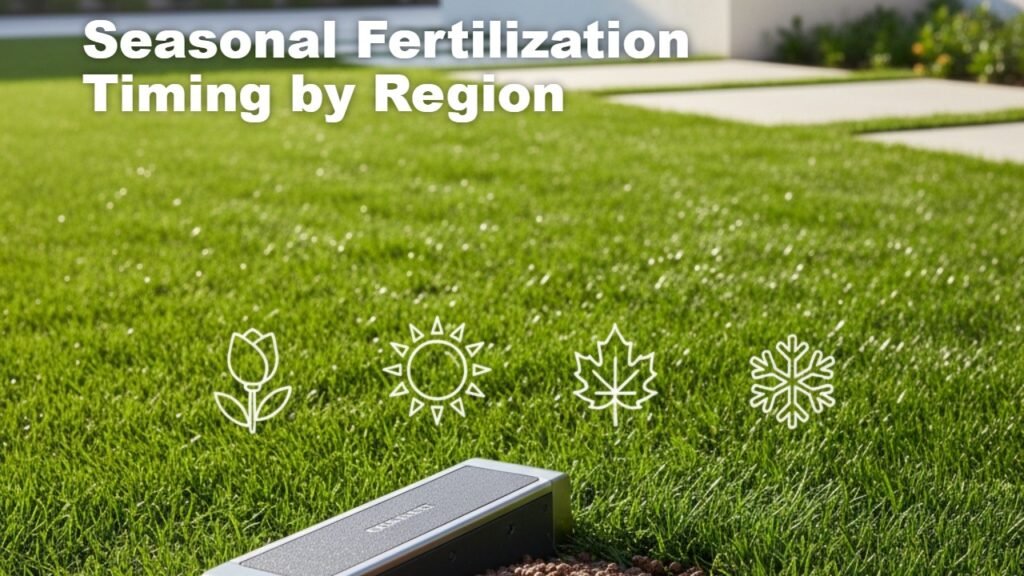
This guide explains regional feeding schedules, grass growth patterns, and practical timing strategies for consistent turf performance.
Why Fertilization Timing Matters
Grass absorbs nutrients most efficiently during active growth periods. Applying fertilizer outside those windows leads to runoff, shallow roots, and inconsistent turf density.
Correct fertilization timing supports:
- Deep root development
- Consistent turf color
- Improved stress tolerance
- Reduced weed pressure
- Efficient nutrient uptake
Understanding seasonal fertilization timing by region allows property owners to match feeding schedules with climate conditions and grass biology.
How Climate Zones Affect Fertilization Schedules
Regional climate patterns influence turf growth cycles. Temperature, rainfall, and daylight determine when grass can use applied nutrients.
Three major climate categories guide fertilization planning:
- Cool-season regions
- Warm-season regions
- Transitional zones
Each region requires a different feeding approach to maintain optimal turf health.
Cool-Season Regions: Northern Fertilization Timing
This YouTube video below from Ryan Knorr Lawn Care explains whether you should fertilize your lawn during summer. It covers timing, product choice, and heat stress risks. The guidance helps readers fertilize safely without damaging turf.
Cool-season grasses grow most actively in spring and fall. These regions include northern states and areas with cold winters.
Common cool-season grasses include:
- Kentucky bluegrass
- Perennial ryegrass
- Tall fescue
Fertilization schedules must align with their growth cycles.
Early Spring Feeding
Apply light fertilizer once soil temperatures reach about 55°F. Early feeding supports recovery from winter dormancy.
Avoid heavy nitrogen applications at this stage. Excess growth can stress turf before summer heat arrives.
Late Spring Application
A balanced fertilizer supports steady growth as temperatures rise. Focus on moderate nitrogen and balanced nutrients.
This period prepares turf for summer stress conditions.
Early Fall Feeding
Fall represents the most important fertilization window. Grass resumes active growth as temperatures cool.
Benefits of fall fertilization include:
- Strong root development
- Improved winter survival
- Enhanced spring green-up
Late Fall Winterizer Application
Apply a final fertilizer once top growth slows but roots remain active. This supports carbohydrate storage and early spring growth.
Following proper seasonal fertilization timing by region ensures cool-season lawns remain dense and resilient.
Warm-Season Regions: Southern Fertilization Timing
This YouTube video below from Turf Mechanic explains whether warm-season lawns should be fertilized in the fall. It covers timing, nutrient needs, and risks of excess nitrogen. The guidance helps readers support healthy growth without stressing the turf.
Warm-season grasses thrive in heat and grow most actively from late spring through summer. These regions include southern and coastal climates.
Common warm-season grasses include:
- Bermudagrass
- Zoysiagrass
- St. Augustinegrass
Fertilization should follow their active growth periods.
Late Spring Feeding
Apply the first fertilizer once grass fully greens up and soil temperatures rise above 65°F. Early feeding before green-up wastes nutrients.
This application supports strong summer growth.
Mid-Summer Feeding
Warm-season turf benefits from additional feeding during peak growth. Apply moderate nitrogen to maintain color and density.
Avoid excessive fertilization during extreme heat.
Late Summer Application
A final summer feeding supports continued growth and recovery from wear.
Reduce nitrogen levels as fall approaches.
Early Fall Transition
Stop fertilizing warm-season lawns several weeks before dormancy. Late applications can stimulate growth vulnerable to cold damage.
Correct seasonal fertilization timing by region helps warm-season lawns maintain performance without overstimulation.
Transitional Zones: Blended Fertilization Strategies
Transitional regions experience both hot summers and cold winters. Turf managers often maintain a mix of cool- and warm-season grasses.
Fertilization strategies must adapt to changing conditions.
Key recommendations include:
- Focus on fall feeding for cool-season turf
- Apply summer feeding for warm-season species
- Adjust nitrogen levels carefully
- Monitor soil temperatures closely
Flexible scheduling improves results in these variable climates.
Soil Temperature: The Key Timing Indicator
This YouTube video below from Turf Mechanic explains how to measure soil temperature accurately for lawn and garden care. It shows proper timing, tools, and reading methods. The guidance helps readers make better planting and treatment decisions.
Soil temperature determines nutrient uptake more accurately than calendar dates. Grass responds to soil warmth rather than air temperature alone.
General guidelines include:
- 55°F soil temperature for cool-season spring feeding
- 65°F soil temperature for warm-season feeding
- Declining temperatures signal fall applications
Using a soil thermometer improves precision when following seasonal fertilization timing by region.
Fertilizer Types and Timing Considerations
Different fertilizer types influence application timing.
Slow-Release Fertilizers
These products release nutrients gradually. They reduce the risk of burn and support steady growth.
Ideal for:
- Early season applications
- Long-term feeding
- Reduced maintenance schedules
Quick-Release Fertilizers
Quick-release products deliver rapid results. They require careful timing and monitoring.
Best used for:
- Correcting deficiencies
- Mid-season color improvement
- Targeted recovery feeding
Matching fertilizer type with timing improves efficiency.
Regional Rainfall and Irrigation Factors
Moisture levels influence nutrient movement and absorption. Fertilizer applied before heavy rain may wash away.
Best practices include:
- Apply fertilizer before light watering
- Avoid application before storms
- Adjust schedules during drought
- Monitor irrigation coverage
Weather awareness improves outcomes when implementing seasonal fertilization timing by region.
Common Fertilization Mistakes by Region
Many turf problems result from poor timing rather than product choice.
Common mistakes include:
- Spring over-fertilization in cool regions
- Late fall feeding in warm regions
- Ignoring soil temperature
- Applying fertilizer during dormancy
- Using excessive nitrogen
Avoiding these errors protects turf health and reduces maintenance costs.
Practical Fertilization Schedule Overview
Below is a simplified regional guideline.
Cool-Season Regions
- Early spring: light feeding
- Late spring: balanced fertilizer
- Early fall: primary feeding
- Late fall: winterizer
Warm-Season Regions
- Late spring: first feeding
- Mid-summer: maintenance feeding
- Late summer: final feeding
- Early fall: stop fertilizing
Following this framework supports consistent turf performance.
Tips for Accurate Fertilizer Application
This YouTube video below from LSU AgCenter explains different fertilizer application methods for lawns and landscapes. It shows how timing, placement, and technique affect nutrient absorption. The overview helps readers apply fertilizer more effectively and safely.
Consistent application techniques improve results.
- Calibrate spreaders regularly
- Apply evenly across lawn
- Water lightly after application
- Follow label instructions
- Test soil annually
Precision ensures effective nutrient delivery.
Frequently Asked Questions
How often should I fertilize my lawn?
Most lawns benefit from three to four applications annually, depending on region and grass type.
Can I fertilize during summer heat?
Apply cautiously. Excess nitrogen during extreme heat can stress turf.
Should I fertilize before rain?
Light rain helps nutrients absorb. Heavy rain may cause runoff.
Is fall the most important fertilization period?
Yes. Fall feeding supports root growth and winter survival for many lawns.
Do all regions follow the same schedule?
No. Regional climate and grass type determine proper timing.
Conclusion
Fertilization success depends on aligning nutrient applications with grass growth cycles and regional climate conditions. Generic schedules often fail because they ignore soil temperature and seasonal growth patterns.
Understanding seasonal fertilization timing by region allows homeowners and property managers to maximize nutrient efficiency and improve long-term turf performance. Correct timing strengthens roots, enhances color, and reduces environmental impact.
Evaluate your region, monitor soil temperature, and adjust feeding schedules carefully to maintain a resilient lawn that performs consistently throughout the year.