Grass growth cycles explained in simple terms can transform how homeowners and property managers care for lawns. Many turf problems begin when maintenance does not match the natural growth rhythm of grass. Mowing, watering, and fertilizing at the wrong time weakens roots and wastes resources.
Every lawn follows predictable seasonal growth phases. Understanding those phases helps you plan irrigation, fertilization, and mowing with precision. Healthy turf depends on working with the plant’s biology rather than against it.
This guide breaks down how grass grows, when growth slows, and what actions produce the best results at each stage.
What Are Grass Growth Cycles?
This YouTube video from Mr Ag Science explains the growth cycle of grass and how it changes through seasons. It shows stages from germination to dormancy. The overview helps readers time watering, mowing, and care for healthier turf.
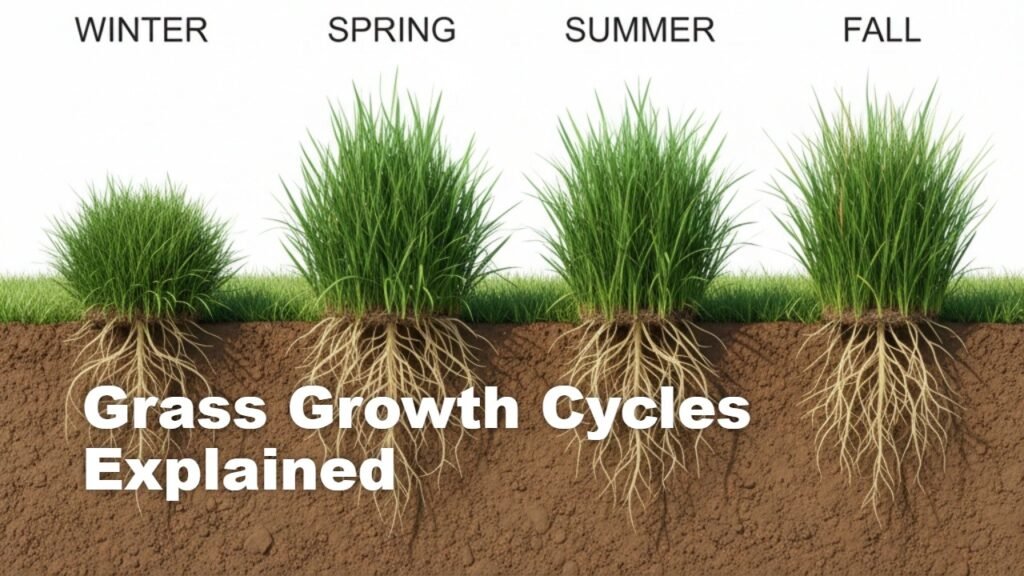
Grass growth cycles explained refers to the natural pattern of growth, dormancy, and recovery that turf follows each year. These cycles depend on temperature, sunlight, and moisture levels.
Most grasses fall into two categories: cool-season and warm-season. Each type grows strongest at different times of year.
Matching lawn care practices to these cycles improves turf density and resilience.
Cool-Season vs Warm-Season Grasses
Understanding your grass type is the first step.
Cool-season grasses include:
- Kentucky bluegrass
- Fescue
- Ryegrass
Warm-season grasses include:
- Bermuda
- Zoysia
- St. Augustine
Cool-season varieties grow most in spring and fall. Warm-season grasses peak in summer heat.
The Four Main Grass Growth Stages
This YouTube video below from Barnyards & Backyards Wyoming explains grass growth stages and how grazing affects each phase. It shows when grass is most vulnerable and when it recovers best. The insights help readers manage turf or pasture for stronger growth.
Grass growth cycles explained becomes easier when broken into stages. Each stage requires different care strategies.
Stage 1: Active Growth
Active growth occurs when temperatures fall within the ideal range for your grass type. During this phase, roots expand and blades grow rapidly.
This period demands:
- Regular mowing
- Balanced fertilization
- Consistent watering
Active growth offers the best time for lawn improvement projects.
Stage 2: Slow Growth
Growth slows when temperatures shift away from ideal ranges. Grass still grows but at a reduced rate.
During this stage:
- Reduce fertilizer application
- Adjust watering frequency
- Monitor soil moisture
Slow growth periods often occur in late spring or early fall depending on grass type.
Stage 3: Stress Period
Extreme heat or cold pushes grass into stress. Growth nearly stops. Turf focuses on survival rather than expansion.
Common stress triggers include:
- Heat waves
- Drought
- Freezing temperatures
During stress periods, avoid aggressive maintenance. Limit mowing and fertilization.
Stage 4: Dormancy
Dormancy occurs when grass stops growing completely. Cool-season grass goes dormant in summer heat. Warm-season grass becomes dormant in winter cold.
Dormant turf may turn brown but often remains alive beneath the surface. Proper care during dormancy ensures faster recovery later.
Seasonal Grass Growth Patterns
Grass growth cycles explained requires a seasonal approach. Each season affects turf differently.
Spring Growth Phase
Spring marks the beginning of active growth for many lawns. Soil temperatures rise, and root systems wake up.
Focus on:
- Light fertilization
- Aeration
- Overseeding
- Gradual mowing increase
Spring provides an opportunity to strengthen turf before summer stress.
Summer Growth and Stress
Warm-season grasses thrive in summer. Cool-season varieties may struggle.
Key strategies include:
- Deep watering
- Higher mowing height
- Reduced fertilizer
- Monitoring for drought stress
Understanding growth cycles helps prevent summer lawn decline.
Fall Recovery Phase
Fall represents the strongest growth period for cool-season grasses. Warm-season grasses prepare for dormancy.
Fall maintenance should include:
- Fertilization
- Aeration
- Overseeding
- Weed control
This phase builds root strength for winter survival.
Winter Dormancy
Winter slows growth for most grasses. Maintenance needs drop significantly.
During winter:
- Limit foot traffic
- Avoid heavy equipment
- Monitor drainage
Dormancy protects turf from extreme conditions.
How Growth Cycles Affect Mowing
Grass growth cycles explained directly impacts mowing frequency. Cutting too often during slow growth stresses turf. Waiting too long during active growth creates uneven results.
Mowing Best Practices
Follow these guidelines:
- Never remove more than one-third of blade height
- Adjust mowing frequency with growth speed
- Use sharp blades
- Raise mowing height during stress periods
Proper mowing supports healthy root systems.
Watering Based on Growth Cycles
Water needs change throughout the year. Active growth requires consistent moisture. Dormant periods need minimal watering.
Smart Irrigation Timing
During active growth:
- Water deeply and less often
- Monitor soil moisture
- Adjust for rainfall
During dormancy:
- Water only when necessary
- Prevent soil from drying completely
Grass growth cycles explained helps reduce water waste and improve turf health.
Fertilization Timing and Growth Stages
Applying fertilizer at the wrong time harms turf. Nutrients should match growth activity.
Fertilization Schedule
Use this simple approach:
- Apply fertilizer during active growth
- Avoid fertilizing during stress
- Reduce feeding during dormancy
Balanced fertilization strengthens roots and improves color.
Root Growth vs Blade Growth
Many homeowners focus only on visible growth. Root development matters more for long-term health.
Roots often grow even when blades slow. Strong root systems support drought resistance and recovery.
Grass growth cycles explained helps prioritize root health over appearance.
Environmental Factors That Influence Growth
Several external factors affect growth patterns.
Key Influences
- Soil temperature
- Sun exposure
- Rainfall
- Soil type
- Foot traffic
Monitoring these conditions allows better timing of lawn care tasks.
Common Mistakes Homeowners Make
Many lawn issues stem from ignoring natural growth cycles.
Avoid These Errors
- Overwatering during dormancy
- Fertilizing during stress
- Mowing too short
- Ignoring seasonal changes
- Using one schedule year-round
Adjusting maintenance with growth patterns prevents these problems.
Practical Lawn Care Calendar
Use this general timeline as a guide:
Spring:
- Begin mowing
- Fertilize lightly
- Aerate soil
Summer:
- Water deeply
- Raise mowing height
- Monitor stress
Fall:
- Fertilize
- Overseed
- Aerate
Winter:
- Reduce traffic
- Maintain equipment
- Monitor drainage
This schedule supports healthy turf year-round.
Benefits of Understanding Growth Cycles
Grass growth cycles explained offers measurable benefits:
- Healthier root systems
- Reduced water use
- Fewer disease issues
- Improved lawn density
- Lower maintenance costs
Proper timing enhances every aspect of lawn care.
FAQs About Grass Growth Cycles Explained
How fast does grass grow during peak season?
Grass may grow several inches per week during active growth depending on species and conditions.
Why does grass stop growing in extreme heat?
High temperatures trigger stress and reduce energy available for growth.
Can grass recover after dormancy?
Most grass recovers once favorable conditions return. Proper care speeds recovery.
Should I fertilize during dormancy?
Fertilization during dormancy is usually unnecessary and may harm turf.
How often should mowing change with growth cycles?
Adjust mowing frequency based on growth speed rather than using a fixed schedule.
Conclusion
Grass growth cycles explained provides a foundation for smarter lawn care. Every maintenance decision should align with the natural rhythm of turf growth. Ignoring these cycles leads to wasted effort, higher costs, and weaker lawns.
Homeowners and property managers who understand seasonal growth patterns can time mowing, watering, and fertilization more effectively. Strong roots and consistent turf density result from working with nature rather than forcing growth.
Study your lawn’s growth patterns and adjust your maintenance plan to unlock stronger, greener turf throughout the year.