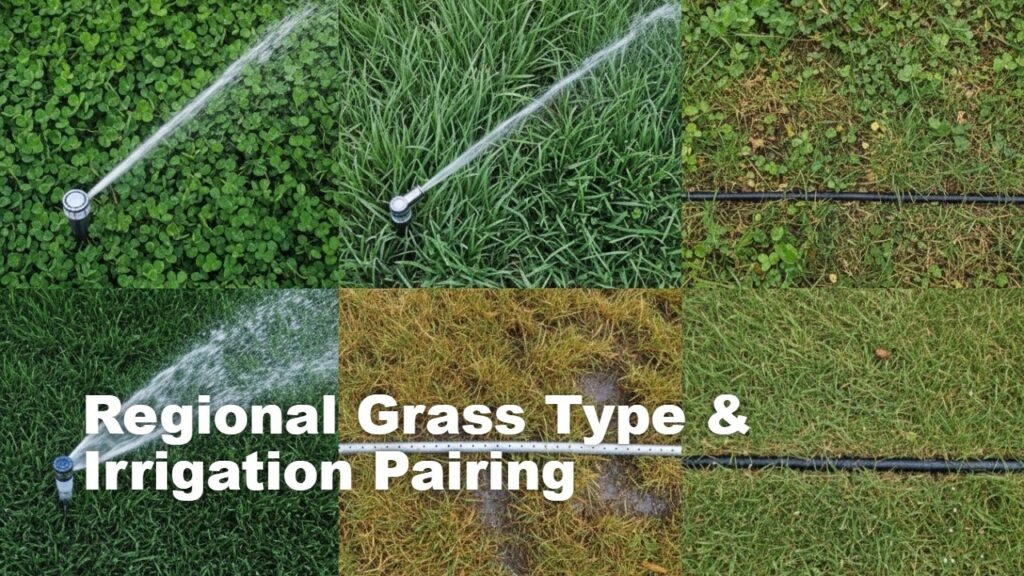
Regional grass type & irrigation pairing determines whether a lawn thrives or struggles under local climate conditions. Many irrigation problems start with a mismatch between turf species and watering schedules. A grass variety suited for one region may fail in another due to temperature, rainfall, or soil differences.
Homeowners and property managers often install irrigation systems without adjusting them for the grass type. That mistake leads to shallow roots, disease outbreaks, and wasted water.
Understanding regional grass type & irrigation pairing helps create resilient lawns, reduce water use, and improve long-term landscape performance.
Why Grass Type and Irrigation Must Work Together
Different grass species have unique root depths, growth cycles, and water needs. Pairing the wrong irrigation strategy with a specific turf variety causes stress and inefficiency.
Warm-season grasses require deep, less frequent watering. Cool-season grasses often need more consistent moisture during active growth.
A correct regional grass type & irrigation pairing ensures water reaches the root zone at the right time and depth.
Major Turfgrass Categories
This YouTube video below from OklahomaGardening explains the main types of turfgrasses for residential lawns. It highlights differences in climate needs, growth habits, and maintenance levels. The video serves as a quick reference for choosing the right grass for your yard.
Cool-Season Grasses
Cool-season grasses grow best in northern and transitional climates. They thrive during spring and fall when temperatures remain moderate.
Common varieties include:
- Kentucky bluegrass
- Perennial ryegrass
- Tall fescue
These grasses require consistent moisture but can suffer during extreme heat.
Warm-Season Grasses
Warm-season grasses thrive in southern and western climates. They tolerate heat and drought better than cool-season varieties
Common varieties include:
- Bermuda grass
- Zoysia grass
- St. Augustine grass
- Centipede grass
These grasses grow actively during summer and need less frequent irrigation.
Regional Climate and Grass Selection
Climate plays a central role in regional grass type & irrigation pairing.
Northern Regions
Cool-season grasses dominate northern states. Summers can be warm, but winters remain cold.
Irrigation pairing:
- Moderate frequency
- Deep watering during summer
- Reduced watering in fall
Southern Regions
Warm-season grasses dominate the South. High heat and humidity define summer conditions.
Irrigation pairing:
- Deep watering
- Early morning schedules
- Reduced frequency
Western Regions
Western states often face drought. Warm-season and drought-tolerant grasses perform best.
Irrigation pairing:
- Drip or efficient sprinklers
- Strict watering schedules
- Soil moisture monitoring
Transitional Zones
Transitional regions experience both hot summers and cold winters. Tall fescue often performs well.
Irrigation pairing:
- Balanced watering
- Seasonal adjustments
- Soil monitoring
Root Depth and Water Requirements
Root depth determines irrigation frequency.
| Grass Type | Root Depth | Watering Style | Frequency |
|---|---|---|---|
| Kentucky bluegrass | Shallow | Moderate depth | Frequent |
| Tall fescue | Deep | Deep watering | Less frequent |
| Bermuda grass | Deep | Deep watering | Infrequent |
| Zoysia grass | Moderate | Moderate depth | Balanced |
| St. Augustine | Shallow | Frequent light watering | Moderate |
This table highlights how regional grass type & irrigation pairing affects scheduling.
This YouTube video below from Halden explains how root depth affects watering needs. It shows why deeper roots require less frequent but longer irrigation. The video serves as a quick reference for smarter watering practices.
Soil Type and Irrigation Matching
Soil type influences water retention and drainage.
Sandy Soil
Sandy soil drains quickly. Even drought-tolerant grasses may need deeper watering.
Clay Soil
Clay retains moisture longer. Overwatering increases disease risk.
Loam Soil
Loam provides balanced moisture retention. It supports efficient irrigation.
Matching soil type with turf species improves irrigation results.
Seasonal Irrigation Adjustments
Regional grass type & irrigation pairing must change throughout the year.
Spring
Cool-season grasses grow rapidly. Increase watering slightly as temperatures rise.
Summer
Warm-season grasses thrive. Increase watering depth rather than frequency.
Fall
Reduce watering gradually as growth slows.
Winter
Most regions require minimal irrigation during dormancy.
Seasonal adjustments prevent stress and waste.
Irrigation System Design Considerations
System design must match turf needs.
Sprinkler Coverage
Uniform coverage ensures all areas receive proper moisture.
Pressure Regulation
Correct pressure prevents misting and runoff.
Zoning by Grass Type
Separate zones for different grass varieties improve efficiency.
Proper design supports regional grass type & irrigation pairing.
Technology for Efficient Pairing
Modern tools improve irrigation accuracy.
Smart Controllers
Weather-based controllers adjust watering schedules automatically.
Soil Moisture Sensors
Sensors measure moisture at root depth and trigger irrigation only when needed.
Flow Sensors
Flow sensors detect leaks and abnormal water use.
Technology enhances precision and efficiency.
Common Pairing Mistakes
Avoid these errors:
- Using one schedule for all grass types
- Ignoring soil differences
- Overwatering shallow-root grasses
- Underwatering deep-root grasses
- Failing to adjust seasonally
Correct pairing prevents turf stress.
Practical Tips for Homeowners and Property Managers
Follow these steps for effective pairing:
- Identify grass type
- Test soil composition
- Adjust watering depth
- Install smart controllers
- Monitor rainfall
- Aerate compacted soil
- Inspect irrigation monthly
Consistent monitoring improves results.
Budget and Water Use Planning
Efficient pairing reduces water costs.
Track Usage
Monitor monthly water bills. Compare usage with seasonal needs.
Upgrade Equipment
Efficient sprinkler heads and controllers reduce waste.
Plan for Seasonal Changes
Adjust budgets for peak summer demand.
Proper planning supports long-term savings.
Environmental Benefits
Correct regional grass type & irrigation pairing reduces water waste. Lower consumption protects local water supplies and reduces runoff pollution.
Efficient irrigation supports sustainable landscape management.
FAQs About Regional Grass Type & Irrigation Pairing
Why is grass type important for irrigation planning?
Different grass types have unique water needs. Matching irrigation prevents stress and waste.
How often should lawns be watered?
Most lawns need about one inch of water weekly, including rainfall.
Can one irrigation schedule work for all grass types?
No. Each grass variety requires specific watering depth and frequency.
Are smart controllers helpful?
Yes. They adjust watering based on weather and soil conditions.
How can I identify my grass type?
Local extension services or lawn professionals can help identify turf species.
Conclusion
Regional grass type & irrigation pairing remains one of the most important factors in successful landscape management. Matching turf species with appropriate watering schedules improves root health, reduces water waste, and prevents disease.
Homeowners and property managers who align grass selection with irrigation strategy create resilient lawns that thrive under local climate conditions.
Evaluate your turf type and irrigation setup today to build a smarter regional grass type & irrigation pairing that keeps your landscape healthy and efficient year-round.