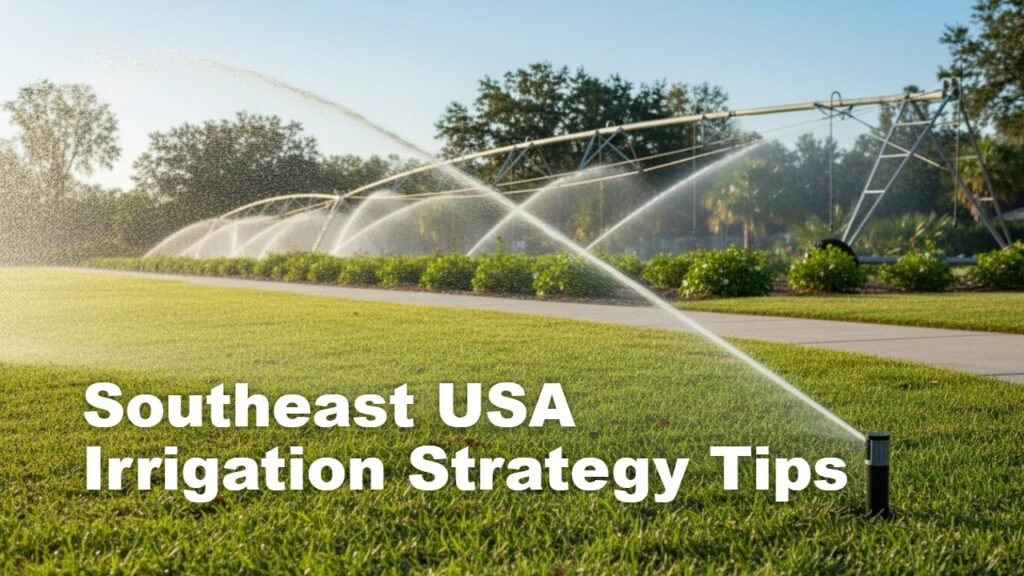
Southeast USA irrigation strategy requires a climate-specific approach that accounts for high humidity, heavy rainfall, sandy soils, and extended growing seasons. Homeowners and property managers across states like Florida, Georgia, Alabama, and the Carolinas face unique watering challenges.
Unlike arid regions, the Southeast receives significant annual rainfall. However, precipitation often arrives in intense bursts followed by dry stretches. That pattern makes irrigation timing more important than total volume.
An effective Southeast USA irrigation strategy balances moisture control, disease prevention, drainage management, and water efficiency.
Understanding the Southeast Climate Profile
This YouTube video below from Lauren Weinkein explains the climate of the Southeast region. It highlights temperature patterns, rainfall, and seasonal weather trends. The video serves as a quick reference for understanding regional climate conditions.
The Southeast features a humid subtropical climate. Summers bring high temperatures, elevated humidity, and frequent thunderstorms. Winters remain mild with occasional cold snaps.
Annual rainfall often exceeds 45 inches in many areas. Despite this, drought conditions still occur due to uneven distribution.
A well-designed Southeast USA irrigation strategy must account for both excess moisture and periodic water shortages.
Key Climate Challenges for Irrigation
High Humidity
Humidity reduces evaporation but increases fungal risk. Lawns may appear moist even when root zones lack adequate hydration.
Intense Rainfall Events
Heavy storms cause runoff and erosion. Water may not penetrate deeply into compacted soil.
Sandy Soils
Many coastal and inland Southeast areas contain sandy soil. Sandy soil drains quickly and holds limited moisture.
Extended Growing Season
The growing season often lasts from March through November. Longer active periods increase annual irrigation demand.
Each factor shapes a sustainable Southeast USA irrigation strategy.
Seasonal Irrigation Planning
Spring Irrigation Strategy
Spring typically brings regular rainfall. Irrigation should supplement only when rainfall falls below one inch per week.
Monitor soil moisture before activating systems. Avoid unnecessary watering during wet periods.
Summer Irrigation Strategy
Summer heat and humidity increase evapotranspiration. Deep watering two to three times per week often works better than daily shallow cycles.
Early morning watering reduces evaporation and fungal risk.
Fall Irrigation Strategy
Temperatures decline gradually in fall. Reduce irrigation frequency while maintaining adequate moisture for root health.
Winter Irrigation Strategy
Most Southeast lawns remain semi-active in winter. Irrigate only during prolonged dry spells.
A flexible Southeast USA irrigation strategy adapts monthly rather than remaining fixed.
Turfgrass Selection for the Southeast
This YouTube video below from OklahomaGardening explains the main types of turfgrasses for residential lawns. It highlights differences in growth, climate needs, and maintenance levels. The video serves as a quick reference for choosing the right grass type.
Grass selection influences irrigation efficiency.
Common Warm-Season Grasses
- Bermuda grass
- Zoysia grass
- St. Augustine grass
- Centipede grass
Warm-season grasses thrive in heat and humidity. They require less water than cool-season varieties during peak summer.
Selecting the right turf strengthens any Southeast USA irrigation strategy.
Irrigation Scheduling Best Practices
Water Deeply and Infrequently
Deep watering promotes strong root systems. Shallow watering increases disease susceptibility.
Avoid Evening Irrigation
Night watering prolongs leaf wetness. Extended moisture increases fungal outbreaks.
Monitor Weekly Water Totals
Combine rainfall and irrigation. Most lawns need about one inch per week.
Adjust Based on Soil Type
Sandy soils may require slightly more frequent watering than clay soils.
These practices refine a reliable Southeast USA irrigation strategy.
Drainage and Runoff Management
Heavy rainfall demands proper drainage systems.
Improve Soil Structure
Add organic matter to sandy soil. Organic material increases water retention.
Install French Drains
French drains redirect excess water away from foundations and lawn surfaces.
Grade Landscapes Properly
Ensure slopes direct water away from buildings.
Drainage supports both plant health and structural protection.
Technology for Efficient Irrigation
Modern technology enhances irrigation accuracy.
Smart Irrigation Controllers
Weather-based controllers adjust watering automatically based on rainfall and temperature.
Rain Sensors
Rain sensors pause irrigation during storms.
Soil Moisture Sensors
Sensors measure real-time moisture at root depth.
Technology reduces overwatering and supports an adaptive Southeast USA irrigation strategy.
Water Conservation in Humid Regions
Even humid regions must conserve water.
Reduce Turf Coverage
Replace high-maintenance turf with native shrubs and groundcovers.
Use Drip Irrigation
Drip systems deliver water directly to roots, minimizing evaporation.
Apply Mulch
Mulch reduces surface evaporation and suppresses weeds.
Conservation reduces water bills and supports sustainability.
Southeast Rainfall and Irrigation Comparison Table
| Factor | Southeast Region | Irrigation Adjustment |
|---|---|---|
| Annual Rainfall | 40–60+ inches | Supplement during dry spells |
| Soil Type | Sandy dominant | Improve retention |
| Humidity | High | Reduce evening watering |
| Growing Season | Long | Adjust monthly |
| Storm Intensity | High | Improve drainage |
This table summarizes how climate influences irrigation planning.
Disease Prevention Through Proper Irrigation
Humidity increases fungal risk. A proper Southeast USA irrigation strategy prioritizes disease prevention.
Common Turf Diseases
Frequent moisture may trigger:
- Brown patch
- Dollar spot
- Pythium blight
- Large patch
Morning irrigation reduces leaf wetness duration.
Budget Planning and Water Costs
Water rates vary across Southeast municipalities. Efficient irrigation reduces operating costs.
Monitor Utility Bills
Track monthly consumption trends. Identify unusual spikes.
Invest in Smart Technology
Efficient controllers often reduce usage by 15–30%.
Plan for Seasonal Peaks
Summer months typically increase water demand.
Budget planning complements a strong Southeast USA irrigation strategy.
Practical Action Plan
Follow these steps to improve irrigation efficiency:
- Test soil type
- Install rain sensors
- Use smart controllers
- Water early in the morning
- Monitor weekly rainfall
- Aerate compacted soil
- Improve drainage systems
- Inspect sprinkler heads monthly
Consistent oversight improves results.
Common Mistakes to Avoid
Avoid these frequent errors:
- Watering on fixed schedules year-round
- Ignoring rainfall totals
- Overwatering during humid weeks
- Skipping drainage maintenance
- Neglecting system inspections
Correcting these mistakes enhances landscape health.
FAQs About Southeast USA Irrigation Strategy
How often should lawns be watered in the Southeast?
Most lawns require about one inch of water weekly, including rainfall. Adjust during heat waves.
Is irrigation necessary during rainy seasons?
Monitor soil moisture before watering. Heavy storms may eliminate the need for irrigation.
Why is morning watering recommended?
Morning watering reduces evaporation and minimizes fungal growth.
Do sandy soils need more frequent watering?
Yes. Sandy soils drain quickly and may require slightly more frequent cycles.
Are smart controllers effective in humid climates?
Yes. They adjust schedules automatically based on local weather data.
Conclusion
Southeast USA irrigation strategy must balance abundant rainfall, high humidity, sandy soils, and extended growing seasons. Fixed watering routines rarely work in this climate.
Homeowners and property managers who adapt irrigation schedules monthly, improve drainage, and invest in smart technology maintain healthier landscapes and lower water bills.
Evaluate your current irrigation system today and implement a climate-specific Southeast USA irrigation strategy that ensures long-term efficiency and resilient landscape performance.