High humidity irrigation considerations shape how successful your landscape performs in warm, moisture-heavy climates. Many homeowners assume humid air means less watering is required. That assumption often leads to shallow roots, fungal outbreaks, and wasted water.
Property managers face even greater pressure. Large lawns, athletic fields, and commercial landscapes demand precision. Humidity changes plant transpiration, soil drying rates, and disease risk. Irrigation systems must adapt accordingly.
This guide explains how to adjust scheduling, equipment, and maintenance strategies for humid regions. The goal is simple: healthier turf, fewer pathogens, and efficient water use.
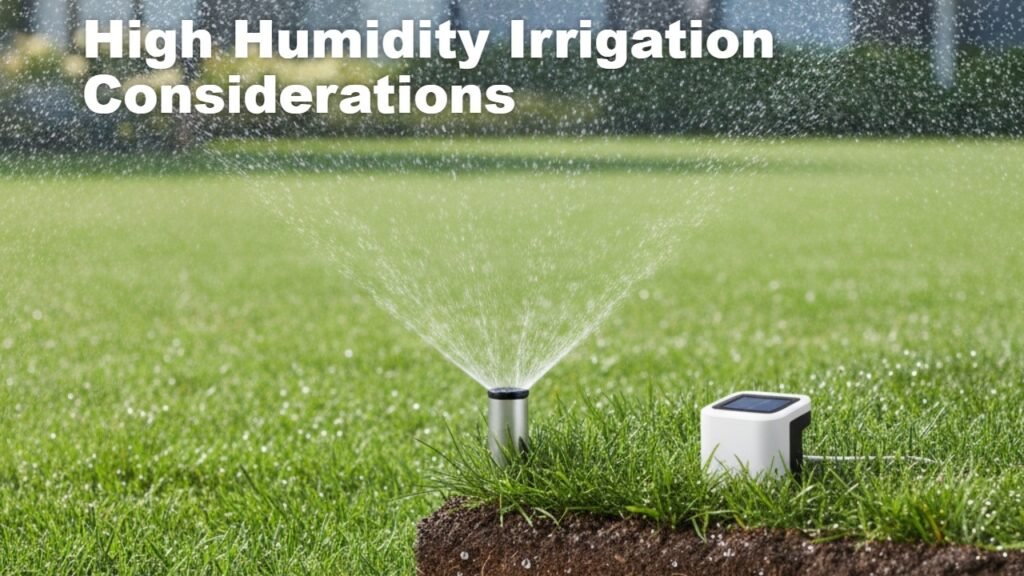
Why Humidity Changes Irrigation Strategy
Humidity reduces the rate at which water evaporates from leaf surfaces. When relative humidity climbs above 70%, evapotranspiration slows significantly. Soil moisture remains elevated longer than expected.
However, slower drying does not eliminate plant water needs. Grass still requires oxygen in the root zone. Saturated soil suffocates roots and encourages pathogens.
Understanding this balance separates average lawn care from professional-grade irrigation management.
Evapotranspiration in Humid Climates
This YouTube video below from The O’Fishel Weather Channel explains evapotranspiration and its role in water cycles. It shows how evaporation and plant use affect irrigation needs. The video serves as a quick reference for understanding plant water demand.
Evapotranspiration (ET) measures combined evaporation and plant transpiration. High humidity suppresses ET because air already holds substantial moisture.
Lower ET means irrigation intervals should extend. Many systems still run on fixed timers. That outdated approach oversaturates turf in humid regions.
Leaf Wetness Duration
Leaf wetness duration increases in humid air. Dew lingers longer each morning. Prolonged moisture on blades creates ideal conditions for fungi such as:
- Brown patch
- Dollar spot
- Leaf spot
- Pythium blight
High humidity irrigation considerations must prioritize minimizing additional leaf moisture.
Soil Behavior in High Humidity Environments
Soil moisture retention behaves differently under humid conditions. Clay soils remain wet longer. Compacted soils drain slowly. Sandy soils still drain quickly but retain surface moisture longer due to reduced evaporation.
Oxygen Deprivation in Root Zones
Roots require oxygen for respiration. Saturated soils reduce pore space air. Oxygen deficiency weakens turf resilience.
Chronic overwatering in humid climates leads to:
- Shallow root systems
- Reduced drought tolerance
- Increased compaction
- Nutrient leaching
Healthy turf requires controlled drying cycles.
Microbial Activity and Pathogens
High moisture increases microbial activity. Beneficial microbes thrive, but so do fungal pathogens. Warm and humid environments accelerate disease cycles.
Proper irrigation timing limits excess moisture exposure.
Adjusting Irrigation Scheduling in Humid Conditions
Scheduling adjustments represent the most important high humidity irrigation considerations. Timing matters more than volume alone.
Water Less Frequently, But Deeply
Extend intervals between watering cycles. Allow topsoil to dry slightly before reapplying water.
Deep watering encourages root depth. Shallow daily watering promotes fungal growth.
Early Morning Irrigation Only
Irrigate between 4:00 AM and 7:00 AM. Morning watering allows sunlight to dry foliage quickly.
Avoid evening irrigation. Night watering extends leaf wetness duration and increases fungal risk.
Use Smart Controllers
Weather-based controllers adjust watering automatically. They rely on ET data and rainfall sensors.
Modern systems monitor humidity levels to modify runtimes. These systems prevent unnecessary cycles.
Sprinkler System Efficiency in Humid Regions
This YouTube video below from Dr. Denise DeBusk explains the four elements of sprinkler uniformity. It highlights how spacing, pressure, nozzle selection, and layout affect irrigation efficiency. The video serves as a quick reference for improving sprinkler performance and water distribution.
Equipment performance becomes critical under high moisture conditions. Even minor inefficiencies cause pooling and runoff.
Optimize Sprinkler Head Spacing
Proper head-to-head coverage ensures uniform distribution. Overlapping spray in humid areas creates saturated patches.
Check for:
- Misaligned heads
- Pressure imbalance
- Broken nozzles
- Clogged filters
Routine inspections prevent overwatering.
Adjust Run Times for Reduced Evaporation
Lower evaporation means water remains in soil longer. Reduce runtime by 10–30% depending on soil type and turf variety.
Install Rain and Soil Moisture Sensors
Rain sensors prevent irrigation during storms. Soil moisture sensors measure real-time moisture content.
Combining both technologies improves accuracy in humid climates.
Turfgrass Selection for Humid Regions
Plant choice influences irrigation strategy. Certain species tolerate high humidity better than others.
Cool-Season Grasses
Cool-season grasses struggle in hot, humid summers. Common varieties include:
- Kentucky bluegrass
- Perennial ryegrass
- Tall fescue
These grasses require careful irrigation timing to prevent disease.
Warm-Season Grasses
Warm-season varieties handle humidity more effectively. Examples include:
- Bermuda grass
- Zoysia grass
- St. Augustine grass
These grasses possess stronger disease resistance in humid climates.
Choosing the right species reduces irrigation stress.
Disease Prevention Through Smart Irrigation
This YouTube video below from the International Fresh Produce Association explores smart irrigation, disease detection, and solar-powered farming. It highlights how technology improves efficiency and crop health. The video serves as a quick reference for emerging AgTech solutions.
High humidity irrigation considerations must prioritize fungal prevention.
Common Humidity-Driven Turf Diseases
Excess moisture contributes to:
- Brown patch
- Dollar spot
- Pythium blight
- Leaf spot
Reducing leaf wetness breaks fungal cycles.
Aeration Improves Drainage
Core aeration increases oxygen exchange. Improved soil structure enhances infiltration.
Perform aeration during active growth periods. Avoid aerating during peak disease outbreaks.
Balanced Fertilization
High nitrogen rates increase disease susceptibility in humid climates.
Maintain moderate fertilization schedules. Avoid excessive growth during peak humidity.
Landscape Beds and High Humidity
Irrigation strategies extend beyond turf. Shrubs and ornamentals respond differently.
Drip Irrigation Over Overhead Spray
Drip systems deliver water directly to root zones. They minimize leaf moisture.
Micro-irrigation reduces fungal risk and water waste.
Mulch Depth Management
Apply 2–3 inches of organic mulch. Mulch stabilizes soil moisture.
Avoid excessive mulch depth, which traps moisture and promotes rot.
Hardscape Drainage and Runoff Control
Humidity often accompanies heavy rainfall. Irrigation must account for storm events.
Evaluate Drainage Slopes
Water pooling near foundations damages structures. Ensure proper grading.
Inspect downspouts and drainage channels regularly.
Avoid Compaction from Foot Traffic
High moisture softens soil. Heavy traffic compacts wet ground quickly.
Restrict access to saturated turf areas.
Monitoring Tools for Humid Climate Irrigation
Professional management requires data.
Soil Moisture Meters
Portable probes provide instant readings. Use them before adjusting schedules.
Weather Stations
On-site weather stations measure humidity, rainfall, and ET.
Property managers benefit from localized climate data.
Irrigation Audits
Conduct annual audits to measure distribution uniformity.
High humidity irrigation considerations demand system precision.
Water Conservation and Regulatory Compliance
This YouTube video below from Water Science For Everyone explains regulatory compliance steps for water analysis. It outlines testing requirements, safety standards, and reporting processes. The video serves as a quick reference for understanding water quality compliance.
Many humid regions enforce seasonal watering restrictions.
Overwatering increases runoff into storm drains. Nutrient-laden runoff contributes to water pollution.
Efficient irrigation protects:
- Municipal water supplies
- Nearby lakes and rivers
- Community landscapes
Smart irrigation reduces operating costs while protecting environmental health.
Practical Action Plan for Homeowners
Follow this checklist to implement high humidity irrigation considerations immediately:
- Adjust irrigation intervals based on soil moisture.
- Water only during early morning hours.
- Inspect sprinkler heads monthly.
- Install rain or soil moisture sensors.
- Aerate compacted turf annually.
- Reduce nitrogen applications during peak humidity.
- Monitor for early signs of fungal disease.
Small adjustments prevent costly landscape failures.
FAQs About High Humidity Irrigation Considerations
How does high humidity affect lawn watering frequency?
High humidity slows evaporation. Lawns require less frequent watering. Soil should partially dry between cycles.
Is evening irrigation safe in humid climates?
Evening watering increases fungal risk. Morning irrigation remains safest.
Can humid air replace irrigation needs?
Humidity does not replace soil moisture. Plants still require adequate root zone hydration.
What irrigation system works best in humid regions?
Drip irrigation and smart controllers perform best. They minimize excess leaf moisture.
How do I know if I am overwatering in humid weather?
Look for persistent soggy soil, fungal spots, and shallow roots. Use soil moisture meters for confirmation.
The Long-Term Strategy for Sustainable Irrigation
High humidity irrigation considerations require proactive planning. Reactive watering leads to disease and waste. Smart scheduling, appropriate turf selection, and efficient hardware create resilience, which is why following proven smart irrigation best practices from Sprinkle Splash strengthens long-term landscape performance.
Landscape success in humid climates depends on balance. Too little water stresses plants. Too much water fuels pathogens. Precision irrigation protects investment value for homeowners and property managers alike.
Apply these high humidity irrigation considerations consistently and your landscape will thrive even in the most moisture-laden environments.