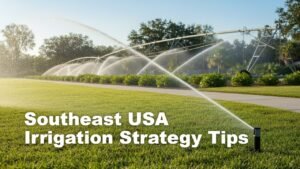
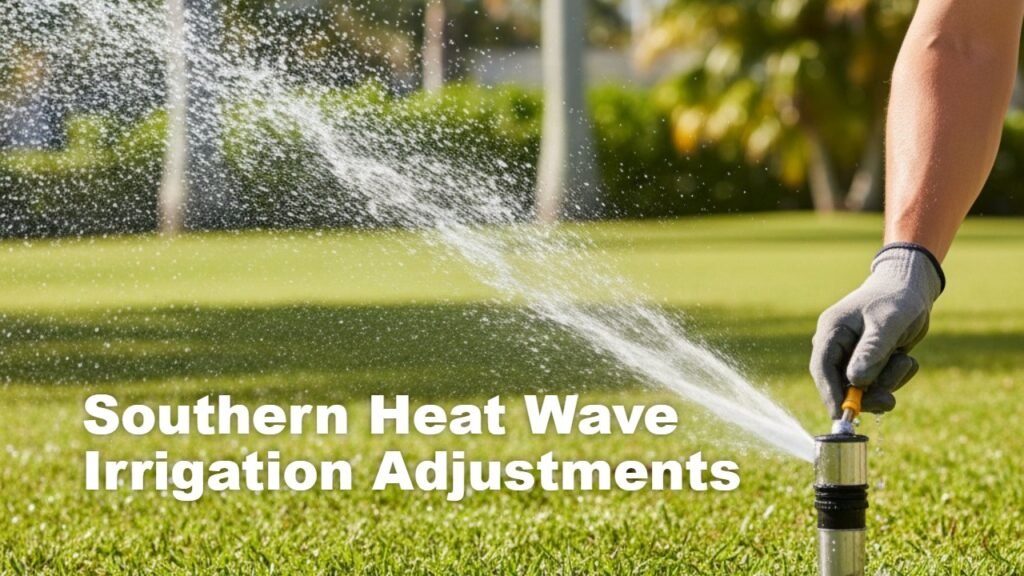
Southern heat wave irrigation adjustments are essential for protecting lawns and landscapes during extreme summer temperatures. Across states like Texas, Florida, Georgia, Alabama, and the Carolinas, prolonged heat waves now arrive more frequently and last longer. High humidity, intense sunlight, and extended dry periods place significant stress on turf and ornamental plants.
Standard irrigation schedules rarely perform well during extreme heat. Water demand rises quickly, yet overwatering can cause shallow roots and fungal outbreaks. Property owners must strike a careful balance.
This guide explains how to implement effective southern heat wave irrigation adjustments that preserve plant health, reduce water waste, and prevent costly landscape damage.
Understanding Southern Heat Waves
Southern climates combine high temperatures with strong solar intensity. Heat waves often push daytime temperatures above 95°F for consecutive days.
Evapotranspiration rates spike during these periods. Turfgrass loses moisture rapidly, especially in full sun areas. Soil surface temperatures may exceed air temperature by 20 degrees or more.
Southern heat wave irrigation adjustments must account for both air temperature and soil heat stress.
Why Standard Irrigation Schedules Fail
Fixed watering routines ignore daily temperature swings and humidity shifts. During heat waves, lawns may require deeper watering but not necessarily more frequent cycles.
Overwatering in humid regions can lead to fungal diseases such as brown patch and pythium blight. Meanwhile, shallow watering weakens root systems.
Effective southern heat wave irrigation adjustments prioritize root health over surface appearance.
Signs of Heat Stress in Lawns
Recognizing early stress allows timely irrigation changes.
Common Turf Stress Indicators
- Wilting grass blades
- Bluish-gray coloration
- Footprints that remain visible
- Thinning or patchy growth
- Leaf rolling
Quick response prevents permanent turf damage.
Adjusting Irrigation During Heat Waves
Increase Watering Depth, Not Frequency
This YouTube video below from Tom Jacob explains the depth and frequency of irrigation for healthy plants. It shows how proper watering schedules support root growth and soil moisture balance. The video serves as a quick reference for efficient irrigation practices.
Deep watering encourages roots to grow deeper into cooler soil layers. Avoid daily shallow watering.
Water Early in the Morning
Irrigate between 4:00 AM and 7:00 AM. Morning watering reduces evaporation and limits fungal growth.
Avoid Midday or Evening Watering
Midday watering evaporates quickly. Evening watering prolongs leaf wetness and encourages disease.
Southern heat wave irrigation adjustments depend heavily on precise timing.
Soil Considerations During Extreme Heat
Soil type influences how water should be applied.
Sandy Soil
Sandy soils drain quickly. They may require slightly more frequent but still deep irrigation cycles.
Clay Soil
Clay soils retain moisture longer. Overwatering clay leads to compaction and runoff.
Improving Soil Structure
Add compost to increase water retention. Aerate compacted soil to improve infiltration.
Healthy soil supports effective southern heat wave irrigation adjustments.
This YouTube video below from Agresol explains four ways to improve soil structure using regenerative agriculture methods. It highlights compost, cover crops, and reduced tillage for healthier soil. The video serves as a quick reference for building strong, water-holding soil.
Warm-Season Grass Performance
Southern lawns typically consist of warm-season grasses that tolerate heat better than cool-season varieties.
Common Southern Turf Varieties
- Bermuda grass
- Zoysia grass
- St. Augustine grass
- Centipede grass
These grasses remain active in summer but still require proper irrigation management.
Irrigation Technology for Heat Waves
Modern tools simplify adjustments.
Smart Irrigation Controllers
Weather-based controllers adjust schedules automatically based on temperature and rainfall.
This YouTube video below from Modern Gardener explains how smart irrigation controllers save water and reduce costs. It shows how weather-based scheduling improves efficiency and prevents overwatering. The video serves as a quick reference for upgrading to smarter irrigation technology.
Soil Moisture Sensors
Sensors prevent overwatering by activating irrigation only when needed.
High-Efficiency Nozzles
Upgrading spray heads improves water distribution and reduces waste.
Technology strengthens southern heat wave irrigation adjustments.
Heat Wave Irrigation Comparison Table
| Condition | Standard Schedule | Heat Wave Adjustment |
|---|---|---|
| Temperature under 90°F | Moderate watering | Maintain schedule |
| Temperature above 95°F | Standard depth | Increase depth |
| High humidity | Normal frequency | Avoid evening watering |
| Sandy soil | Regular intervals | Monitor moisture closely |
| Clay soil | Standard watering | Prevent runoff |
This table highlights practical irrigation changes.
Managing Water Restrictions During Heat Waves
Many Southern municipalities enforce watering limits during drought or heat waves.
Follow Assigned Watering Days
Adjust irrigation depth within allowed days.
Use Efficient Systems
Drip irrigation and smart controllers help maximize limited watering windows.
Prioritize Critical Zones
Water high-visibility or high-value landscape areas first.
Southern heat wave irrigation adjustments must align with local regulations.
Protecting Trees and Shrubs
Trees and shrubs also require attention.
Deep Root Watering
Use slow-release drip systems to reach deeper roots.
Mulching Around Trees
Apply mulch to conserve moisture and regulate soil temperature.
Avoid Overhead Spraying
Overhead watering wastes water and increases disease risk.
Balanced watering protects long-term landscape investments.
Budget Considerations
Heat waves increase water use and utility bills.
Monitor Consumption Weekly
Track water usage during peak heat.
Identify Leaks Early
Leaks waste water quickly during high-demand periods.
Invest in Efficiency
Smart irrigation often reduces overall water consumption despite increased depth.
Budget planning supports sustainable southern heat wave irrigation adjustments.
Common Mistakes During Heat Waves
Avoid these frequent errors:
- Watering daily with shallow cycles
- Ignoring soil moisture levels
- Watering during peak sun
- Overcompensating with excessive irrigation
- Skipping system inspections
Correcting these mistakes protects turf health.
Practical Action Plan
Follow these steps during a heat wave:
- Adjust irrigation depth
- Water early morning only
- Monitor soil moisture
- Inspect sprinkler coverage
- Add mulch to plant beds
- Reduce foot traffic on stressed lawns
- Repair leaks immediately
Consistent monitoring improves outcomes.
Environmental Impact
Efficient irrigation reduces strain on municipal water systems during peak demand. Lower runoff protects waterways from nutrient pollution.
Responsible southern heat wave irrigation adjustments benefit both landscapes and communities.
FAQs About Southern Heat Wave Irrigation Adjustments
How often should lawns be watered during a heat wave?
Water deeply two to three times per week, depending on soil type and rainfall.
Is daily watering recommended?
No. Daily shallow watering weakens root systems and increases disease risk.
Can heat waves kill warm-season grass?
Prolonged drought and improper watering can cause damage, but proper irrigation reduces risk.
Should irrigation increase during high humidity?
Increase watering depth carefully, but avoid evening irrigation to prevent fungal growth.
Are smart controllers helpful during heat waves?
Yes. They adjust schedules automatically based on weather data.
Conclusion
Southern heat wave irrigation adjustments are essential for maintaining healthy landscapes during extreme summer temperatures. Deep watering, early morning irrigation, soil improvement, and efficient technology form the foundation of a resilient strategy.
Homeowners and property managers who adapt irrigation practices during heat waves protect turf health, reduce water waste, and manage rising utility costs.
Review your current irrigation schedule and implement targeted southern heat wave irrigation adjustments to keep your landscape strong through even the most intense Southern summers.