Introduction: How Cities Detect Excessive Sprinkler Water Usage
Cities no longer rely on neighbors or drive-by inspections to catch water waste. Modern municipalities detect excessive sprinkler use through Advanced Metering Infrastructure (AMI), local weather intelligence, and predictive enforcement algorithms. These systems compare your real-time water use against Evapotranspiration (ETo) data, watering rules, and your assigned water budget. When usage exceeds what science and regulations allow, the system flags the account automatically.
That decision happens before anyone ever looks at your lawn.
Advanced Metering Infrastructure (AMI): How Cities See Water Use in Real Time
Cities across the USA have replaced manual meters with Advanced Metering Infrastructure (AMI). These meters record water flow every few seconds and transmit the data using Radio Frequency (RF) or cellular backhaul systems.
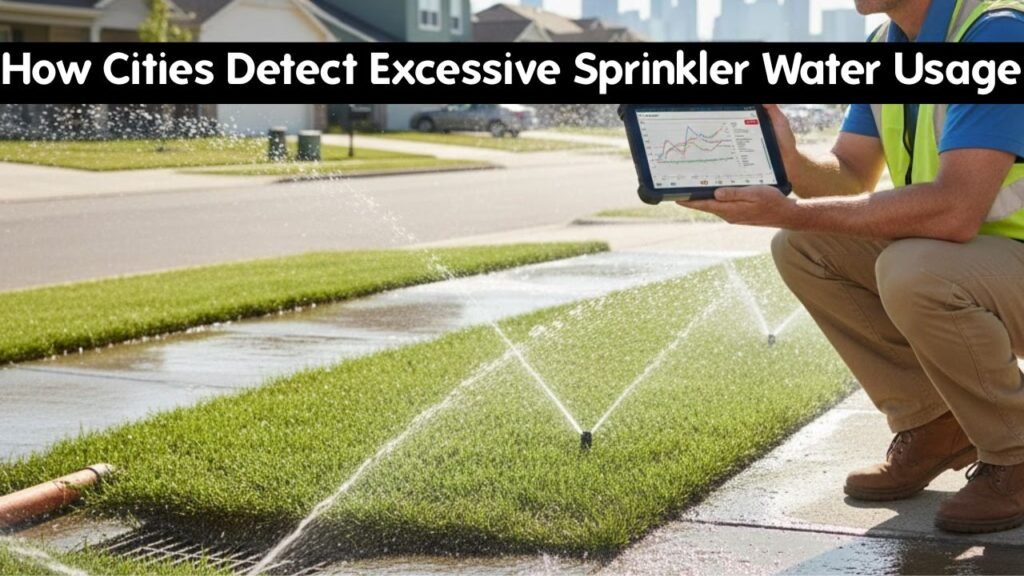
AMI does not guess. It isolates patterns. Long, steady nighttime flow often signals sprinklers. Continuous flow suggests leaks. Sharp spikes indicate irrigation zones cycling. The system benchmarks these patterns against your historical usage and city rules. Once a threshold breaks, enforcement begins automatically.
This shift removed human judgment. Data now makes the call.
Weather Intelligence: Why CIMIS and Mesonet Data Matter
Water enforcement relies heavily on weather science. Many U.S. cities use CIMIS (California Irrigation Management Information System) or regional Mesonet networks. These platforms calculate Local Reference Evapotranspiration (ETo) using temperature, humidity, wind speed, and solar radiation.
Cities cross-reference your AMI data against that ETo value. If the weather indicates low plant demand and your sprinklers still ran heavily, the system proves the watering was unnecessary. That evidence supports fines, not opinions.
Rain days with irrigation spikes get flagged almost instantly.
The Water Budget Formula Cities Actually Enforce
Most homeowners misunderstand how limits work. Cities calculate budgets using Irrigable Area, not total lot size. They often measure turf and planting zones using GIS (Geographic Information Systems) and aerial mapping.
The standard formula looks like this:
Water Budget = ETo × Plant Factor × Irrigable Area
Turf grass carries a higher plant factor than shrubs or native plants. When usage exceeds this calculation, the account enters higher billing tiers and enforcement review. The math leaves little room for argument.
Top 3 Indicators Municipalities Use to Issue Citations
Cities actively flag accounts using these signals:
- Time-of-Day Violations
Software isolates irrigation during restricted hours, usually 10 AM to 6 PM. - Weather vs Usage Conflicts
AMI data is benchmarked against CIMIS or Mesonet ETo values. - Budget Overruns
Monthly totals crossing assigned limits trigger review under an Inclining Block Rate Structure.
Multiple triggers strengthen the enforcement case fast.
Inclining Block Rate Structure: Why Small Overages Cost Big Money
Most U.S. utilities use an Inclining Block Rate Structure. Each usage tier costs more per Centum Cubic Feet (CCF) than the last. The final tier often costs three to five times more than baseline water.
This creates a price cliff. That last 10% of water can represent half the bill. AMI systems enforce these tiers automatically. No warning letters needed anymore.
Non-Revenue Water (NRW): Why Cities Enforce So Aggressively
Excessive sprinkler use increases Non-Revenue Water (NRW) and stresses infrastructure. Morning irrigation surges raise peak demand, dropping citywide pressure.
Low pressure affects fire suppression systems and increases mainline failure risk. Cities enforce irrigation rules to protect system stability, not just conservation goals. Your sprinkler schedule now ties directly into public safety planning.
Acoustic Data Loggers and Permanent Leak Monitoring
Many utilities deploy acoustic data loggers along distribution mains. These devices listen for pressure irregularities and continuous flow noise. When sensors isolate a problem area, analysts cross-reference nearby AMI meters.
Your sprinkler system becomes one data point on a much larger network. This explains why enforcement feels precise. It is.
The Legal Framework: Public Utility Data & Privacy
In the U.S., water usage data is classified as a public utility record. Courts generally allow cities to use AMI data for enforcement without a warrant. Fourth Amendment protections rarely apply.
By using municipal potable water, customers accept monitoring under utility law. This legal structure explains why AMI-based fines are hard to challenge successfully.
Potable vs Non-Potable Water: Wells and Recycled Systems
Cities monitor potable water only. Private wells and non-potable reclaimed water systems are usually exempt from volume enforcement. However, proof matters.
Properties must document separation from city supply. Cross-connections trigger severe penalties. Backflow certification and declarations protect well owners from false citations.
Traditional Meters vs Smart Meters (AMI)
| Feature | Traditional Meter | Smart Meter (AMI) |
|---|---|---|
| Read Frequency | Monthly | Every seconds |
| Leak Detection | Manual | Automated |
| Data Transmission | Visual | RF / Cellular |
| Enforcement Action | Manual warning | Administrative citation |
| Accuracy | Basic | High-resolution |
This shift explains why fines now feel sudden.
How Homeowners Stay Compliant Without Guesswork
Compliance today means alignment with data.
- Use EPA WaterSense labeled irrigation controllers
- Sync schedules with local weather data
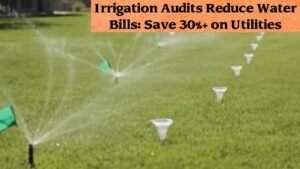
- Audit systems for leaks and overspray
- Track usage against your water budget
Smart controllers help, but audits catch the issues algorithms punish hardest.
Glossary of Enforcement Terms
- CCF (Centum Cubic Feet): Standard water billing unit
- Peak Demand: Periods of maximum system usage
- Cross-Connection: Unsafe link between potable and non-potable systems
These terms appear often in enforcement notices.
Conclusion: Check Your Data Before the City Does
Cities do not guess anymore. They benchmark, isolate, and flag using data science. AMI, weather intelligence, and predictive pricing transformed sprinkler enforcement into an automated system. The smartest move now is to log into your municipal water portal and review your own usage patterns before the next billing cycle decides the outcome for you.