Introduction: How to Protect Your Home and Wallet
When a geyser erupts in your front yard at 10:00 PM, panic sets in immediately. In these moments, your home’s equity, water supply, and safety are all vulnerable to predatory contractors. Emergency irrigation repairs are high-stakes, YMYL situations where every decision can have financial and structural consequences.
Understanding the anatomy of these scams, the technical signs of fraud, and the immediate steps you must take can prevent costly mistakes. This guide serves as your tactical manual, blending crisis triage with forensic-level inspection and consumer protection strategies.
Emergency Protocol: Stop the Leak Immediately
Before you worry about the cost, take control of the situation. The first 3–5 minutes are critical in preventing both water damage and financial exploitation.
- Locate the Backflow Preventer or Isolation Valve: Most systems have a green box or metal assembly near the meter. Turn the handles 90° to shut off irrigation flow.
- Confirm Main Water Shut-Off Functionality: If the water continues to pool, close the household main valve. Ensure your home retains potable water by checking faucets inside.
- Document the Scene: Take photos of the affected zones, valves, and any visible damage. This creates a visual record in case of disputes or insurance claims.
Pro Tip: Many systems have an Isolation Valve near the meter, allowing you to deactivate irrigation without shutting off the house. This removes the immediate panic and neutralizes the leverage scammers rely on.
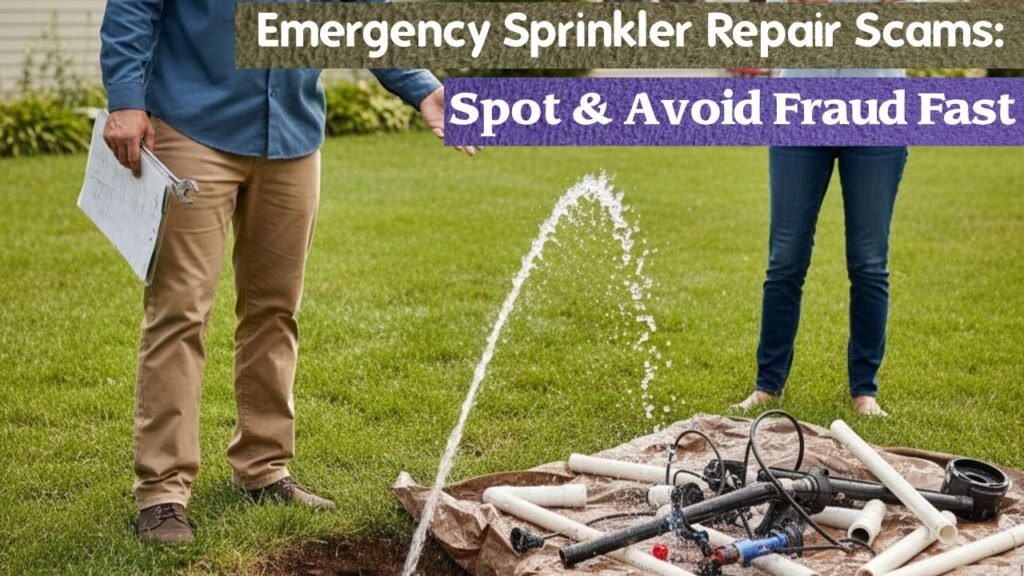
How to Spot a Sprinkler Repair Scam in Under 60 Seconds
In a crisis, rapid detection of red flags is essential. Imagine a technician arriving in your driveway: water pooling at your feet, tools unloaded, yet the contractor refuses to show a license or provide documentation. This is the critical moment where scams begin.
Check for instant red flags:
- Unmarked Vehicle vs. Branded Fleet: Professional emergency services invest in a commercial livery as a moving billboard for accountability. Personal cars without signage are suspicious.
- Cash-Only Demands: Avoid contractors insisting on Zelle, Venmo, or CashApp. Credit cards provide chargeback protection; untraceable payments leave you exposed.
- No License Verification: Demand the Licensed Irrigator (LI) card. A general contractor or landscaper license does not satisfy pressurized irrigation standards.
- No Physical Address or Digital Verification: Reputable companies provide GPS-based dispatch notifications with technician name and photo. If someone claims they “just happened to be in the neighborhood,” do not allow them on your property.
The Anatomy of a Solenoid Swap Fraud
One of the most common predatory tactics involves a contractor claiming a zone valve is “burnt out” when it is fully functional. A professional irrigation auditor will never guess; they use a Volt-Ohm Multimeter to verify electrical integrity. A healthy solenoid consistently reads 20–60 ohms.
If a technician cannot show a reading of “Infinite/Open” or “Zero/Short”, they are likely attempting a Solenoid Swap Fraud, padding invoices with unnecessary parts and labor. Insist on inspecting manufacturer boxes (Rain Bird, Hunter, Toro) and itemized documentation before approving replacement.
Pro Tip: Ask for a live demonstration of Ohmic resistance testing. A legitimate technician will walk you through the diagnostic process.
The Ghost Mainline Repair
Scammers may create the illusion of a major mainline failure by spraying water or dumping a bucket into a trench to simulate a leak. This often accompanies alarmist claims about foundation saturation, gas line proximity, or municipal code violations.
- Verify Physical Breach: Demand to see the actual compromised pipe.
- Hydrostatic Pressure Testing: Professionals assess static and dynamic PSI/GPM to determine whether the system’s hydraulic integrity is truly compromised.
- Legacy Systems Consideration: Some older brass valves or obsolete fittings may warrant higher quotes. Patching legacy parts is often a short-term fix that will fail again, leading to recurring costs.
Pro Tip: A fair quote includes a Diagnostic Discovery Phase or contingency clause for unforeseen underground issues, preventing “Scope Creep” and post-service price shocks.
Predatory After-Hours Pricing vs. Legitimate Emergency Fees
Emergency services often carry higher rates, but transparency distinguishes a professional from a predator. Standard after-hours or mobilization fees typically range $150–$250, but a legitimate firm clearly specifies if this fee is applied toward the repair.
- Fully Burdened Labor: Higher quotes often reflect the inclusion of Workers’ Compensation, continuing education, vehicle insurance, and technician training.
- Unexplained Premiums: Contractors demanding immediate cash payments with vague line items are attempting to exploit the homeowner’s stress.
Hydraulic Integrity and Component Verification
Proper irrigation repairs involve maintaining system hydraulics, not just fixing leaks. This includes:
- Pipe Diameter and Pressure Calculations: Downsizing to save money can create friction loss, weak spray coverage, and premature wear.
- Matched Precipitation Rates: Different nozzle types affect water distribution; mismatched designs lead to overwatering or dry spots.
- WaterSense and Pressure-Regulated Spray Bodies (PRS): High-efficiency nozzles save water and reduce municipal billing.
Pro Tip: Request hydraulic schematics or flow reports when evaluating quotes, especially for complex zone repairs.
Backflow Certification and Cross-Connection Control
Skipping backflow testing is both a health risk and a legal violation. Municipal water authorities require Annual Backflow Certification, typically performed by a certified tester.
- Missing certification can result in fines or contamination of potable water.
- Always ask for documented results before work begins, even during emergencies.
Pre-Work Documentation is Non-Negotiable
No legitimate technician begins excavation without a diagnostic work order. This document should detail:
- Base service fee
- Estimated hourly rate or flat rate repair cost
- Parts specification and model numbers
Pro Tip: Even in crisis mode, insist on a digital or carbon-copy estimate. This protects you from post-repair disputes and potential vicarious liability claims.
Post-Scam Recovery Steps
If a homeowner realizes they have been scammed, a strategic recovery plan is crucial:
- Contact Insurance and Producer: Verify coverage listed on the contractor’s Certificate of Insurance.
- File a State Board Complaint: Report the individual’s license number with the State Irrigation Board.
- Document All Work: Take high-resolution photos of any installations before hiring a second reputable firm.
Following this protocol strengthens your subrogation rights and ensures you can reclaim financial and structural losses efficiently.
Professional vs. Predator Comparison Table
| Feature | Professional Emergency Tech | Potential Scammer |
|---|---|---|
| Payment | Credit Card / Invoice | Cash, Zelle, Venmo |
| Identification | Branded Fleet, Uniform | Personal Vehicle, No Signage |
| Diagnostic | Explains Point of Failure | Vague, Scary Language |
| Estimate | Written / Digital | “I’ll let you know when done” |
| Tools | Multimeter, Wire Locator | Blind Digging |
| Warranty | Written 12–24 Months | Verbal / None |
Final Verdict: Take Control Before Panic
Water can be shut off indefinitely, and no emergency warrants immediate hiring of an unvetted contractor. By verifying licensing, digital dispatch, hydraulic integrity, and pre-work documentation, homeowners regain authority in crisis situations. Even under extreme stress, following a methodical inspection and triage protocol prevents fraud, safeguards property, and ensures compliance with municipal and insurance regulations.