How Irrigation Audits Reduce Water Bills: A Forensic Financial Approach
High water bills are rarely caused by overwatering alone. The main culprit is Non-Revenue Water (NRW)—gallons that pass through your meter and never reach the landscape. Overspray, low-head drainage, hydraulic imbalances, and scheduling errors convert potable water into pure financial loss. A professional irrigation audit treats this loss as recoverable OPEX, framing every wasted gallon as a capital expense that can be recovered through precise system optimization.
Distribution Uniformity and the Overwatering Tax
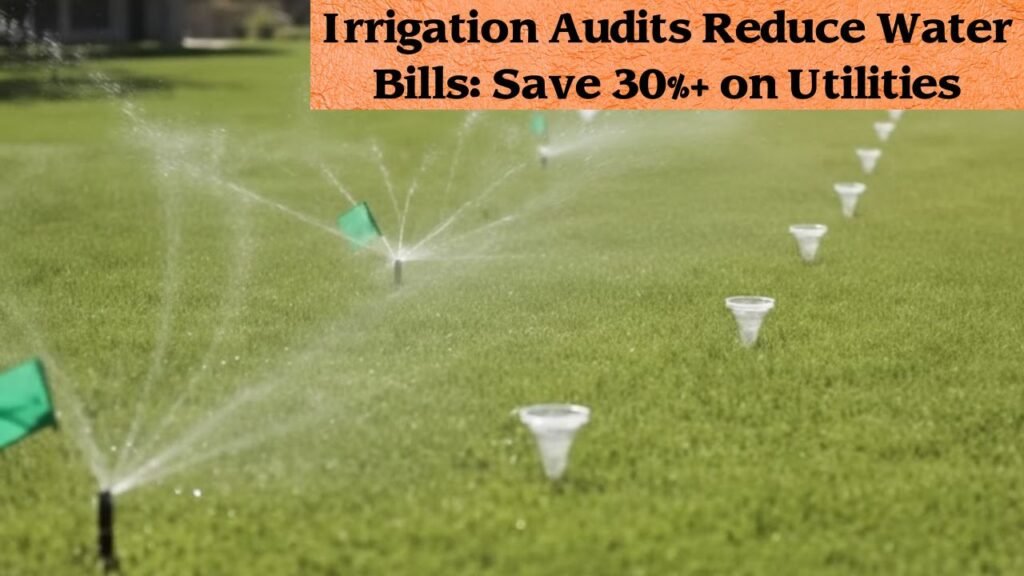
Distribution Uniformity (DU) measures how evenly water is applied across a zone. Low DU creates what auditors call The Overwatering Tax. For example, if a zone operates at 50% DU, the system must run twice as long to ensure dry areas receive enough water. This forces the meter to run at 200% capacity, inflating water and sewer bills.
Audit Benefits:
- Catch-can testing identifies the Scheduling Coefficient required to balance zones
- Corrects nozzle and pressure imbalances
- Reduces runtime and lowers monthly water bills by up to 30–40%
Forensic Leakage: Hydraulic vs Mechanical Failures
Visible leaks are only part of the story. Most water loss occurs through hydraulic inefficiencies hidden in the system. Impervious Surface Runoff and pressure imbalances cause significant financial waste while damaging turf.
Key Findings Audits Provide:
- Identify mechanical leaks (broken heads, solenoids)
- Measure hydraulic inefficiencies (uneven flow, overpressurized zones)
- Recommend targeted repairs to prevent unnecessary part replacement
Dynamic Pressure Loss and Hydraulic Rebound
Excessive pressure does more than create mist; it can damage your system. High pressure leads to atomization at the nozzle and triggers Hydraulic Rebound, stressing valves, fittings, and lateral lines. This accelerates asset depreciation and shortens the lifecycle of expensive components.
Audit Interventions:
- Map Dynamic PSI for every zone
- Install Pressure-Regulated Stems (PRS) and flow-control valves
- Reduce water loss while protecting infrastructure
Engineering Note: Systems operating above 45 PSI at the nozzle typically convert water into airborne mist, which is lost before it reaches the soil.
Evapotranspiration Accuracy and Requirement-Based Scheduling
Timer-based schedules often ignore actual landscape needs, resulting in inflated runtimes and unnecessary water loss. Audits use verified ET data to align irrigation schedules with plant requirements.
Benefits:
- Moves irrigation from schedule-based to requirement-based precision
- Improves landscape health
- Reduces unnecessary water consumption and utility costs
Low-Head Drainage: Recovering Silent Losses
Water left in lateral lines after a cycle often “pukes” out of the lowest head, wasting water and creating Subsurface Void Formation over time. Repeated cycles magnify this loss.
Audit Solutions:
- Identify low-head drainage points
- Install check valves to retain water in the lines
- Recover significant water volumes annually
Sewer Surcharge Arbitrage and Deduct Meters
Many municipalities calculate sewer fees based on total water usage. This means irrigation water artificially inflates sewer costs. Professional audits enable Sewer Surcharge Arbitrage by providing volumetric evidence for installing an irrigation deduct meter.
Financial Impact:
- Legally exclude irrigation from sewer billing
- Often reduce combined water and sewer bills by 40–60%
- Provides long-term ROI through measurable utility cost savings
The Forensic Audit Deliverables
A comprehensive audit always concludes with tangible documentation.
Deliverables Include:
- Catch-Can Data Sheets: Zone-by-zone DU metrics
- Dynamic PSI Maps: Pressure and Hydraulic Rebound analysis
- Requirement-Based Schedules: ET-informed irrigation calendars
- ROI Projection: Estimated payback time from utility savings
Conclusion: Why Audits Deliver ROI
Professional irrigation audits do more than conserve water—they directly protect your operating budget. By addressing Non-Revenue Water, The Overwatering Tax, hydraulic inefficiencies, and sewer surcharges, audits transform invisible waste into measurable savings. Every recovered gallon improves the Asset Lifecycle Index and protects the property from costly infrastructure failures. For property managers and HOAs, this is a clear pathway to predictable, optimized water costs.