Irrigation Planning for Multi-Family Properties: Maximize ROI & Reduce Water Loss
For multi-family assets, water waste is more than a utility expense—it is Irrigation-Induced NOI Leakage. Every dollar wasted in irrigation reduces your property’s Net Operating Income (NOI), impacting long-term valuation.
Professional Irrigation Planning for Multi-Family Properties transforms landscaping from a liability into a value-add infrastructure project. Aging lateral lines, patchwork controllers, and inefficient sprinklers silently erode NOI while increasing insurance and maintenance exposure.
The Asset Management Case: Protecting Cap Rates Through Hydraulic Efficiency
Irrigation is a strategic tool in property management, not just aesthetic improvement. Rising municipal water rates, high-density usage, and underperforming systems directly affect NOI and long-term asset valuation.
Key operational priorities include:
- Capital Expenditure Control (CAPEX): Prevent costly retrofits and emergency mainline repairs.
- Curb Appeal Sustainability: Maintain tenant satisfaction and occupancy rates.
- Hydraulic Efficiency: Optimize flow and pressure to prevent Dynamic Head Loss Mitigation and Solenoid Ohmic Resistance spikes.
Aligning irrigation with Evapotranspiration (ET) Coefficients and precise Hydro-Zones ensures long-term performance and compliance with ESG and sustainability standards.
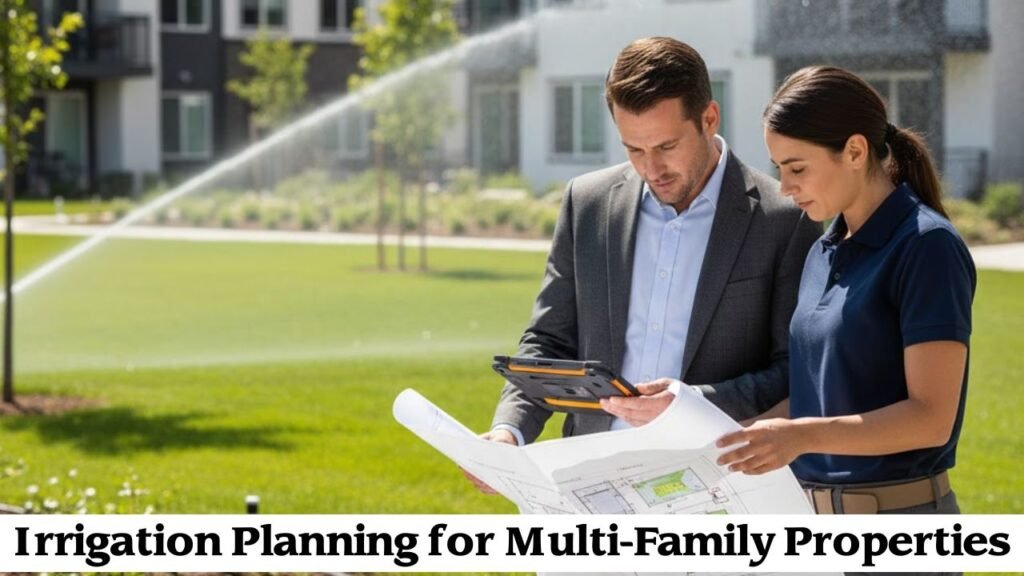
Centralized Control: Managing Legacy Systems & Frankensystems
Most multi-family sites are composed of Frankensystems—a mix of aging lateral lines, outdated controllers, and modern hardware that lack Hydraulic Synergy.
Professional strategies include:
- IoT Integration: Real-time soil moisture and weather-based irrigation adjustments.
- Cloud-Based Dashboards: One central control for multiple buildings.
- Legacy System Integration: Identify Systemic Obsolescence to ensure new IoT dashboards manage healthy infrastructure.
This centralized approach maintains consistency, reduces human error, and improves the Asset Lifecycle Index.
Non-Revenue Water (NRW): Detecting Ghost Leaks
Multi-family leaks rarely appear as geysers; they often manifest as Silent Runs—slow, low-velocity water losses at the Point of Connection (POC) or hairline fractures in the mainline loop.
Mitigation techniques:
- Ultrasonic Flow Sensing: Detect slow leaks before fiscal quarters of waste accumulate.
- Master Valve Actuation & Soft-Start Sequences: Reduce Hydraulic Stress on pipes.
- Critical Flow Velocity Calculations: Prevent water hammer and premature pipe fatigue.
Addressing NRW proactively protects the Asset Lifecycle Index and reduces water-related insurance exposure.
Zone Optimization: Managing High-Traffic Hydraulics & Liability
High-density properties face two major risks: water waste and legal exposure. Poor Distribution Uniformity (DU) leads to overspray and Biofilm/Algae growth, creating Algae-Based Slip Liability.
Best practices include:
- Hydro-Zoning: Group plants by water needs to avoid runoff and overwatering near foundations.
- Rotary Nozzles & Pressure-Regulated Spray Heads (PRS): Ensure precise coverage while preventing Impervious Surface Runoff Management issues.
- Subsurface Drip Irrigation: Reduces overspray and protects walking paths from hazards.
Improper irrigation near building envelopes can create Hydrostatic Surcharge, compromising vapor barriers and structural integrity.
Compliance & ESG: Tracking Performance & Sustainability
Modern multi-family properties require compliance with sustainability and reporting standards.
Implementation strategies:
- EPA WaterSense Benchmarks: Track water use efficiency across common areas.
- Submetering & RUBS: Separate tenant vs. landscape water, allowing accurate Metric-Based Cost Recovery.
- As-Built Mapping: Provides forensic evidence for the board and insurance claims.
Documentation protects owners from liability due to maintenance errors or external utility work.
5 Critical Components of a Multi-Family Irrigation Plan
- Hydraulic Assessment: Evaluate pressure, velocity, and pipe integrity across all zones.
- Smart Control System: Centralized CMS with predictive Evapotranspiration (ET) Modeling.
- Flow & Leak Sensors: Detect NRW, trigger Master Valve actuation, and manage Critical Flow Velocity.
- Hydro-Zone Optimization: Protect high-traffic areas, reduce overspray, and avoid foundation surcharge.
- Compliance Documentation: As-Built Maps, permit logs, and submeter data ensure forensic evidence during disputes.
Smart vs Traditional Irrigation Systems
| Feature | Traditional Apartment Irrigation | Professional Multi-Family Smart Plan |
|---|---|---|
| Control | On-site manual timers | Central Management System (CMS) |
| Leak Detection | Visual only | Real-time Flow Monitoring & Alerts |
| Scheduling | Fixed weekly schedule | Predictive Weather (ET) Modeling |
| Maintenance | Reactive | Predictive health checks |
| Labor Burden | High (Manual clock adjustments) | Minimal (Automated Alerts & Remote Tuning) |
| Water Savings | Minimal | 30–50% reduction first 18 months |
| Cost Recovery | Flat-rate (Estimated) | Metric-Based (Accurate RUBS/Submetering) |
ROI Calculation: Where Savings Come From
- Optimized Distribution Uniformity (DU) reduces overspray and waste.
- Reduced Personnel Man-Hours via centralized smart control.
- Early detection of leaks and hydraulic issues protects Backflow Assembly Lifecycle.
- Accurate submetering allows Metric-Based Cost Recovery and municipal sewer exemptions.
Strategic irrigation planning converts landscaping from a liability into a measurable asset value, enhancing Cap Rate performance.
FAQs
What is the ROI of a smart irrigation upgrade for multi-family properties?
ROI typically ranges 12–24 months, depending on property size, water rates, and existing infrastructure condition.
How can overspray create liability?
Overspray promotes Biofilm/Algae growth on sidewalks, creating slip-and-fall hazards. Hydro-Zoning and high-efficiency nozzles mitigate this risk.
Can submetering differentiate tenant vs. landscape water?
Yes, submetering allows precise Metric-Based Cost Recovery, protecting both tenants and owners.
What is the most important hardware for multi-family irrigation?
A Normally Closed (NC) Master Valve prevents mainline flooding and ensures critical Master Valve Fail-Safe operation.
Conclusion
Effective Irrigation Planning for Multi-Family Properties is more than watering landscapes—it’s a strategic asset management tool. By integrating Hydraulic Efficiency, smart controls, and Submetered Cost Recovery, property managers can reduce Irrigation-Induced NOI Leakage, mitigate liability, and enhance long-term property value.
A well-documented system, combined with proactive maintenance and As-Built Maps, protects both the investment and residents, turning irrigation from a hidden cost into a measurable value driver.