Preventive Maintenance That Reduces Emergency Sprinkler Repairs
Preventive maintenance that reduces emergency sprinkler repairs protects your system and saves money by identifying hydraulic and electrical weaknesses before failure. Homeowners should perform a 24-hour Meter Test, clean Nozzle Basket Filters, check solenoid Ohms, and gradually re-pressurize the system to prevent a Velocity Surge that can snap new joints—maximizing risk-adjusted ROI.
Sprinkler systems face constant Hydraulic Stress Points, and minor weaknesses can escalate into expensive mainline failures or foundation damage. Spending $150 on a preventive audit can save $1,500+ in emergency repairs. Proactive inspections of pressure, valves, solenoids, and lateral lines protect landscaping and household budgets.
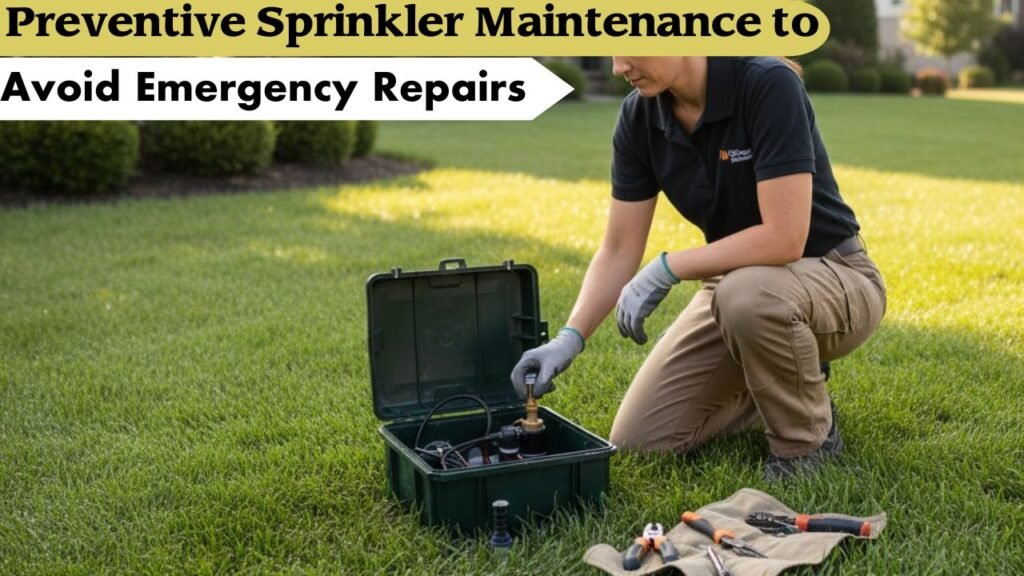
What is Proactive Irrigation Maintenance?
Proactive irrigation maintenance is a strategic service model identifying hydraulic and electrical weaknesses—like solenoid resistance fluctuations or valve diaphragm wear—before system-wide failure. Unlike reactive repairs, it focuses on Risk-Adjusted ROI, hardening the system against pressure spikes and environmental stress.
How Preventive Maintenance Reduces Emergency Sprinkler Repairs
Emergency repairs come with high premiums, especially during weekends or peak season. Preventive maintenance focuses on system stabilization to lower costs and extend equipment life.
Benefits:
- Detect hidden leaks before threatening foundations.
- Prevent Velocity Surge Protection events that stress PVC joints.
- Maintain Distribution Uniformity (DU) and matched precipitation rates (MPR).
Entities: Schedule 40 PVC, Dynamic Pressure, DU, PRS Heads
Master Valves: Your First Line of Defense Against Flooding
The Master Valve serves as secondary containment, keeping the mainline depressurized when idle and reducing cumulative stress on PVC joints by 95%.
Why it matters:
- Provides a Normally Closed (NC) Fail-safe to prevent catastrophic mainline leaks.
- Protects downstream zone valves from prolonged static pressure.
- Reduces emergency service costs by hundreds of dollars per incident.
Hydraulic Hierarchy: Mainline vs. Lateral Lines
Preventive maintenance targets 70% of effort on the mainline since emergencies here are property-threatening.
- Mainline leaks: Expensive, disruptive, and dangerous.
- Lateral line leaks: Minor but should be corrected to prevent puddling or turf damage.
Pressure Management: PRS Heads and Regulators
High water pressure accelerates wear on lateral lines and heads. Installing PRS heads reduces stress and prevents misting-related damage.
- Slowly open the main shut-off valve during the first cycle to avoid Velocity Surge Protection.
- Water is a Non-Compressible Fluid, so sudden surges create destructive forces against PVC joints.
- Match MPR across all heads for consistent coverage.
Seasonal Audits: Spring, Summer, and Fall
Preventive audits detect issues before they escalate.
Spring Startup:
- Inspect Backflow Preventer Assembly (BPA) seals.
- Flush lines after winter.
Mid-Summer:
- Adjust ET rates to prevent pump burnout.
- Test solenoid Ohms; 10–15 Ohms is a “silent killer” that may overdraw current and damage the controller.
Fall Blowout:
- Schedule when night-time lows hit 37°F (3°C) to protect lines before freezing.
- Use commercial-grade CFM to prevent freeze-expansion cracks.
Entities: Cross-Connection Control, EPA WaterSense, CFM
How Flow Sensors Pay for Themselves by Stopping Emergency Floods
Smart technology prevents costly incidents:
- Flow sensors detect high-flow conditions and shut off the system automatically.
- Cloud-connected controllers alert homeowners to mainline leaks or stuck-open zones.
- Reduces foundation flooding and emergency service costs.
Keywords: Leak detection, remote shut-off, SaaS monitoring
Why Cleaning Your Valve Box Prevents $400 Electrical Failures
Maintaining hardware prevents emergencies:
- Remove mud, roots, and debris from valve boxes to prevent solenoid corrosion.
- Perform Root Pruning to reduce Fulcrum Stress, where roots lift pipes as they grow.
- Verify solenoid continuity with a multimeter.
Insider Tip: Solenoid readings of 10–15 Ohms are dangerous and may melt your controller transformer over time.
Compaction & Grading: Preventing Low Head Drainage
Poor soil compaction causes Low Head Drainage, leading to turf rot and destabilized heads.
Pro-Tip: Conduct a Dry Line Test before the first run. Soil that remains dry but forms a soft spot after irrigation indicates a pinhole leak requiring immediate attention.
10-Point Preventive Audit Checklist
- Master Valve Function – Ensure NC fail-safe works.
- PRS Head Inspection – Confirm proper installation and spray coverage.
- Valve Diaphragm Test – Detect leaks or stuck-open zones.
- Water Meter Check – Identify silent leaks via low flow indicator.
- Solenoid Continuity – Monitor Ohms for potential failures.
- Backflow Preventer Inspection – Maintain BPA integrity.
- Nozzle Basket Cleaning – Remove PVC burrs and solvent strings.
- Valve Box & Wiring – Inspect for corrosion, prune roots.
- Pressure Calibration – Ensure Dynamic Pressure matches MPR.
- Inspection Certificate & Utility Bill Credit – Ensure your maintenance technician provides a signed certificate. Many US water providers offer leak adjustments if you can prove the system was professionally audited and optimized for EPA WaterSense standards.
Pro-Tip: Keep a service log including Static PSI, zone amp draws, and BPA results for documentation and ROI validation.
Emergency vs. Preventive Maintenance: Cost Comparison
| Potential Emergency | Preventive Fix | Estimated Savings |
|---|---|---|
| Mainline Burst | Master Valve & PRS Installation | $500 – $1,500 |
| Foundation Flood | Valve Diaphragm & Low Head Audit | $2,000+ |
| Freeze Crack | Professional Blowout | $400 – $800 |
| Burned Controller | Waterproof Connectors & Solenoid Check | $250 – $450 |
FAQ
How can I stop my sprinkler system from leaking in an emergency?
Routine preventive maintenance detects leaks before they escalate.
Is a sprinkler maintenance plan worth it?
Yes. Preventive audits save thousands in emergency repairs.
What causes most sprinkler system emergencies?
High water pressure, unpruned roots, low-head drainage, and solenoid failure.
How long should I monitor a system after preventive maintenance?
Perform a 7-day audit for pressure, valve, and solenoid stability.
Does homeowners insurance cover sprinkler emergencies?
Usually no. Most policies exclude gradual seepage or lack of maintenance. Documented preventive audits may help if a sudden pipe burst causes structural damage.
Final Verdict:
Preventive maintenance is financial and hydraulic insurance. By installing PRS heads, inspecting valves and solenoids, pruning roots, and conducting seasonal audits with Temperature Triggers, homeowners avoid emergencies, protect property, and maximize Risk-Adjusted ROI. Proper documentation ensures accountability and proof for utility credits.