7 Seasonal Sprinkler Services Homeowners Often Forget
Imagine a homeowner opening the mailbox to find a shocking $1,500 water bill. Stepping onto the lawn reveals a brown patch where the sprinkler heads failed to deliver water uniformly.
A simple 5-minute oversight during seasonal maintenance—rotor arc adjustment—caused a Distribution Uniformity (DU) failure, uneven watering, and overcompensation elsewhere.
Sprinkler systems are not mere appliances; they are complex hydraulic networks subject to hydrostatic stress, capillary action, and soil dynamics. Addressing these issues with precise, technically informed maintenance saves money, protects turfgrass, and avoids emergency repairs.
Spring Awakening: Aligning Your Rotors
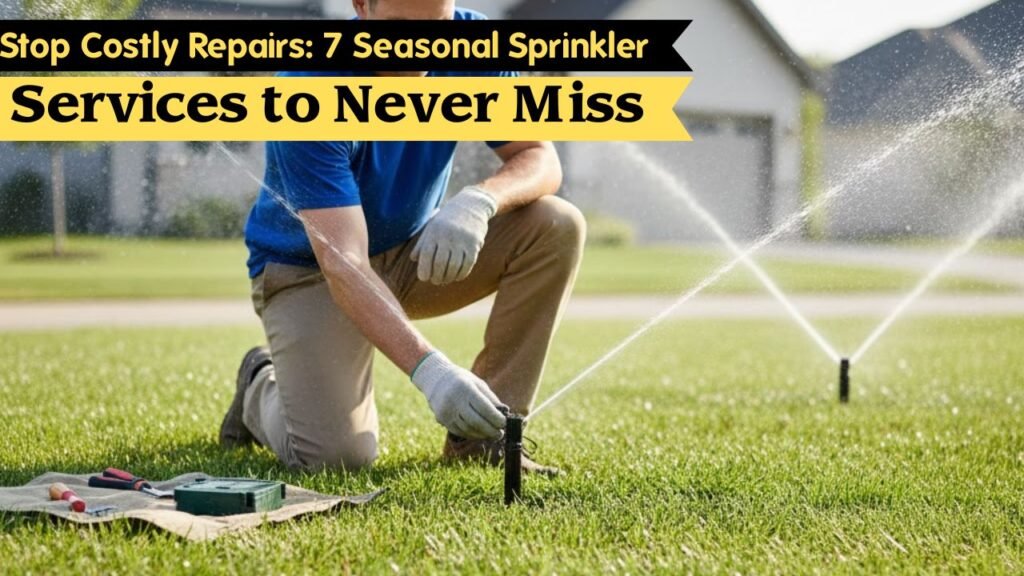
Over winter, soil movement and frost can misalign rotor heads like the Hunter PGP or Rain Bird 5000. Mechanical creep occurs as the internal gear torque shifts the left or right stops, changing spray arcs.
Misalignment reduces DU, leaving some areas overwatered and others dry. Homeowners should manually rotate each turret before running the first full cycle, confirming head-to-head coverage and preventing overspray onto hardscapes or sidewalks.
Key Tips for Spring:
- Verify the arc stops on each rotor.
- Adjust height for hardscape clearance.
- Flush lines briefly to remove winter sediment.
Mid-Summer Heat Stress: Nozzle Care & Efficiency
High summer temperatures increase evapotranspiration (ET) rates, stressing the irrigation system and turf. Mineral deposits slowly erode plastic nozzle orifices, widening the flow path, reducing PSI, and lowering DU. Dry patches often prompt homeowners to overwater, causing further inefficiency.
Pro Maintenance Tips:
- Inspect nozzles for wear and erosion; replace every 5 years.
- Consider high-efficiency rotary nozzles for hot spots.
- Adjust watering schedules to the 2:00–6:00 AM window to minimize ET losses.
Fall Pre-Winterization: Sensors, Valves, and Drains
Hygroscopic Disc Lifecycle
Rain sensors use hygroscopic discs that expand when wet. Over 3–5 years, discs degrade. Test by pressing the plunger; a mushy or unresponsive click indicates replacement is necessary. Failing sensors can trigger overwatering, leading to fungal diseases like Large Patch.
Lateral Line Drainage
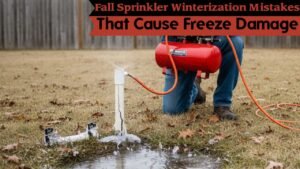
Manual drain valves at low points may seize due to mineral buildup. Cycle these valves annually to ensure free flow and prevent pipe freeze damage in winter.
Valve Box Chemistry
Valve boxes trap humidity, causing copper oxidation. Look for green patina on wires. Use grease-filled waterproof DBY connectors to maintain conductivity and avoid intermittent zone failure.
Electrical Triage: Solenoids & Controllers
Heat increases electrical resistance in copper wires, straining solenoids. Measure resistance with an Ohm meter: Rain Bird solenoids usually read 20–30 Ohms, Hunter slightly higher.
Solenoid Diagnosis:
- Humming valve: stuck plunger or debris
- Silent valve: electrical break in solenoid or wiring
Controller Tips:
- If hot to touch, leave door open and circulate air with a fan.
- Inspect 9V battery; a faded display or reset clock signals corrosion or replacement need.
Hydraulic Window: Timing Watering for Maximum Efficiency
Municipal systems experience peak demand 5:00–8:00 AM, reducing static pressure and causing heads not to pop. Watering at 2:00 AM maximizes pressure, coverage, and capillary action for deeper root hydration.
Pressure Tips:
- High static PSI: misting and evaporation → consider PRS heads
- Low dynamic PSI: heads won’t pop → check valve pressure
- Keep a simple hose bib pressure gauge on hand; below 30 PSI at the bib indicates inefficiency.
Master vs Zone Valve Weeping
A leaking Master Valve affects the entire system; a leaking Zone Valve impacts a single area. Check your water meter when the system is off; a spinning low-flow dial indicates a major leak. Inspect diaphragms, solenoids, and wire nuts. Corroded wires increase resistance and can burn out controller stations.
Pro Tip: Use waterproof DBY connectors to prevent copper oxidation in humid valve boxes.
Maintenance vs. Replacement Cost Matrix
| Task | Frequency | Cost of Action | Cost of Ignoring |
| Rotor Arc Adjustment | Annually | $0–$10 | $1,500+ repair & wasted water |
| Nozzle Replacement | Every 5 Years | $10–$20 per nozzle | Reduced DU, dry spots |
| Hygroscopic Disc | 3–5 Years | $20–$50 | Overwatering, fungal disease |
| Manual Drain Valve | Annually | $0 | Frozen pipes, blowouts |
| Wire Nut Inspection | Annually | $0–$10 | Intermittent zone failure |
| PRS Upgrade | As Needed | $30–$50 per head | Misting/fog, inefficient irrigation |
7-Step Professional Audit Checklist
- Flush Each Zone: Remove the last head to eliminate sediment.
- Adjust Rotor Arcs: Correct mechanical creep for proper DU.
- Clean & Test Rain Sensors: Ensure hygroscopic discs are responsive.
- Inspect Valve Boxes: Check diaphragms, solenoids, and wire corrosion.
- Check Pressure: Monitor static and dynamic PSI; upgrade to PRS if necessary.
- Trim & Elevate Heads: Ensure clearance above grass and hardscape.
- Recalibrate Controller: Adjust Seasonal Adjust % according to local ET rates.
Final Takeaway
Seasonal sprinkler maintenance is critical to prevent water waste, turf damage, and costly repairs. Understanding rotor mechanics, valve chemistry, hydraulic timing, and pressure dynamics ensures your system runs efficiently year-round. Regular audits and proactive maintenance protect your landscape and your wallet.