Water bills keep climbing, but most sprinkler systems still run like it’s 2005. Fixed schedules. Manual seasonal changes. Lots of guessing. That’s exactly why smart irrigation systems are taking over. Straight answer first: A smart irrigation system uses Evapotranspiration (ET), hyper-local weather intelligence, and soil data to water only when plants actually need it. By replacing guesswork with data, most households cut outdoor water waste by 20–40%, often recovering the upfront cost in a single season. This guide explains how smart irrigation works, how easy it is to set up, and whether the savings are real or just marketing talk.
What Is a Smart Irrigation System, Really?
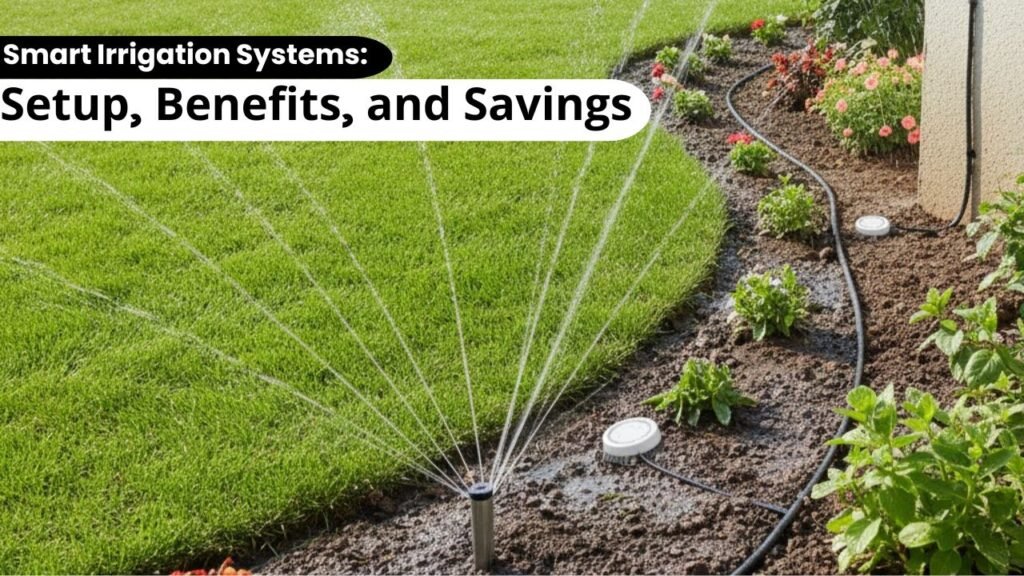
A smart irrigation system replaces an old timer with a Wi-Fi–connected smart controller. Instead of watering on fixed days, the system adjusts automatically based on conditions. It looks at:
- Temperature
- Rainfall
- Wind
- Solar radiation
- Soil conditions
The key metric is Evapotranspiration (ET). ET measures how much water plants lose through evaporation and transpiration. Smart irrigation replaces only the water that was actually lost, not a drop more. That’s the efficiency advantage.
How Smart Irrigation “Thinks”
Smart systems rely on Predictive Watering, not reaction. Instead of watering first and hoping rain doesn’t come later, the controller checks conditions ahead of time. If rain is forecast, the cycle skips. If a heat spike or strong sun exposure is expected, it adds a short soak.
Hyper-Local Weather Intelligence
This is where modern systems shine. Smart controllers pull data from:
- Nearby personal weather stations (PWS)
- Satellite models
- Local forecast grids
They also factor in solar radiation, which measures sun intensity. An 80°F lawn in full sun loses far more moisture than an 80°F lawn in shade. Smart systems know the difference. Old timers don’t. This consistency improves plant health, reduces stress cycles, and builds deeper root systems over time.
What Is a WaterSense Certified Controller?
An EPA WaterSense certified controller is a smart irrigation device independently tested to meet strict efficiency and performance standards. These controllers must automatically adjust watering schedules using weather and soil data and are proven to save at least 20% more water than traditional timers. Before buying, always verify certification using the EPA WaterSense Product Search Tool. This official database confirms which models qualify for rebates and efficiency programs. If it’s not listed, incentives usually don’t apply.
The Three Pillars of Smart Irrigation Setup
The Smart Controller
Most smart controllers are designed for retrofit installation. You keep your valves, pipes, and sprinkler heads. What you need:
- A smartphone
- Internet access
- 2.4GHz Wi-Fi
Important detail many people miss:
Most controllers do not support 5GHz Wi-Fi. They use 2.4GHz because it travels farther and penetrates walls better, especially when installed in garages or basements.
Sensors (The Feedback Loop)
Optional, but powerful. Common add-ons include:
- Rain sensors
- Soil moisture sensors
- Freeze sensors
Weather data predicts. Sensors confirm. Together, they tighten accuracy.
Flow Meter (The Safety Net)
A smart Flow Meter turns irrigation into a protection system. This enables Catastrophic Leak Detection. If a valve sticks open or a mainline cracks, the system shuts water off automatically and sends a push alert. It doesn’t just save water. It acts like insurance against a $2,000 surprise water bill while you’re away.
Installation & Retrofitting: What Setup Actually Looks Like
Most upgrades take under an hour.
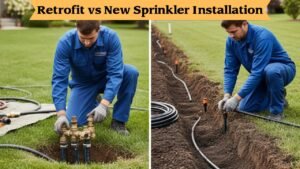
Basic Retrofit Steps
- Take a clear photo of the old wiring
- Disconnect wires from the old terminal strip
- Label the Common wire (usually white)
- Identify the Master Valve wire (often marked P/MV or M)
- Mount the new controller
- Reconnect zone, common, and master valve wires
- Power up and complete app setup
That master valve step matters. If it’s not configured correctly, zones may run but no water comes out. It’s a common DIY hiccup.
Zone Calibration: Where Real Efficiency Is Locked In
During setup, the app asks about:
- Soil type (Clay, Loam, Sand)
- Plant type
- Sun exposure
- Slope
This data helps calculate the soil’s Infiltration Rate (also called Intake Rate). Heavy clay absorbs water slowly. Smart systems respond with cycle and soak, breaking watering into short intervals to prevent runoff. For accuracy, it’s smart to consult your local University Cooperative Extension Office. They can help identify exact soil textures, which improves calibration and savings.
Power, Connectivity, and Reliability
Smart controllers use non-volatile memory.
That means:
- Zone names stay saved
- Schedules are preserved
- Settings survive power outages
When power returns, everything resumes automatically. No backup battery juggling like older timers.
The Math of Savings (Why ROI Is Real)
Here’s a realistic example.
- Summer water bill: $150/month
- Average smart irrigation savings: 30%
- Monthly reduction: $45
A $180 controller pays for itself in one season.
Why Tiered Pricing Makes Savings Bigger
Most utilities use Tiered Water Pricing. The more water you use, the more expensive each gallon becomes. Pro tip: In some municipalities, dropping from Tier 2 back to Tier 1 can reduce your per-gallon cost by up to 40%, making the hidden ROI of smart irrigation even higher. Smart systems help you stay in lower tiers by avoiding unnecessary overwatering.
Standard Timer vs. Smart Irrigation Controller
| Feature | Standard Timer | Smart Controller |
|---|---|---|
| Schedule Changes | Manual (often forgotten) | Automatic (ET-based) |
| Data Source | None / Rain Sensor | Hyper-local Weather + ET |
| Seasonal Adjustment | Manual | Automatic (solar + ET) |
| Water Waste | High | Minimal |
| Remote Access | None | App-based |
| Leak Detection | None | Flow Meter Alerts |
The difference is control, not convenience.
Does a smart irrigation controller require a monthly subscription?
Most major brands do not charge for basic weather-based features. Optional premium tools may exist, but core functions are usually free.
Will smart irrigation work with my existing solenoid valves?
Yes. Smart controllers are designed to operate standard solenoid valves found in traditional systems.
What happens if the Wi-Fi goes out?
The controller continues running the last saved schedule until connectivity returns.
Can I control my sprinkler system while I’m away from home?
Yes. Because the controller connects to Wi-Fi, you can start, stop, or adjust zones from anywhere using your smartphone app.
Is smart irrigation worth it for smaller yards?
Yes. Even small yards benefit from avoiding tiered pricing penalties and overwatering
Final Thoughts
Smart irrigation systems aren’t gadgets. They’re control upgrades. They replace guessing with data. They protect lawns, plumbing, and budgets at the same time. Once installed, they quietly work in the background. Less waste. Better turf. Lower bills. And far fewer surprises. That’s why most homeowners upgrade once—and never go back.