Introduction: Sprinkler Company for Rental Properties
Choosing a sprinkler company for rental properties requires prioritizing Remote Shut-off Capability, Backflow Certification Filing, and preventative maintenance contracts. Look for providers offering Smart Controller installation, flow sensing, Master Valve integration, and automated service documentation. These elements protect your assets, reduce tenant disputes, and maintain Capital Expenditure (CapEx) Protection.
The Landlord’s Irrigation Dilemma
A tenant accidentally runs over a sprinkler head with a mower and doesn’t report it. Within days, a broken lateral line floods the backyard, causing a soggy foundation corner. The resulting repair could cost $10,000–$20,000. For rental property owners, irrigation isn’t just about curb appeal—it’s about Asset Preservation and Risk-Adjusted ROI.
Landlords need to focus on Total Cost of Ownership over initial installation costs. Unlike homeowners, rental property managers prioritize liability mitigation, tenant-proof design, and remote accessibility.
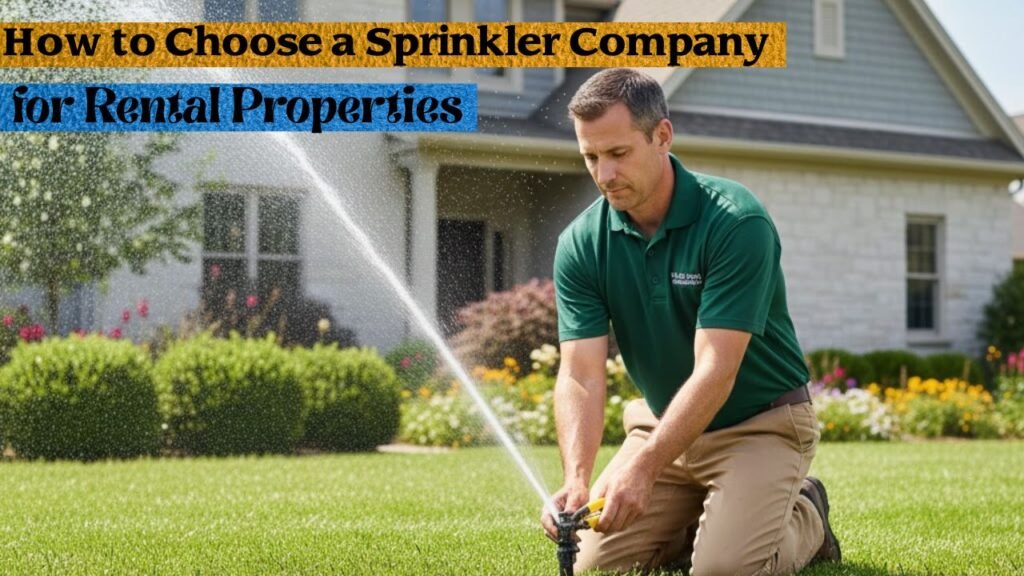
Technology Requirements: Remote Management & Multi-Site Control
Rental properties require technology for oversight across multiple sites.
Smart Controllers: Rachio or Hunter Hydrawise enables landlords to adjust schedules remotely, track water usage, and automate rain delays.
Multi-Site Dashboarding: Platforms like Hunter Hydrawise Contractor Portal or Rachio Shared Access allow landlords to monitor 5–10 properties from a single dashboard.
Scenario: A landlord in New York manages a property in Dallas. At 2:00 AM, their Hunter Hydrawise dashboard sends a High Flow Alert. The landlord remotely shuts down the Master Valve, preventing a $500 water bill before the tenant even wakes up.
Flow Sensors: Detect leaks or broken heads before tenants notice issues, protecting Foundation Subsidence and avoiding costly insurance claims.
Liability & Legal Compliance: Documented Protection
Backflow Testing: Ensures compliance with Cross-Connection Control and BPA regulations. Most US municipalities require annual filing. Franchises often automate this; local pros may provide paper reports.
The Paper Trail: Protecting Your Insurance Claims: Dated service reports, photos, and PDFs prove the system was maintained to code if a tenant sues for slip-and-fall incidents.
Insurance Coverage: Hire licensed irrigators with General Liability and Workers’ Comp. This safeguards landlords from tenant claims and municipal fines.
The Master Valve: Primary Safety Entity
A Master Valve acts as a fail-safe for the entire mainline. If a tenant damages a head and the zone valve fails, the Master Valve shuts off the water, preventing flooding and foundation damage. For rental properties, this is essential for CapEx Protection and Risk-Adjusted ROI.
Tenant-Proof System Design: Durable Hardware
Rental irrigation systems must be resilient and compliant:
- Heavy-Duty Components: Schedule 40 PVC, PRS/SAM heads, and commercial-grade rotors like Hunter I-20 with Automatic Arc Return.
- Locked Controller Covers: Prevent tenant tampering.
- Hydrozoning: Accommodates overgrowth or partial mowing, protecting pumps.
- Purple Pipe Compliance: In states like California and Arizona, reclaimed water systems must have Purple Pipe identifiers. Missing these can result in municipal fines.
- Lease Agreement Integration: Attach a “Tenant Irrigation Use Guide” specifying leak reporting within 24 hours.
Pro-Tip: Using commercial-grade components reduces maintenance and protects Foundation Subsidence Mitigation.
Service Model: Maintenance Contracts vs. On-Call
Annual contracts are ideal:
- Spring startup and winterization
- Master Valve testing and flow/solenoid diagnostics
- Digital PDF service reports
- Multi-property oversight
Pro-Tip: Maintenance logs support Asset Preservation and are critical for insurance documentation.
Solving the “Who Pays for the Water?” Dispute
Landlords can prevent tenant billing conflicts using Estimated Usage Reports. When a tenant complains about high water bills, landlords can show the actual irrigation consumption, separating irrigation usage from tenant behavior.
Strategic Differences: Residential Maintenance vs. Rental Asset Management
| Feature | Standard Homeowner Service | Rental Property Service |
|---|---|---|
| Control | On-site manual adjustments | Remote / Cloud-Based Access |
| Priority | Curb appeal / aesthetics | Asset Preservation / Risk-Adjusted ROI |
| Reporting | Verbal updates | Digital PDFs with photos |
| Components | Retail grade | Tenant-Proof / PRS/SAM / Purple Pipe compliant |
| Scheduling | Customer-initiated | Automated Maintenance Contract |
| Safety | Zone valve only | Master Valve fail-safe |
| Multi-Site | Single property | Multi-Site Dashboarding |
7 Things to Ask an Irrigation Company Before Hiring for Your Rental
- Are you licensed and insured for multi-family or commercial properties?
- Do you offer Smart Controller installation and Remote Shut-off Capability?
- Can you provide automated maintenance reports for my records (Backflow Certification Filing) and Master Valve tests?
- Do you use tenant-proof hardware, including commercial-grade rotors, PRS/SAM heads, and purple pipe compliance?
- Is a Master Valve installed for emergency shutdown?
- Do you offer multi-site management if I own multiple properties?
- Can you provide a standard “Tenant Irrigation Use Guide” for lease integration?
The Landlord’s Annual Irrigation Compliance Calendar
- March/April: Spring Startup & Backflow (BPA) Testing
- July: Mid-summer Flow Stress Test and nozzle alignment
- October/November: Professional Blowout (Winterization) & Controller Shutdown
- Year-Round: Monthly remote flow-report reviews
FAQ Section
Who is responsible for sprinkler repairs: landlord or tenant?
Landlords hold responsibility; tenants must report damage promptly.
Should I get a smart sprinkler controller for my rental property?
Yes. Smart controllers provide remote monitoring, automated alerts, and multi-property management.
Can I write off irrigation repairs as a business expense?
Yes, typically 100% deductible as operating expenses.
Does the irrigation company need to coordinate with tenants?
No. Professional companies use a No-Contact model, sending reports to the landlord.
Why are annual maintenance contracts worth it?
They prevent costly repairs, maintain compliance, and track water usage across multiple properties.
Final Verdict: Maximizing Risk-Adjusted ROI
For rental properties, the best sprinkler companies deliver tenant-proof hardware, Smart Controller integration, Master Valve protection, and automated reporting. Annual maintenance contracts and compliance documentation protect against flooding, foundation damage, and utility spikes. Focusing on Risk-Adjusted ROI ensures the landlord’s investment is preserved, and tenant disputes are minimized.