How Often Homeowners Should Schedule Sprinkler Inspections
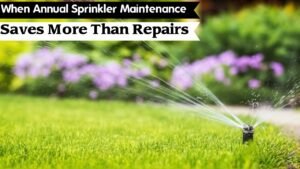
Most homeowners should schedule a professional sprinkler inspection at least twice per year: once in the Spring for startup and once in the Fall for winterization. Older systems or properties in high-heat regions may require additional mid-season checks to maintain peak efficiency, distribution uniformity, and prevent costly water loss.
Why Timing is Everything
Sprinkler systems often hide leaks and inefficiencies that silently inflate water bills. Misaligned nozzles, failing solenoids, or uneven coverage may go unnoticed, creating dry patches, soggy areas, or even foundation issues. Strategic inspections catch problems early, maintain curb appeal, and comply with municipal water efficiency regulations like EPA WaterSense.

The Twice-A-Year Gold Standard
Spring Startup: The System Audit
A licensed technician will:
- Backflow Preventer Assembly (BPA) Integrity – Ensure cross-connection control compliance. Professional inspections include municipal filing of test results with your local water purveyor.
- Inspect nozzle alignment, head-to-head coverage, and Master Valve operation.
- Check PRS heads, rotors, and system hydraulics.
- Conduct a Catch Can Test to measure Distribution Uniformity (DU). A pro-grade system should achieve DU ≥ 0.70, whereas most uninspected residential systems hover near 0.40.
- Program controllers for seasonal changes and utility restrictions.
Fall Blowout: Winterization & Protection
Fall inspections prevent freeze damage and pipe bursts:
- Commercial-grade air volume (50–100 CFM) is required to clear low-head drainage and prevent ice-expansion bursts.
- Inspect solenoids, lateral lines, and PVC for micro-cracks.
- Adjust controllers for off-season settings.
- Verify Master Valve and Backflow assembly seals.
Cost vs. Value: A $150 inspection can prevent foundation repairs exceeding $2,000, offering immediate Water Budgeting benefits.
Do I Need More Frequent Sprinkler Checks in Florida or Texas?
Southern and high-ET regions benefit from more frequent inspections:
- Quarterly inspections keep systems calibrated during peak heat.
- Smart Controllers like Rachio or Hunter Hydrawise allow remote monitoring, multi-site dashboarding, and alerts.
- Flow sensors detect broken heads or leaks before turf damage occurs.
- Scenario: A homeowner in New York manages a property in Dallas. At 2:00 AM, the Hydrawise dashboard reports high flow. They remotely shut the Master Valve, preventing a $500 water bill before the tenant even wakes.
System Age: The Rule of Three
| Tier | System Age | Key Technical Failure Points | Recommended Frequency |
|---|---|---|---|
| Tier 1 | 0–5 years | Settlement Adjustments (heads sinking as soil settles) | 2x/year |
| Tier 2 | 5–12 years | Seal Degradation, Root Intrusion | 2–3x/year |
| Tier 3 | 12+ years | Polyethylene/PVC Fatigue (pipe embrittlement) | 3–4x/year |
Older systems face mechanical stress, root penetration, and seal failure, justifying more frequent audits to maintain Matched Precipitation Rates (MPR) and system efficiency.
Hydraulic Justification: Pressure Matters
Municipal water pressure can fluctuate. Pressures above 80 PSI cause misting and inefficient coverage. Inspections ensure Dynamic Pressure is safe and PRS heads are properly calibrated. Maintaining pressure regulation extends component life, protects turf, and optimizes water use.
Event-Based Inspections: When the Calendar Doesn’t Matter
Schedule off-cycle inspections after:
- Landscaping or trenching projects (risk of nicked lines)
- Record-breaking heatwaves (adjust ET settings)
- Hearing “hammering” in pipes (Water Hammer diagnostics)
Catch Can Test: Step-by-Step
- Place 12+ catch containers evenly across each zone.
- Run the zone for a set period.
- Measure collected water and identify the lower quartile.
- Calculate Scheduling Coefficient for proper runtime adjustments.
- Ensure Distribution Uniformity (DU) ≥ 0.70 for pro-grade coverage.
This prevents uneven watering, reduces runoff, and saves 15–20% in water usage annually.
Signs Your Sprinkler System Needs an Inspection Before the Scheduled Date
- Dry or soggy patches
- Spiking water bills without visible leaks
- Low nozzle pressure or irregular spray patterns
- Smart controller or flow sensor alerts
- Freeze or storm damage
Strategic Differences: Residential Maintenance vs. Large-Scale Planning
| Homeowner Profile | Recommended Frequency | Primary Focus |
|---|---|---|
| New Homeowner | 2x/year | Warranty compliance & controller programming |
| Acreage / Large Estate | 3x–4x/year | Mainline integrity & zone efficiency |
| Southern / Desert Climate | Quarterly | ET adjustment & nozzle clogging |
| Northern / Freeze Climate | 2x/year | Winterization & pressure calibration |
Professional Sprinkler Inspection Checklist: What the Pros Check
- BPA and Master Valve integrity
- Zone-by-zone nozzle alignment
- PRS heads and rotor condition
- Catch Can Test for Distribution Uniformity (DU)
- Controller programming and seasonal adjustments
- Leak detection and lateral line integrity
- Flow sensors and dynamic pressure monitoring
- Root intrusion and lateral line stress assessment
FAQ
Q: Is a yearly sprinkler inspection worth it?
Yes, inspections prevent leaks and structural damage while optimizing water use.
Q: How often should I check my sprinkler backflow preventer?
Annually, and professional inspections typically handle municipal filing.
Q: When is the best time for a sprinkler startup in the US?
Spring, before the growing season, to calibrate heads, pressure, and controllers.
Q: Will a professional inspection pay for itself?
Yes. Ensuring Matched Precipitation Rates (MPR) reduces runtime 15–20%, covering costs in one season.
Q: How do I know if my old system needs extra checks?
Tier 2 and 3 systems require more frequent inspections for seal degradation, root intrusion, and pipe fatigue.
Final Verdict:
Professional sprinkler inspections, performed at least twice per year with strategic mid-season checks for older or Southern systems, align your landscape with professional Water Budgeting standards. These inspections maintain Distribution Uniformity, detect hidden failures, and prevent expensive repairs.