Introduction – The Sticker Shock Every Homeowner Hates
You call your irrigation contractor because a Solenoid Valve failed. You remember signing a “5-year warranty” agreement. Hours later, the technician leaves—and you’re handed a $125 bill for a $10 part. Your first thought: “I thought this was covered?”
This is the reality for many homeowners. Most people assume a manufacturer’s parts warranty automatically covers labor. It doesn’t. Understanding the difference between parts, labor, and the Trip Charge is essential to avoid surprise bills, protect your home’s irrigation investment, and know exactly what “full protection” actually means.
To make it simple, here’s a Warranty Blueprint right upfront:
| Warranty Component | Manufacturer (Parts) | Professional Contractor (Labor) |
|---|---|---|
| Duration | 2–5 Years | 12–24 Months |
| Covers | Factory defects, cracked manifolds, solenoid failure | Improper glue, cross-threading, leaking joints, misaligned rotors |
| Excludes | Labor, shipping, mower damage, freeze damage | Clogged nozzles, lightning, freezing, third-party alterations |
| Verification | Manufacturer Date Code stamped on part | Original service invoice / Work Order |
| Transferability | Usually non-transferable | May transfer to subsequent owners if contractor approves |
| Trip Charge | N/A | Applies unless “Full Warranty” purchased |
Even with top-tier manufacturers like Hunter Industries or Rain Bird, homeowners are frequently surprised by a Trip Charge or labor fee. This post explains exactly how sprinkler warranties work, how parts and labor interlock, and how to execute a proper warranty audit to avoid costly mistakes.
What is the Difference Between a Sprinkler Parts Warranty and a Labor Warranty?
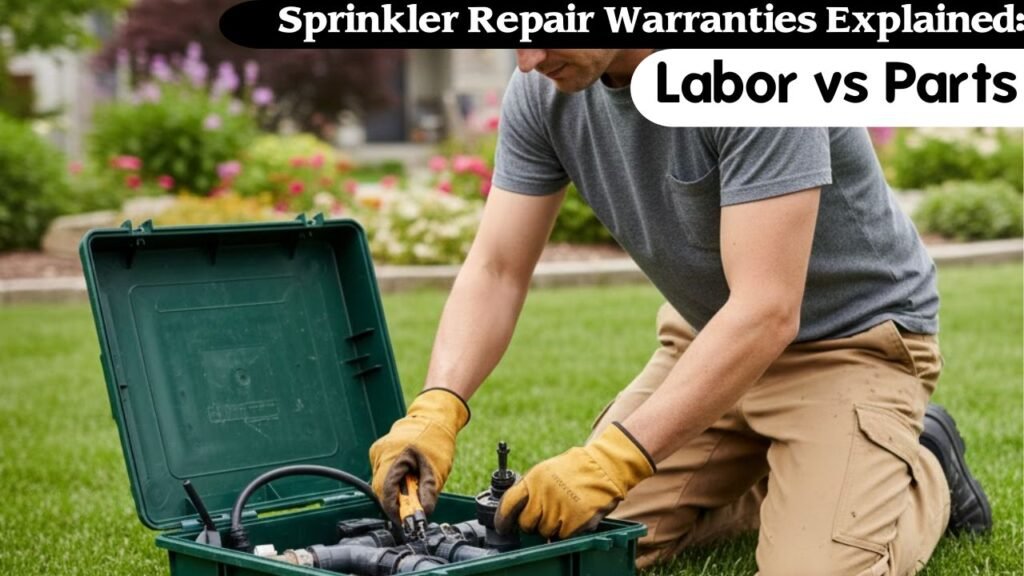
A Sprinkler Parts Warranty covers only the hardware against manufacturer defects, including Rotors, Spray Bodies, Solenoid Valves, and Smart Irrigation Controllers. A Labor/Workmanship Warranty protects the contractor’s installation quality. While parts may last 2–5 years, labor coverage is generally 12–24 months.
Anatomy of a Warranty Claim:
When a Solenoid Valve fails, the process involves three financial layers:
- Trip Charge – getting the technician to your home.
- Labor Fee – physically swapping the component.
- Part Cost – the hardware itself.
A Full Warranty covers all three. A Standard Warranty usually covers only the part, leaving the homeowner responsible for labor and Trip Charges.
Manufacturer Warranty – Protecting the Hardware
Manufacturers like Rain Bird, Hunter Industries, and Toro guarantee the physical components, not the installation.
- Coverage: Factory defects such as cracked manifolds, defective solenoids, or broken rotors.
- Wear and Tear vs. Defect: A valve diaphragm cracking after 10 years is wear and tear, not a defect. A solenoid failing in month six is a manufacturer defect, within its Useful Life Expectancy.
- Date Code Verification: Most parts carry a date code stamped on the plastic, e.g., “24-12” (year-week). This is the official proof for warranty claims, not receipts.
- Warranty Exchange: Manufacturers repair or replace at their discretion. Homeowners may cover freight/shipping costs.
Labor / Workmanship Warranty – Protecting the Installation
While a parts warranty safeguards hardware, the Labor/Workmanship Guarantee protects installation integrity.
- Coverage: Improper glue, cross-threading, leaking joints, misaligned rotors or spray bodies.
- Service Call Fee / Trip Charge: Even with 100% labor coverage, a Trip Charge may still apply. It compensates the technician for travel and diagnostic work.
- IA Standards: A professional labor warranty guarantees that installation complies with Irrigation Association (IA) Best Practices, including:
- Pipe trench depth
- Solvent welding (gluing) procedures
- Voltage regulation for Smart Controllers
Interlocking Warranty Narrative: The parts and labor warranties work together. When a failure occurs, the trip charge, labor, and part cost are evaluated. Full protection covers all three. Standard coverage often leaves homeowners paying for professional expertise required to diagnose and fix the system.
Non-Warrantable Maintenance Items
Many claims are denied because the issue is maintenance-related, not a defect. Typical non-warrantable items include:
- Clogged Nozzles (common with sand or well water)
- Seal Leaks (caused by high dynamic pressure)
- Wiper Seal Wear on rotors over time
Highlighting these avoids disappointment and helps homeowners understand why some claims are rejected.
Fine Print Exclusions and Contributory Negligence
- Water Quality: Iron or sand can bypass coverage.
- Freeze Damage / Winterization: Failing to perform a Professional Blow-Out can void claims. Frozen valves or cracked manifolds fall under the Negligence Clause.
- Third-Party Alterations: Any other company touching your system usually voids the labor warranty.
Conflict Resolution Tip: If a contractor disputes whether a failure is a defect or abuse, homeowners should contact the local distributor or wholesaler for a third-party inspection.
Transferability: Labor warranties may transfer to subsequent owners if approved. Manufacturer warranties usually do not.
Comparative Table – Manufacturer vs. Contractor
| Warranty Component | Manufacturer (Parts) | Professional Contractor (Labor) |
|---|---|---|
| Duration | 2–5 Years | 12–24 Months |
| Covers | Factory defects, cracked manifolds, solenoid failure | Improper glue, cross-threading, leaking joints, misaligned rotors |
| Excludes | Labor, shipping, mower damage, freeze damage | Clogged nozzles, lightning, freezing, third-party alterations |
| Verification | Manufacturer Date Code stamped on part | Original service invoice/work order |
| Trip Charge | N/A | Applies unless Full Warranty purchased |
| Transferability | Non-transferable | May transfer to subsequent owners |
Execute Your Warranty Audit – Step by Step
- Verify duration for parts vs. labor coverage.
- Confirm covered components: Rotors, Spray Bodies, Solenoid Valves, Smart Controllers.
- Review exclusions: freeze damage, water quality, third-party alterations.
- Clarify Trip Charge / Service Call Fee.
- Check transferability for subsequent owners.
- Confirm verification: Manufacturer Date Code and service invoices.
- Retain all original invoices and codes for easy proof.
Executing this audit ensures homeowners know exactly what’s protected and avoids surprise bills.
Final Verdict
Sticker shock from a Trip Charge or labor bill is avoidable. By understanding the interlocking nature of parts and labor warranties, non-warrantable maintenance items, IA Best Practices, and prorated coverage, homeowners can protect their irrigation investment. Execute a Warranty Audit now and safeguard your system, wallet, and home equity.