Hidden Costs in Cheap Sprinkler Repair Quotes: A Forensic Audit
A low-ball irrigation bid is essentially a form of Unsecured Debt. While the initial line item looks attractive, Operational Expense (OPEX) Creep—driven by Non-Revenue Water (NRW), premature Ductile Failure, and regulatory gaps—ensures that property owners pay the difference within 12–18 months. Identifying hidden costs in cheap sprinkler repair quotes requires auditing the contractor’s Hydraulic Specification and Liability Indemnity.
Forensic Red Flag: How to Spot a “High-Risk” Low-Ball Quote
- Hardware: Quotes Class 125/200 PVC (Thin-walled) instead of Schedule 40 industrial-grade pipe.
- Compliance: Omits Backflow Assembly Testing or municipal permit requirements.
- Insurance: Cannot provide a Certificate of Insurance (COI) covering Subsurface Excavation.
- Forensics: No Hydraulic Diagnostic or As-Built Map documentation is included.
Executive Summary: OPEX Creep and Hidden Liability
Cheap quotes are rarely inexpensive in total cost. Professional bids reflect:
- Industrial-Grade Hardware: Schedule 40 PVC, PRS heads, and EPDM diaphragms.
- Licensed & Insured Labor: Protects against Statutory Employer Liability.
- Forensic Documentation: Hydraulic Diagnostic Blueprints and As-Built Maps for future audits.
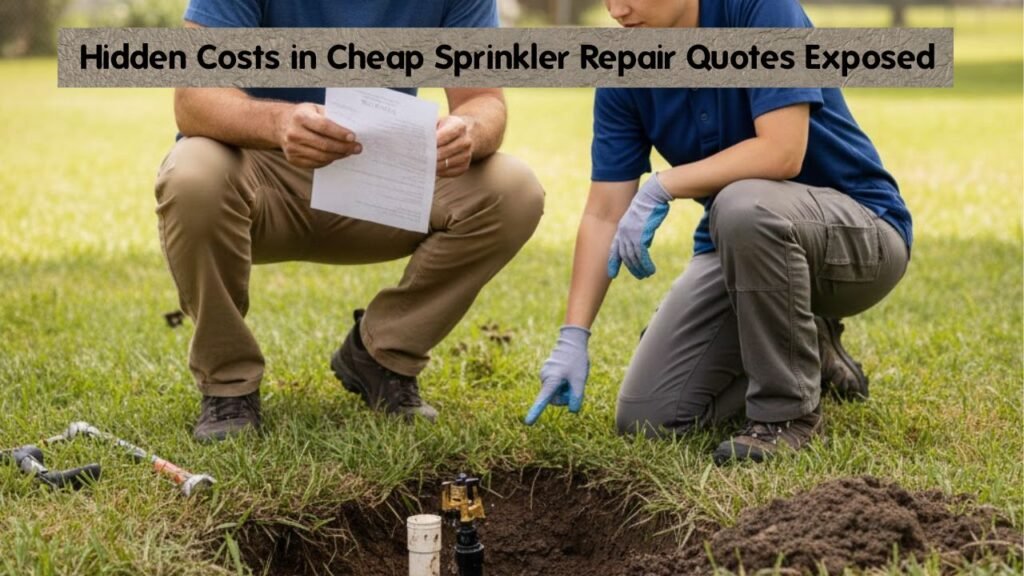
Forensic Audit: 5 Red Flags in Budget Irrigation Bids
1. Component Sub-specification: The “Parts Illusion”
Budget contractors often install thin-walled PVC and non-regulated heads.
Why this matters:
- Creates Cascading Failure risk due to Dynamic Pressure Loss (PSI).
- Poor Distribution Uniformity (DU) increases overwatering or dry zones.
- Weak Backflow Assembly Lifecycle compromises municipal compliance.
Molecular Fusion Logic: Solvent Weld Integrity
Professional repairs use Molecular Fusion with primer and heavy-duty cement, creating Cross-Link Polymerization—a monolithic bond between PVC pieces. Cheap contractors rely on compression or push-fit couplings with rubber O-rings, which fail under Water Hammer and cyclic loading.
Hardware Comparison Table:
| Feature | $99 Budget Quote | Professional Bid |
|---|---|---|
| Pipe Grade | Class 125 Thin-Wall | Schedule 40 Industrial |
| Head Type | Non-Regulated | PRS Head |
| Couplings | Compression / Push-Fit | Molecular Fusion Solvent Weld |
| Warranty | None / “Taillight” | 1–3 Year Written |
| Compliance | Ignored | Licensed & Backflow Certified |
2. Labor Arbitrage: Statutory Employer Liability
Hiring an uninsured contractor can expose homeowners to Statutory Employer Liability if a worker is injured during Subsurface Excavation.
Professional bids include:
- General Liability and Workers’ Comp, creating a legal firewall.
- Licensed irrigators (LI) familiar with local codes.
- Proper documentation of Point of Connection (POC) Pressure and isolation.
3. Regulatory Gap: Ignored Backflow Certification
Cheap quotes skip compliance checks:
- Risk of Potable Water Cross-Connection and municipal fines.
- No eligibility for insurance claims in case of damage.
- Weakens Backflow Assembly Lifecycle, jeopardizing system integrity.
4. Hydraulic Stress: Quick Fixes That Fail
Patch repairs without assessing Static Load Stress lead to new leaks.
Subsurface Bedding Integrity: Mechanical Impingement
Budget contractors backfill trenches with native rocky soil. This causes Mechanical Impingement, where the pipe vibrates against sharp edges during system start-ups. Over time, this creates Point Load fractures, compromising the Asset Lifecycle Index.
Professional practice:
- Remove debris and use Select Sand Fill.
- Ensure structural support for pipes under cyclic loads.
- Protect warranty and prevent Ductile Failure.
5. Sewer Surcharge: Silent Financial Drain
A slow leak from sub-standard fittings can lose 100+ gallons per day.
Utility Adjustment Audit:
- Licensed contractors provide forensic documentation to waive Sewer Surcharges.
- Budget contractors cannot certify leaks, meaning the city bills for water lost underground.
- Proper repair often recovers more than the cost difference between cheap and professional bids.
Yield Enhancement: The ROI of Industrial-Grade Specifications
Investing in licensed, insured, and documented irrigation services ensures:
- Long-Term Reliability: Schedule 40 PVC, PRS heads, and Molecular Fusion prevent Hydrostatic Shock.
- Regulatory Compliance: Avoid fines and protect Backflow Assembly Lifecycle.
- Liability Protection: Homeowner shielded from Statutory Employer Liability.
- Reduced Secondary Repairs: Proper installation and bedding prevent Cascading Failure.
First Aid for Property Managers
- Verify Licensing & Insurance: Protect against legal exposure.
- Confirm Hardware Specs: Check Schedule 40 PVC and PRS compatibility.
- Request Documentation: Ensure As-Built Maps and Hydraulic Diagnostic Blueprints are included.
- Monitor Leaks: Track water use to detect hidden OPEX losses.
FAQ
Q: Why is one sprinkler quote so much lower than the others?
A: Low quotes cut corners on labor, compliance, and components, creating hidden long-term costs.
Q: What happens if my contractor is unlicensed?
A: Homeowners may face Statutory Employer Liability and municipal penalties.
Q: Is Schedule 40 PVC better than Class 125?
A: Yes. Schedule 40 resists Point Loading, Hydrostatic Shock, and preserves the Asset Lifecycle Index.
Conclusion
Cheap sprinkler repair quotes are rarely cost-effective. Hidden OPEX Creep, skipped Backflow Certification, improper Bedding Integrity, and weak Solvent Welds create cascading costs that exceed the original savings. Auditing low-ball bids through a forensic lens ensures operational reliability, compliance, and long-term ROI.