Introduction: Repair vs Maintenance Irrigation Costs
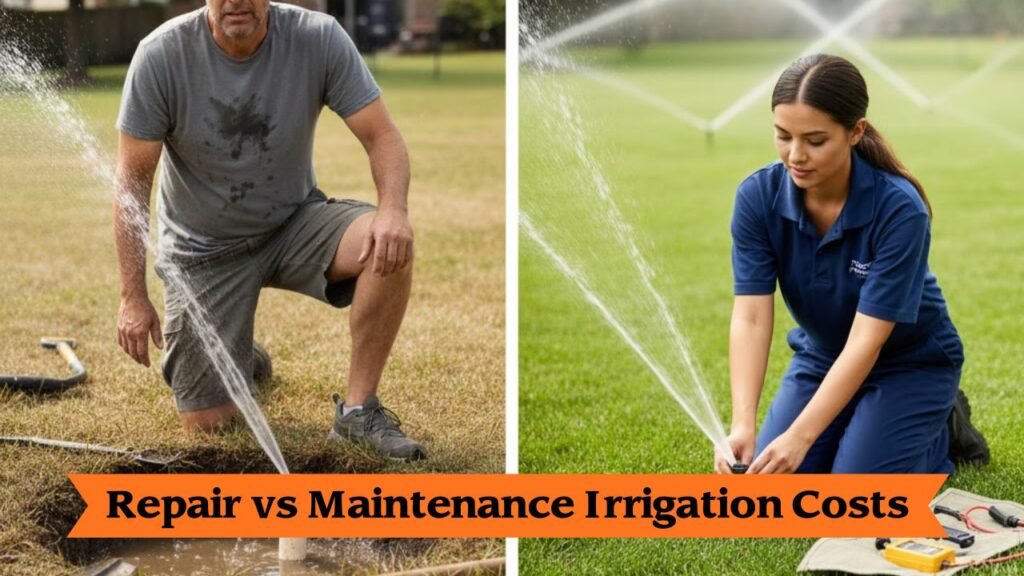
Asset managers rarely plan to fail an irrigation system. Failure happens through neglect. A Repair-Only strategy crosses the Systemic Obsolescence threshold around Year 7. At that point, the system becomes financially unrepairable.
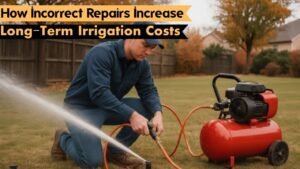
Reactive management triggers the Irrigation Death Spiral. A rushed emergency fix treats the visible break only. The technician does not address Static Load Stress or pressure spikes. Hydraulic energy shifts to the next weakest joint. That joint fails next. This cycle creates Cascading Ductile Failures. By Year 10, the system reaches end-of-life early, even though parts look new.
This is not theory. I see it weekly on U.S. commercial sites.
The 10-Year Cost Reality
Over a decade, irrigation spending follows two paths. One path controls risk. The other compounds it.
| Cost Category | Proactive Maintenance Model | Reactive Repair Model |
|---|---|---|
| Annual Inspections | $200–$300 planned | $0 |
| Water Waste (NRW) | <5% monitored | 15–30% hidden |
| Emergency Dispatch | Rare | Frequent |
| Component Life | 15–20 years | 7–10 years |
| Total 10-Year Cost | $3,500–$5,000 | $9,000–$15,000+ |
This delta comes from physics, not pricing.
Compounded Hydraulic Debt Explained
Deferred maintenance creates Compounded Hydraulic Debt. Early years look harmless. Years one through three show similar spend.
Year four changes everything. Valves begin failing silently. Solenoid Continuity degrades. Small leaks appear and stay hidden. These leaks cause bedding erosion.
Subsurface Void Formation
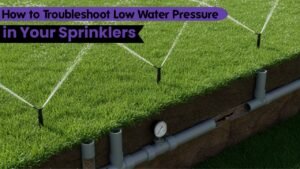
The most expensive damage stays underground. A slow weeping leak washes away the Select Fill under the pipe. This creates Subsurface Void Formation. The pipe becomes suspended in air. Soil weight above causes bending stress. The pipe snaps later under normal pressure.
That secondary failure costs five times more than early detection. No owner budgets for that.
Mechanical Integrity Over a Decade
Molecular Fusion vs Mechanical Patches
Emergency work favors speed. Crews install compression or push-fit couplings. These rely on rubber seals. They fail under thermal expansion.
Proactive maintenance allows Molecular Fusion repairs. Primer and solvent cement trigger Cross-Link Polymerization. The joint becomes monolithic. It resists vibration and surge.
Mechanical patches age fast. Molecular fusion lasts the full Asset Lifecycle Index.
Non-Revenue Water and Utility Loss
Water loss rarely shows immediately. Non-Revenue Water drains profit slowly.
Without inspections, leaks go unmeasured. With maintenance, teams perform Volumetric Leak Calculation and document loss.
Sewer Surcharge Arbitrage
Municipal billing assumes water equals sewage. Maintenance enables Sewer Surcharge Arbitrage. Through audits and submetering, managers prove irrigation water never entered sewer lines.
This redirects thousands back into Net Operating Income (NOI). Maintenance contracts often pay for themselves here alone.
The 1:4 Rule in Practice
Industrial data supports one truth.
Every $1 spent on preventive irrigation maintenance avoids $4 in emergency labor, water loss, and structural remediation.
This ratio holds across climates and property types. It holds because pressure never rests. Pipes vibrate daily. Ignoring that reality costs money.
CAPEX Avoidance: Forensic Indicators of Longevity
Proactive programs extend service life by managing stress.
- Dynamic Flow Monitoring prevents pressure shock.
- Pressure-Regulated Stem (PRS) heads reduce zone fatigue.
- Normally Closed Master Valve (NC) limits failure scope.
- Correct bedding prevents Thrust Block Displacement.
- Annual audits enable Hydrostatic Surcharge Mitigation.
Each item blocks a known failure mode.
The 10-Year Lifecycle Audit Milestones
The 10-Year Lifecycle Audit Milestones
- Years 1–3: Focus on Distribution Uniformity and smart controller calibration.
- Years 4–6: Critical window for Solenoid Ohmic Resistance testing and diaphragm replacement.
- Years 7–10: Forensic audit of POC integrity and Backflow Assembly internal overhaul.
Skipping any phase accelerates decline.
Risk Exposure Over a Decade
Neglected irrigation creates legal exposure. Broken heads cause slip hazards. Saturated soil undermines walkways.
Reactive repairs often involve uninsured labor. That triggers Statutory Employer Liability. One injury shifts financial responsibility to the property owner.
Maintenance contracts include insurance. They function as a legal firewall.
Documentation, GAAP, and Depreciation
Irrigation systems are depreciable assets. Under GAAP and IRS Section 179, useful life matters.
Maintenance preserves operational life beyond depreciation schedules. This improves asset value at sale. Buyers pay more for documented systems. They trust records.
10-Year Strategy Comparison
| Metric | Maintenance Strategy | Repair-Only Strategy |
|---|---|---|
| Hydraulic Stress | Controlled | Accumulating |
| Emergency Costs | Predictable | Chaotic |
| Bedding Integrity | Preserved | Compromised |
| Asset Value | Protected | Discounted |
| Financial Outcome | Optimized | Reactive Loss |
Conclusion
Repair-only irrigation management looks cheaper on paper. Over ten years, it destroys value. Maintenance prevents the Irrigation Death Spiral, controls Compounded Hydraulic Debt, and protects NOI. Smart asset managers invest early and sleep better later, which makes proactive maintenance worth exploring in detail before the next failure hits.