When a sprinkler system fails, it rarely fails quietly. You see dry patches spreading. You notice soggy soil near the heads. Then the water bill arrives and ruins your mood. Most homeowners want answers fast. Not theory. Not sales talk. Just real fixes that work.
This Ultimate Guide to Sprinkler Repair focuses on the most common failures homeowners face. If you want a deeper breakdown of real-world fixes, this complete sprinkler repair guide walks through the exact problems, tools, and repair paths step by step, without unnecessary theory.
Quick Diagnostic Checklist
Use this checklist in order. Don’t skip steps.
- Check the irrigation controller or smart timer for power, blown fuses, or a dead backup battery.
- Inspect sprinkler heads for clogged nozzles, cracked bodies, or heads stuck below grade.
- Look for leaks or valves that won’t shut off, especially water pooling near valve boxes or manifolds.
If you fix these three, you solve most sprinkler problems without touching pipes.
Tools You’ll Need Before You Start
Having tools ready saves frustration mid-repair.
- Flathead and Phillips screwdriver
- Trenching shovel or narrow spade
- Pipe cutter (PVC or poly)
- Teflon tape
- Wire strippers
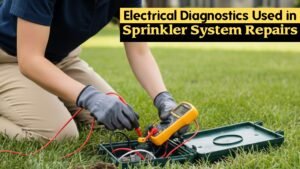
- Multimeter
- Replacement sprinkler heads
This guide assumes common residential materials like Schedule 40 PVC, poly tubing, and swing pipe (funny pipe).
Common Replacement Parts You’ll Likely Need
| Part Name | Typical Use | USA Brand Examples |
|---|---|---|
| Pop-up Spray Head | Small lawns, flower beds | Rain Bird 1800, Hunter Pro-Spray |
| Rotor Head | Large turf zones | Hunter PGP, Rain Bird 5000 |
| Valve Diaphragm | Leaking or stuck valves | Brand-specific match |
| Solenoid | Electrical signal issues | 24VAC universal solenoid |
Knowing part names alone cuts repair time in half.
What Is Sprinkler Repair (In Plain English)
Sprinkler repair means finding where water, pressure, or electrical control breaks down inside an irrigation system and fixing it so water is applied evenly again. This includes heads, valves, wiring, controllers, backflow preventers, and pressure regulation. Good repair saves water and prevents long-term lawn damage.
Now let’s answer the questions people actually search.
Why Are My Sprinkler Heads Not Spraying Correctly?
This almost always comes down to clogged nozzles or damaged heads.
Clogged Nozzles
Minerals and dirt slowly block the nozzle orifice. Spray patterns collapse. Coverage shrinks.
Symptoms
- Misting instead of streams
- Dry rings around healthy grass
- Uneven zone coverage
Fix
- Remove the nozzle
- Rinse the filter screen
- Clear the orifice with thin wire
- Reinstall and adjust spray pattern
This single fix solves more lawn issues than any other.
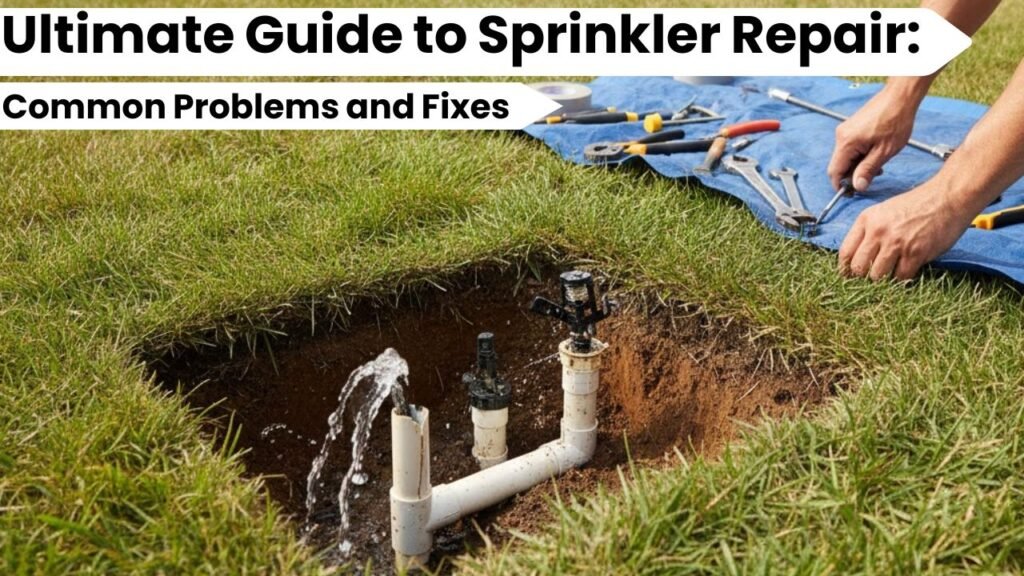
Why Is One Sprinkler Head Leaking or Broken?
Physical damage happens more than people admit. Lawn equipment, foot traffic, sun exposure. Plastic gets brittle.
Broken or Sun-Damaged Sprinkler Heads
Symptoms
- Water bubbling from soil
- One head spraying sideways
- Sunken or tilted head
Fix
- Excavate carefully
- Unscrew the damaged head
- Flush the riser briefly
- Install a matching replacement
- Backfill and level
Flushing the riser is critical. Skip it and dirt ruins the new head.
Why Won’t My Sprinkler Zone Shut Off?
How to Fix a Sprinkler Valve That Won’t Shut Off
If water keeps running, the valve is stuck open.
Inside every valve is a diaphragm, solenoid, and bleed screw. Dirt prevents sealing.
Symptoms
- Zone runs nonstop
- Soil always wet near valve box
- Controller off but water still flowing
Fix
- Shut off the main shut-off valve
- Open the valve bonnet
- Clean or replace the diaphragm
- Inspect solenoid for debris
What Is a Bleed Screw?
The bleed screw manually opens the valve. Turn it slightly to test water flow without electricity. If water flows normally using the bleed screw, the valve body is fine. The problem is electrical.
Why Do I Have Low Water Pressure in One Zone?
Pressure issues are misunderstood. This is where Static Pressure vs. Working Pressure matters.
- Static pressure looks fine when nothing runs.
- Working pressure drops once water flows.
Low Water Pressure Causes
Symptoms
- Heads barely pop up
- Short spray distance
- Uneven coverage in one zone
Fix
- Inspect Schedule 40 PVC for leaks
- Check isolation valves are fully open
- Clean the valve diaphragm
Important Check:
Look at your backflow device. The shut-off handles must be fully parallel to the pipe. Even slightly turned handles throttle working pressure badly.
Hidden Cause: Root Intrusion
Roots can constrict swing pipes over time. No leak. Just less GPM.
Why Is My Sprinkler System Not Turning On At All?
Troubleshooting Irrigation Controllers and Smart Timers
Before digging, always check the brain.
Symptoms
- No zones run
- Random schedules
- Programs resetting
Fix
- Replace backup battery
- Check blown fuses
- Tighten wiring terminals
Smart controllers depend on stable power. Tiny electrical issues feel like system failure.
How Do I Replace a Broken Sprinkler Head?
- Clear grass and debris
- Excavate soil carefully
- Unscrew damaged head
- Flush the riser for a few seconds
- Install the new matching head
- Backfill soil and test coverage
Do it slow. Rushing breaks fittings.
Should I Use a Smart Controller?
Smart controllers help maintain the ideal inches of water per week, usually around one inch for turf.
They adjust run time using:
- Weather data
- Rain sensors
- Seasonal demand
They prevent overwatering without guessing.
Seasonal Maintenance That Prevents Repairs
Spring Start-Up
- Slowly pressurize lines
- Inspect every zone
- Adjust spray patterns
How much does sprinkler repair usually cost?
DIY repairs often cost under $30. Professional repairs vary widely by region, system size, and complexity. Some areas see higher labor rates than others.
Why does one sprinkler zone have low pressure?
Common causes include leaks, clogged diaphragms, root intrusion, or partially closed backflow valves.
Can I mix spray heads and rotor heads in one zone?
No. Different GPM rates cause uneven watering and pressure loss.
Can I fix sprinkler valves myself?
Yes, if you can shut off the main valve safely and follow steps carefully.
Final Thoughts
Sprinkler repair isn’t mysterious. It’s mechanical. Electrical. Logical. When you fix the right problem in the right order, lawns recover fast and water waste stops.