Water Budget Planning for Large Properties is essential for controlling irrigation costs, reducing waste, and maintaining landscape health at scale. Large campuses, HOAs, commercial complexes, and multi-building developments consume significant water volumes. Without a structured budget strategy, costs rise quickly and inefficiencies go unnoticed.
Property managers often review water bills after the fact. A proactive water budget establishes expected usage before the season begins. That approach shifts management from reactive to predictive.
A well-designed water budget protects operating budgets, supports sustainability goals, and ensures consistent turf and plant performance across expansive landscapes.

Why Water Budget Planning Matters for Large Properties
Large properties operate complex irrigation systems. Multiple zones, varying soil types, and different plant materials require careful coordination.
Water Budget Planning for Large Properties helps managers:
- Forecast seasonal water costs
- Prevent overwatering
- Identify leaks early
- Align irrigation with climate conditions
- Support environmental compliance
Unmanaged irrigation can lead to soil erosion, plant stress, and structural damage near foundations and pavement.
Predictable water consumption creates financial stability.
This YouTube video below from the Utah Division of Water Resources explains how to develop a water budget. It shows how tracking usage helps plan efficient irrigation and reduce waste. The video serves as a quick reference for smarter water management decisions.
Understanding the Core Components of a Water Budget
A water budget is not guesswork. It is a calculated estimate based on environmental and system data.
Landscape Area Measurement
Begin by measuring irrigated square footage. Separate turf, shrubs, trees, and drip zones.
Each plant type has different water requirements. Turf generally requires more water than established native shrubs.
Accurate mapping forms the foundation of Water Budget Planning for Large Properties.
Reference Evapotranspiration (ETo)
Evapotranspiration measures water loss through soil evaporation and plant transpiration.
Climate data provides local ETo rates. These values help calculate seasonal irrigation needs.
Using regional climate data ensures realistic water forecasts.
Plant Water Requirement (Plant Factor)
Different plants require different watering volumes.
Examples:
- Cool-season turf: Higher water demand
- Native shrubs: Moderate demand
- Drought-tolerant plants: Lower demand
Adjust irrigation schedules based on plant factors rather than uniform watering.
Irrigation System Efficiency
System efficiency affects actual water delivery.
Factors include:
- Spray head alignment
- Pressure consistency
- Distribution uniformity
- Leak presence
Water Budget Planning for Large Properties must account for efficiency losses. A system operating at 70% efficiency requires more water than a properly calibrated one.
Water Budget Calculation Example
A simplified formula often used:
Water Budget = Landscape Area × ETo × Plant Factor ÷ Irrigation Efficiency
Here is a sample framework:
| Variable | Example Value |
|---|---|
| Irrigated Area | 200,000 sq ft |
| Seasonal ETo | 40 inches |
| Plant Factor | 0.7 |
| Irrigation Efficiency | 0.75 |
| Estimated Water Need | Calculated Total |
This calculation provides a seasonal estimate. Adjust monthly based on weather patterns.
Water Budget Planning for Large Properties becomes more accurate with consistent data tracking.
Financial Impact of Proper Water Budgeting
Water is often one of the highest utility expenses for large landscapes.
A structured budget allows property managers to:
- Compare projected versus actual usage
- Identify billing anomalies
- Reduce emergency leak costs
- Plan seasonal expenditures
Budget tracking also supports sustainability reporting and regulatory compliance.
Proactive oversight protects operating margins.
Common Causes of Budget Overruns
Large properties face several irrigation risks.
Frequent causes include:
- Undetected underground leaks
- Controller programming errors
- Pressure imbalances
- Overspray onto hardscapes
- Broken sprinkler heads
Water Budget Planning for Large Properties helps detect these issues early through usage monitoring.
Unexpected spikes in water bills often signal system failure.
Seasonal Adjustments in Water Budget Planning
Climate variability affects irrigation demand.
During cooler months, reduce watering frequency. During peak summer heat, adjust run times based on updated evapotranspiration data.
Implement seasonal audits that include:
- Controller reprogramming
- Pressure checks
- Leak inspections
- Rain sensor testing
Regular updates keep the water budget aligned with environmental conditions.
Technology Tools That Improve Water Budget Accuracy
Modern irrigation technology improves forecasting precision.
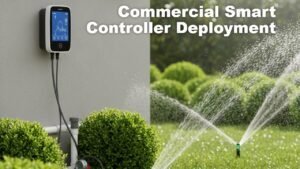
Smart controllers and flow sensors provide:
- Real-time usage monitoring
- Leak detection alerts
- Weather-based adjustments
- Historical consumption reports
Cloud-based dashboards allow property managers to monitor multiple sites from one interface.
Water Budget Planning for Large Properties becomes more data-driven with integrated technology.
Best Practices for Large Property Water Management
Structured processes improve results.
Follow these best practices:
- Conduct annual irrigation audits
- Train maintenance teams on efficiency standards
- Use drought-resistant plant materials
- Implement soil moisture sensors
- Track monthly usage against projections
Consistency ensures predictable performance.
Risk Management and Compliance
Many municipalities impose water restrictions or tiered pricing.
Water Budget Planning for Large Properties supports compliance with local regulations. It also reduces risk of fines during drought restrictions.
Proper documentation demonstrates responsible water stewardship.
Insurance carriers and regulatory bodies increasingly review environmental practices.
Performance Tracking Metrics
Data analysis strengthens water management.
Track:
- Gallons used per acre
- Monthly cost variance
- System downtime
- Leak repair frequency
- Distribution uniformity scores
These metrics reveal patterns and highlight improvement opportunities.
Ongoing measurement ensures long-term efficiency.
Steps to Implement Water Budget Planning for Large Properties
Step 1: Conduct a Property-Wide Irrigation Audit
Evaluate system components, pressure levels, and plant types.
Step 2: Gather Climate Data
Use local weather station data to determine evapotranspiration rates.
Step 3: Calculate Baseline Water Budget
Apply area, plant factor, and efficiency values to estimate seasonal demand.
Step 4: Monitor Monthly Usage
Compare actual water bills to projected targets.
Step 5: Adjust and Optimize
Refine schedules and repair inefficiencies as needed.
Water Budget Planning for Large Properties requires ongoing review, not one-time setup.
Common Mistakes to Avoid
Many managers make preventable errors.
Avoid:
- Ignoring irrigation efficiency ratings
- Using uniform watering schedules
- Skipping seasonal audits
- Failing to track historical data
- Overlooking minor leaks
Small inefficiencies compound over time.
Long-Term Benefits of Strategic Water Budgeting
This YouTube video below from Dr. Simeng Li explains how a water budget supports sustainable water management. It shows how tracking supply and demand helps control usage and plan efficiently. The video serves as a quick reference for smarter long-term water planning.
Effective planning delivers measurable outcomes.
Benefits include:
- Reduced utility expenses
- Improved landscape health
- Enhanced sustainability performance
- Lower risk of structural water damage
- Predictable operating costs
Water Budget Planning for Large Properties strengthens financial and environmental performance.
Frequently Asked Questions
What is Water Budget Planning for Large Properties?
It is a structured method for estimating and controlling irrigation water use across expansive landscapes.
How often should water budgets be updated?
Update budgets seasonally and review monthly usage data to adjust projections.
Can water budgeting reduce utility bills?
Yes. Identifying inefficiencies and optimizing schedules lowers overall water consumption.
Is smart irrigation technology necessary?
While not mandatory, smart systems significantly improve accuracy and monitoring.
Who should manage water budget planning?
Property managers, landscape professionals, or irrigation specialists typically oversee the process.
Conclusion
Water Budget Planning for Large Properties provides financial control, environmental responsibility, and operational clarity. Structured forecasting reduces waste, prevents costly surprises, and improves irrigation efficiency across large landscapes. Property managers who implement data-driven budgeting strategies gain predictable costs and stronger sustainability outcomes.
Effective water management begins with accurate forecasting and consistent monitoring. Explore how a strategic water budget can transform cost control and performance across your entire property portfolio.