CapEx vs OpEx in irrigation decisions plays a critical role in how homeowners associations, facility managers, and property owners manage landscape infrastructure. Irrigation systems involve both large upfront investments and ongoing operational expenses. Understanding how these costs interact helps decision-makers protect budgets and maintain efficient landscapes.
Many properties struggle with rising water bills, unexpected repairs, and aging infrastructure. Without a clear financial strategy, irrigation systems become a reactive expense rather than a managed asset. A balanced approach between capital expenditures and operational expenses ensures consistent performance and predictable budgeting.
This guide explains the difference between capital and operational costs in irrigation systems, how to evaluate investments, and how to structure long-term financial planning for landscapes.
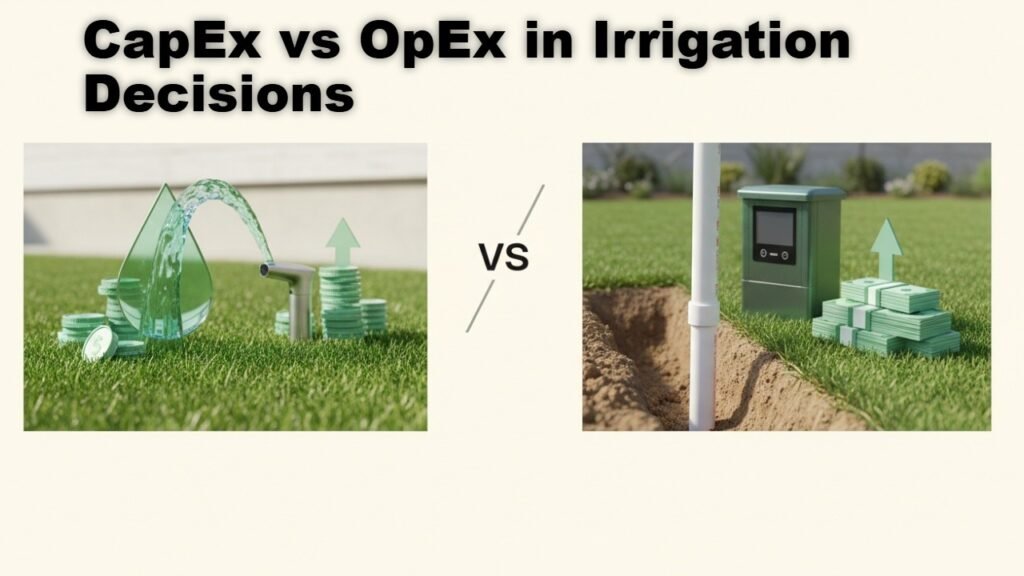
Understanding CapEx and OpEx in Irrigation
This YouTube video below from Aquacycl – Industrial Wastewater Treatment explains the difference between CapEx and OpEx for wastewater assets. It outlines how upfront capital costs compare with ongoing operational expenses. The video serves as a quick reference for making informed infrastructure investment decisions.
Irrigation systems require both one-time investments and recurring costs. These fall into two categories: capital expenditure and operational expenditure.
What Is CapEx in Irrigation?
Capital expenditure refers to major investments in infrastructure. These costs improve system capacity, efficiency, or lifespan.
Examples include:
- New irrigation system installation
- Controller upgrades
- Pump replacement
- Mainline replacement
- Smart controller installation
These expenses usually occur less frequently but require larger budgets.
What Is OpEx in Irrigation?
Operational expenditure includes ongoing costs required to run and maintain the system.
Examples include:
- Water usage
- Electricity for pumps
- Maintenance labor
- Repairs
- Seasonal adjustments
Balancing CapEx vs OpEx in irrigation decisions ensures systems remain efficient without overspending.
Why Financial Strategy Matters in Irrigation Management
Irrigation systems often operate quietly in the background until problems occur. When systems fail or water bills rise, reactive spending begins.
A structured approach to CapEx vs OpEx in irrigation decisions allows managers to:
- Plan budgets accurately
- Reduce emergency repairs
- Extend asset lifespan
- Improve water efficiency
- Protect landscape health
Strategic planning transforms irrigation from a reactive expense into a managed investment.
Comparing CapEx and OpEx Impacts
| Cost Type | CapEx | OpEx |
|---|---|---|
| Frequency | Infrequent | Ongoing |
| Cost Size | High | Moderate |
| Budget Planning | Long-term | Annual |
| Impact | Improves infrastructure | Maintains operation |
| Example | System replacement | Monthly water bill |
Understanding these differences helps property managers allocate funds effectively.
When to Prioritize Capital Investment
Some irrigation problems cannot be solved through maintenance alone.
Aging Infrastructure
Old systems often require frequent repairs. Replacement may reduce long-term costs.
Inefficient Equipment
Outdated controllers and sprinklers waste water. Upgrading improves efficiency.
Major Property Renovations
Landscape redesign projects often require new irrigation layouts.
Evaluating CapEx vs OpEx in irrigation decisions helps determine whether to repair or replace components.
When to Focus on Operational Spending
Operational spending keeps systems functioning properly.
Preventive Maintenance
Regular inspections and adjustments prevent major failures.
Seasonal Adjustments
Adjusting schedules based on weather reduces water waste.
Minor Repairs
Replacing heads and valves maintains efficiency without major investment.
Balancing maintenance with strategic upgrades supports long-term performance.
Lifecycle Cost Analysis
Lifecycle cost analysis helps evaluate long-term expenses.
Initial Cost vs Long-Term Savings
A higher upfront investment may reduce operational costs over time.
Example:
Installing a smart controller increases initial cost but reduces water usage and labor expenses.
Replacement Planning
Forecast replacement timelines for major components. This allows gradual budgeting rather than sudden large expenses.
Lifecycle planning is essential when evaluating CapEx vs OpEx in irrigation decisions.
Budget Planning for Property Managers
Effective budgeting includes both capital and operational planning.
Annual Budget
Include:
- Water costs
- Maintenance labor
- Minor repairs
- Inspections
Capital Reserve Fund
Set aside funds for major replacements such as pumps or controllers. This prevents budget shocks.
A balanced budget supports informed CapEx vs OpEx in irrigation decisions.
Technology and Cost Efficiency
Technology plays a major role in cost management.
Smart Controllers
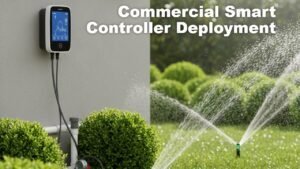
Smart controllers reduce water use and labor costs. They represent a capital investment with operational savings.
Flow Sensors
Flow sensors detect leaks quickly. Early detection reduces repair costs.
Remote Monitoring
Remote systems reduce manual inspections and improve efficiency.
Technology helps balance CapEx vs OpEx in irrigation decisions effectively.
Risk Management and Compliance
Regulations and environmental concerns influence irrigation spending.
Water Restrictions
Municipalities often impose watering restrictions. Efficient systems reduce risk of fines.
Environmental Impact
Overwatering increases runoff and erosion. Efficient systems support sustainability goals.
Insurance Considerations
Proper irrigation management reduces property damage risk.
Risk management should factor into CapEx vs OpEx in irrigation decisions.
Practical Decision Framework
Use this framework when evaluating irrigation costs.
Ask these questions:
- Is the system aging or inefficient?
- Are repair costs increasing?
- Will an upgrade reduce long-term expenses?
- Can maintenance extend lifespan?
- Is water usage excessive?
This approach helps determine whether to invest in capital upgrades or continue operational spending.
Sample Cost Comparison Table
| Scenario | CapEx Investment | OpEx Impact | Long-Term Outcome |
|---|---|---|---|
| Smart controller upgrade | Moderate | Lower water bills | High savings |
| Pump replacement | High | Reduced repairs | Stable operation |
| Routine maintenance only | Low | Higher long-term costs | Increased repairs |
| Full system replacement | High | Lower operating cost | Long-term efficiency |
This comparison highlights the importance of evaluating long-term outcomes.
Common Mistakes to Avoid
Avoid these errors in irrigation budgeting.
Ignoring Lifecycle Costs
Focusing only on short-term savings often leads to higher long-term expenses.
Delaying Necessary Upgrades
Deferred replacement increases repair frequency and water waste.
Overinvesting Without Analysis
Not all systems require immediate replacement. Evaluate cost-benefit carefully.
Avoiding these mistakes improves CapEx vs OpEx in irrigation decisions.
Practical Tips for Property Owners
Use these strategies for better financial control:
- Conduct annual irrigation audits
- Track water usage trends
- Plan replacement schedules
- Invest in efficient technology
- Maintain detailed records
- Review budgets annually
These steps improve financial predictability.
FAQs
What is CapEx in irrigation systems?
CapEx refers to major investments such as new systems, pumps, or controllers.
What is OpEx in irrigation management?
OpEx includes ongoing costs like water usage, maintenance, and repairs.
Which is more important, CapEx or OpEx?
Both matter. Balanced planning ensures long-term efficiency.
Can investing in CapEx reduce OpEx?
Yes. Efficient equipment often lowers operational costs.
How often should irrigation budgets be reviewed?
Review budgets annually and after major repairs or upgrades.
Conclusion
Balancing capital and operational spending is essential for sustainable irrigation management. CapEx vs OpEx in irrigation decisions influences system performance, water efficiency, and long-term costs. Strategic investments in infrastructure combined with consistent maintenance create reliable and cost-effective systems.
Property managers and homeowners who evaluate lifecycle costs make smarter financial decisions. Plan upgrades carefully, monitor operational expenses, and maintain accurate records to ensure irrigation systems deliver value and performance for years to come.