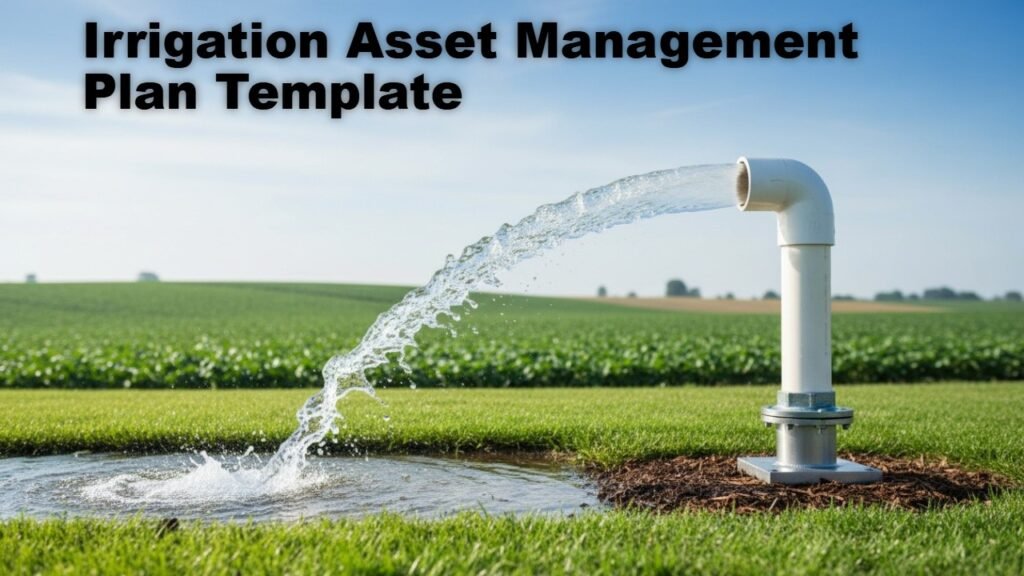
Irrigation Asset Management Plan Template development is essential for homeowners associations, commercial property managers, and large estate owners who oversee complex irrigation systems. Without a structured asset management approach, irrigation infrastructure deteriorates, maintenance becomes reactive, and repair costs escalate.
Irrigation systems include valves, controllers, pumps, pipes, wiring, sensors, and drainage interfaces. Each component has a lifecycle, performance threshold, and replacement cost. Managing these assets strategically protects landscapes and budgets.
This guide provides a comprehensive Irrigation Asset Management Plan Template framework that you can customize for residential communities, commercial properties, and institutional campuses. It outlines inventory methods, lifecycle planning, budgeting strategies, risk management, and performance tracking.
Why an Irrigation Asset Management Plan Matters
Many property managers treat irrigation as a maintenance task rather than a capital asset. This approach often leads to deferred maintenance, emergency repairs, and unpredictable expenses.
An Irrigation Asset Management Plan Template shifts the mindset from reactive repairs to proactive lifecycle planning. It provides:
- Asset visibility
- Cost forecasting
- Preventive maintenance schedules
- Performance monitoring
- Risk reduction
Structured planning extends system lifespan and stabilizes annual budgets.
Core Components of an Irrigation Asset Management Plan Template
An effective template includes clearly defined sections that track and manage every irrigation asset.
1. Asset Inventory Register
Every component must be documented.
Include:
- Controllers
- Mainlines
- Lateral lines
- Valves
- Pumps
- Backflow preventers
- Flow sensors
- Drip systems
- Drainage interfaces
Each entry should list installation date, manufacturer, model, capacity, and expected lifespan.
A detailed inventory forms the backbone of your Irrigation Asset Management Plan Template.
2. Asset Condition Assessment
Asset condition determines maintenance priority.
Evaluate components based on:
- Age
- Performance efficiency
- Visible wear
- Leak frequency
- Pressure stability
Use a standardized rating scale such as:
| Condition Rating | Description | Action Required |
|---|---|---|
| 5 – Excellent | New or fully operational | Routine inspection |
| 4 – Good | Minor wear | Scheduled maintenance |
| 3 – Fair | Performance decline | Repair planning |
| 2 – Poor | Frequent issues | Budget replacement |
| 1 – Critical | System failure risk | Immediate replacement |
Condition scoring supports data-driven decisions.
3. Lifecycle Planning
Every irrigation asset has a predictable service life.
Typical lifespans include:
- Controllers: 10–15 years
- Valves: 8–12 years
- Pumps: 10–20 years
- PVC piping: 20+ years
Lifecycle forecasting allows managers to plan replacements years in advance. A strong Irrigation Asset Management Plan Template includes projected replacement timelines and cost estimates.
Budget Forecasting and Capital Planning
Long-term budgeting prevents financial surprises.
Annual Maintenance Budget
Allocate funds for:
- Inspections
- Minor repairs
- Seasonal adjustments
- System audits
Capital Replacement Budget
Forecast future replacement costs based on lifecycle data. Spread projected expenses across multiple years to stabilize cash flow.
A well-structured Irrigation Asset Management Plan Template links asset condition with financial planning.
Preventive Maintenance Scheduling
Preventive maintenance reduces emergency repairs.
Seasonal Inspections
Conduct spring start-up inspections and winter shutdown procedures.
Monthly System Checks
Inspect pressure levels, controller settings, and valve function.
Annual System Audit
Perform a full irrigation audit to evaluate distribution uniformity and efficiency.
Documenting maintenance within your Irrigation Asset Management Plan Template ensures accountability.
Performance Metrics and Monitoring
Tracking performance improves system efficiency.
Key Performance Indicators (KPIs)
Monitor:
- Water usage trends
- Leak frequency
- Repair frequency
- Pressure stability
- Zone performance
Data Integration
Modern controllers and flow sensors provide digital monitoring. Integrating these tools into your Irrigation Asset Management Plan Template improves oversight.
Risk Management and Compliance
Irrigation systems interact with public water supplies and environmental regulations.
Backflow Compliance
This YouTube video below from Waterpro explains basic backflow compliance in irrigation systems. It highlights why backflow prevention protects clean water from contamination. The video serves as a quick reference for safe and compliant irrigation practices.
Backflow preventers require regular inspection and certification.
Water Conservation Regulations
Many municipalities enforce irrigation restrictions. Smart controllers help maintain compliance.
Drainage Integration
Improper irrigation increases runoff risk. Coordinate irrigation with drainage planning.
Risk mitigation is a core element of an Irrigation Asset Management Plan Template.
Digital Documentation and Mapping
Paper records often become outdated.
GIS Mapping
Geographic Information Systems allow precise mapping of irrigation lines and valves.
Cloud-Based Asset Tracking
Digital platforms centralize asset data, maintenance history, and inspection records.
Photo Documentation
Photographic records support condition assessment and warranty claims.
Modern documentation strengthens your Irrigation Asset Management Plan Template significantly.
Sample Irrigation Asset Management Plan Template Structure
Below is a simplified template outline you can customize.
| Section | Purpose | Key Data Included |
|---|---|---|
| Asset Inventory | Track all components | Model, age, location |
| Condition Assessment | Evaluate performance | Rating scale, notes |
| Lifecycle Forecast | Plan replacements | Estimated year, cost |
| Maintenance Schedule | Prevent breakdowns | Frequency, checklist |
| Budget Forecast | Stabilize finances | Annual and capital costs |
| Risk & Compliance | Ensure safety | Certifications, inspections |
| Performance Metrics | Monitor efficiency | Water use, leak history |
This structure provides a practical foundation for implementation.
Implementation Steps for Property Managers
Follow these steps to implement your Irrigation Asset Management Plan Template:
- Conduct a full system inventory
- Assign condition ratings
- Develop lifecycle forecasts
- Create a preventive maintenance calendar
- Establish annual and capital budgets
- Implement digital tracking tools
- Review performance annually
Structured implementation ensures long-term success.
Common Mistakes to Avoid
Avoid these frequent asset management errors.
Incomplete Inventory
Missing components lead to inaccurate planning.
Ignoring Data Trends
Failing to monitor water usage increases costs.
Delaying Replacement
Deferred replacement often results in emergency failures.
Avoiding these mistakes strengthens your Irrigation Asset Management Plan Template.
Benefits for Homeowners Associations and Commercial Properties
Structured irrigation asset management delivers measurable advantages.
- Predictable budgeting
- Lower emergency repair costs
- Improved landscape performance
- Enhanced water efficiency
- Extended infrastructure lifespan
- Increased property value
These outcomes justify the effort required to implement a comprehensive Irrigation Asset Management Plan Template.
Practical Tips for Long-Term Success
Use these expert recommendations:
- Conduct annual asset reviews
- Replace aging controllers proactively
- Upgrade to smart irrigation technology
- Integrate irrigation with drainage planning
- Train maintenance staff on system operation
- Maintain clear documentation
Consistency is key to maximizing asset value.
FAQs
What is an irrigation asset management plan?
It is a structured document that tracks irrigation components, schedules maintenance, and forecasts replacement costs.
Who should use an irrigation asset management plan template?
Property managers, HOAs, commercial facility managers, and large estate owners benefit most.
How often should assets be reviewed?
Conduct a full review annually and update condition ratings regularly.
Does asset management reduce costs?
Yes. Proactive planning reduces emergency repairs and stabilizes budgets.
Can digital tools improve asset tracking?
Yes. Cloud-based systems and smart controllers enhance monitoring and reporting.
Conclusion
Irrigation infrastructure represents a significant long-term investment. An Irrigation Asset Management Plan Template provides structure, accountability, and financial predictability for managing that investment effectively. By documenting assets, assessing condition, forecasting lifecycle costs, and scheduling preventive maintenance, property managers protect both landscape performance and operational budgets.
Organizations that adopt structured asset management reduce emergency failures, improve efficiency, and extend infrastructure lifespan. Implement a comprehensive irrigation asset strategy today to secure consistent performance and long-term financial stability for your property portfolio.