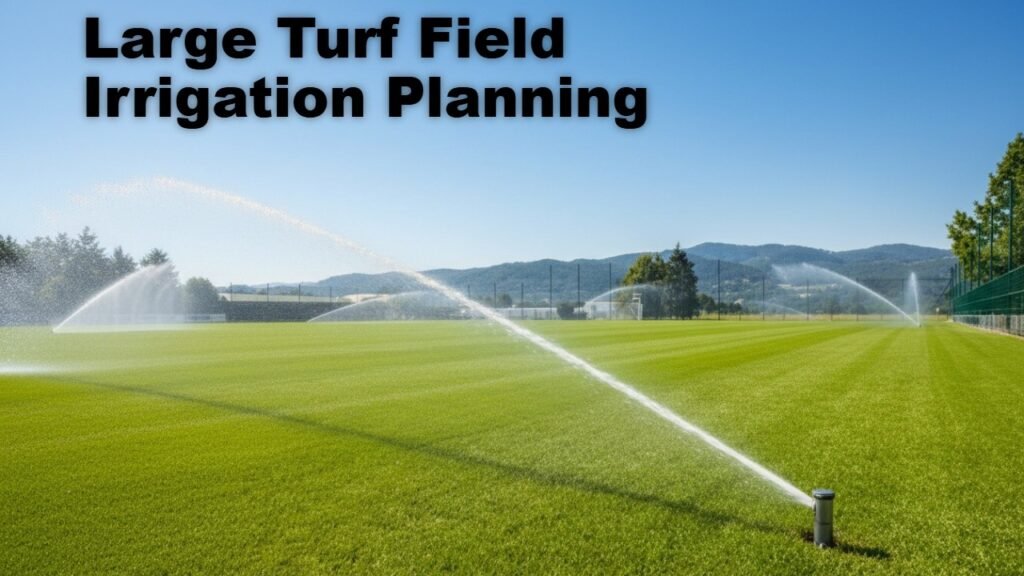
Large Turf Field Irrigation Planning is essential for maintaining healthy grass, controlling water costs, and ensuring consistent playing or recreation conditions across expansive fields. Sports complexes, parks, school grounds, and large residential lawns require precise irrigation to support turf health and usability. Poor planning leads to dry spots, muddy areas, and rising utility costs.
Property managers and facility operators must balance water efficiency with turf performance. A structured irrigation plan supports durability, safety, and long-term cost control. This guide explains how to design and manage irrigation systems that meet the demands of large turf areas.
Why Turf Field Irrigation Planning Matters
Large turf fields experience heavy foot traffic and environmental stress. Heat, wind, and soil compaction increase water demand. Without proper irrigation planning, turf quality declines quickly.
Large Turf Field Irrigation Planning helps:
- Maintain uniform turf coverage
- Prevent soil erosion
- Reduce water waste
- Improve field safety
- Extend turf lifespan
Healthy turf supports both aesthetics and usability. Proper irrigation ensures consistent performance across all sections of the field.
Key Challenges in Irrigating Large Turf Areas
This YouTube video below from Hunter Landscape Irrigation explains how Hunter rotors efficiently water large turf areas. It highlights even coverage, pressure control, and reduced runoff. The video serves as a quick reference for high-performance turf irrigation solutions.
Large fields introduce unique challenges that smaller landscapes do not face.
Uneven Water Distribution
Wide areas require careful head spacing and pressure control. Poor layout results in dry spots or oversaturated zones.
High Water Demand
Large turf fields consume significant water volumes. Without monitoring, costs rise quickly.
Soil Compaction
Heavy use compresses soil. Compacted soil absorbs water slowly, increasing runoff.
Weather Variability
Heat waves and drought conditions increase water demand. Rainfall patterns require schedule adjustments.
Large Turf Field Irrigation Planning must address each of these variables.
Core Components of Large Turf Field Irrigation Planning
A structured approach ensures consistent performance.
System Design and Layout
Proper head spacing ensures uniform coverage. Designers should calculate precipitation rates and match them across zones.
Consider:
- Head-to-head coverage
- Wind exposure
- Field slope
- Soil type
Uniform distribution prevents turf stress.
Zoning Strategy
Divide fields into zones based on:
- Sun exposure
- Soil conditions
- Usage intensity
- Turf type
Zoning allows precise watering and reduces waste.
Large Turf Field Irrigation Planning benefits from clearly defined irrigation zones.
Pressure Regulation
Pressure affects spray distance and uniformity.
High pressure causes misting and evaporation. Low pressure reduces coverage.
Install pressure regulators to maintain optimal performance.
Routine pressure checks ensure consistency.
Smart Controllers and Automation
Weather-based controllers adjust watering schedules automatically. These systems respond to rainfall, temperature, and evapotranspiration rates.
Benefits include:
- Reduced manual adjustments
- Improved efficiency
- Lower water bills
- Real-time monitoring
Automation improves consistency across large fields.
Sample Irrigation Planning Framework
| Component | Recommended Action | Frequency | Impact Level |
|---|---|---|---|
| System Inspection | Full field audit | Annual | High |
| Controller Adjustment | Seasonal schedule updates | Quarterly | High |
| Pressure Testing | PSI measurement | Quarterly | Medium |
| Head Alignment | Visual inspection | Monthly | Medium |
| Leak Detection | Flow monitoring | Monthly | High |
This table provides a structured planning model.
Large Turf Field Irrigation Planning requires consistent oversight and adjustment.
This YouTube video below from OklahomaGardening explains how irrigation plans support effective landscape design. It highlights layout planning, water zones, and efficient coverage strategies. The video serves as a quick reference for creating functional and sustainable irrigation systems.
Water Efficiency Strategies
Efficiency reduces costs and supports sustainability.
Implement these strategies:
- Use high-efficiency nozzles
- Install flow sensors
- Conduct regular audits
- Repair leaks immediately
- Adjust schedules seasonally
Monitoring water usage helps managers identify inefficiencies quickly.
Efficient irrigation supports long-term budget control.
Soil Management and Turf Health
Healthy soil improves water absorption. Compacted soil increases runoff and reduces effectiveness.
Best practices include:
- Aeration to improve infiltration
- Topdressing with sand or compost
- Monitoring moisture levels
- Using soil moisture sensors
Large Turf Field Irrigation Planning must integrate soil management with watering schedules.
Healthy soil requires less frequent irrigation.
Seasonal Irrigation Adjustments
Weather conditions change throughout the year. Irrigation schedules must adapt accordingly.
Seasonal adjustments include:
- Reducing watering during cooler months
- Increasing frequency during peak heat
- Adjusting run times after rainfall
- Winterizing systems in cold climates
Routine schedule review prevents overwatering and turf stress.
Maintenance Protocols for Large Turf Systems
Maintenance keeps systems operating efficiently.
Recommended practices:
- Monthly visual inspections
- Quarterly valve testing
- Annual professional audits
- Immediate leak repairs
- Controller calibration
Document all maintenance activities. Records support long-term planning and budgeting.
Large Turf Field Irrigation Planning relies on consistent maintenance.
Technology Integration for Large Fields
Modern irrigation systems use data to improve performance.
Technology options include:
- Remote monitoring platforms
- Flow sensors
- Weather-based controllers
- Soil moisture sensors
Digital tools allow managers to monitor multiple fields from one interface.
Technology improves efficiency and reduces labor.
Budgeting and Cost Control
Water and maintenance costs can be significant for large fields.
Budget planning should include:
- Annual water usage estimates
- Repair reserves
- Equipment replacement schedules
- Vendor contracts
Large Turf Field Irrigation Planning helps managers forecast expenses accurately.
Predictable costs improve financial planning.
Risk Management Considerations
Improper irrigation can create safety risks.
Potential issues include:
- Slippery playing surfaces
- Water pooling
- Soil erosion
- Turf damage
Routine inspections reduce these risks.
Managers should monitor high-use areas closely.
Implementation Steps
Step 1: Conduct Field Assessment
Evaluate turf condition, soil type, and system performance.
Step 2: Design or Update System Layout
Ensure proper head spacing and zoning.
Step 3: Install Smart Technology
Upgrade controllers and sensors.
Step 4: Establish Maintenance Schedule
Create inspection and repair routines.
Step 5: Monitor Performance
Track water usage and turf health regularly.
Large Turf Field Irrigation Planning requires ongoing evaluation.
Common Mistakes to Avoid
Avoid these errors:
- Overwatering during cool weather
- Ignoring pressure issues
- Skipping maintenance
- Using outdated equipment
- Failing to monitor usage
Small issues can escalate quickly across large fields.
Practical Tips for Property Managers
- Review water bills monthly
- Conduct seasonal audits
- Train staff on system operation
- Standardize equipment models
- Keep maintenance logs
Proactive management improves outcomes.
Frequently Asked Questions
What is Large Turf Field Irrigation Planning?
It is a structured approach to designing and managing irrigation systems for large grass areas.
How often should turf fields be irrigated?
Frequency depends on climate, soil type, and turf species. Seasonal adjustments are essential.
Do smart controllers improve efficiency?
Yes. They adjust watering schedules based on weather data and reduce waste.
How can water costs be reduced?
Efficient scheduling, leak detection, and proper system design lower water use.
Who should manage irrigation planning?
Property managers, grounds supervisors, and irrigation professionals typically oversee planning.
Conclusion
Large Turf Field Irrigation Planning ensures consistent turf quality, efficient water use, and predictable operating costs across expansive fields. Structured design, smart technology, and regular maintenance create reliable systems that support both aesthetics and usability. Property managers who implement proactive irrigation planning protect landscape investments and reduce long-term expenses.
Efficient irrigation supports healthier turf and better field performance. Explore how a structured irrigation planning approach can improve water efficiency and turf quality across your large field property.