Hydraulic friction loss in irrigation pipes directly impacts water pressure, sprinkler performance, and overall system efficiency. When water travels through pipes, it encounters resistance along the interior walls. That resistance reduces pressure before water reaches sprinkler heads.
Homeowners often notice weak spray patterns without understanding the cause. Property managers may see uneven turf coverage or dry spots. In many cases, the real issue is pressure loss inside the piping network. Understanding how hydraulic friction loss works helps prevent costly design errors and system failures.
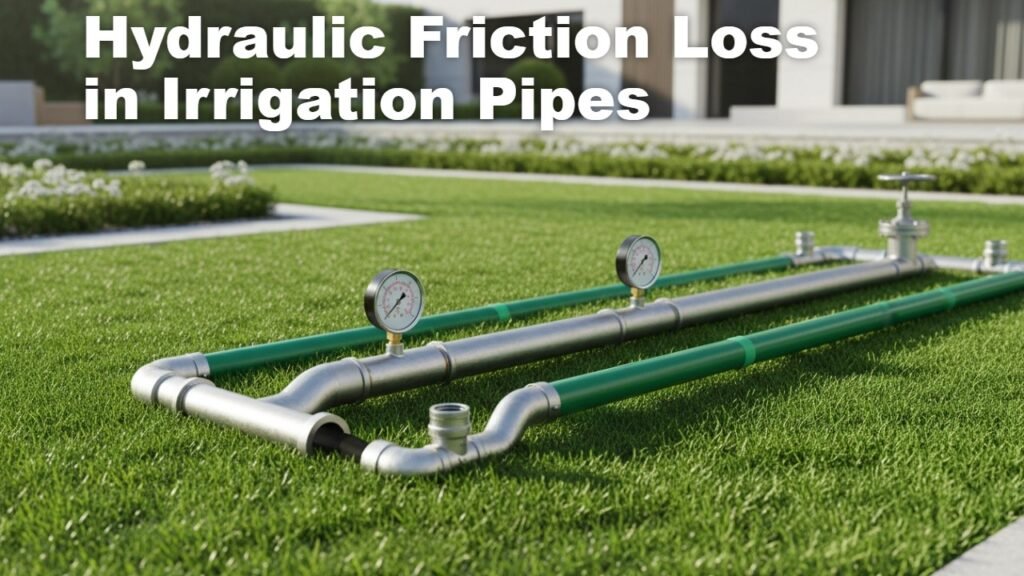
What Is Hydraulic Friction Loss in Irrigation Pipes?
This YouTube video below from Pro Irrigation Training explains friction loss in sprinkler systems and how it affects water pressure. It shows how pipe size, length, and flow rate influence performance. The guidance helps readers design more efficient irrigation systems.
Hydraulic friction loss in irrigation pipes refers to the pressure reduction that occurs as water flows through pipe surfaces. Water moving at higher speeds creates more internal resistance. That resistance increases pressure drop over distance.
Pipe material, diameter, flow rate, and length all influence friction loss. Smaller pipes with high flow rates experience greater pressure reduction. Longer pipe runs amplify the problem.
Why It Matters in Irrigation Systems
Irrigation systems depend on stable operating pressure. Most sprinkler heads require specific PSI levels for optimal performance.
When friction loss reduces pressure below manufacturer specifications, the system suffers. Common symptoms include:
- Weak spray radius
- Poor head-to-head coverage
- Misting or uneven distribution
- Excessive runtime
- Increased water waste
Ignoring hydraulic friction loss leads to inefficient watering and stressed landscapes.
The Science Behind Hydraulic Friction Loss
Water flowing through a pipe creates turbulence along interior walls. That turbulence slows velocity and reduces pressure. The relationship between velocity and pressure loss is not linear. Small increases in flow can cause large pressure drops.
Engineers calculate friction loss using formulas such as the Hazen-Williams equation. This equation estimates pressure loss based on pipe diameter, flow rate, and roughness coefficient. Understanding this principle allows designers to predict performance before installation.
Key Variables That Influence Friction Loss
This YouTube video below from MeyerFire explains what affects friction loss in water systems and piping. It covers pipe size, length, flow rate, and fittings. The overview helps readers understand how friction impacts pressure and system performance.
Hydraulic friction loss in irrigation pipes depends on several measurable factors:
- Pipe diameter
- Pipe length
- Flow rate (gallons per minute)
- Internal pipe roughness
- Elevation changes
Each variable plays a critical role in pressure balance.
Pipe Diameter and Its Impact on Pressure
Pipe diameter significantly affects hydraulic friction loss in irrigation pipes. Smaller pipes force water to travel faster. Faster velocity increases internal resistance and pressure drop.
Larger pipes allow water to move more smoothly. That reduction in velocity lowers friction loss. Designers often increase pipe size in long runs to maintain stable pressure.
Practical Example
Consider two pipes carrying the same flow rate. A one-inch pipe experiences higher friction loss than a one-and-a-half-inch pipe over the same distance. That difference may reduce sprinkler pressure by several PSI.
Even minor PSI reductions can shrink spray radius noticeably.
Pipe Length and Layout Design
Longer pipe runs increase hydraulic friction loss in irrigation pipes. Every additional foot adds resistance. Complex layouts with multiple bends amplify pressure reduction.
Strategic layout planning minimizes unnecessary length. Designers should avoid sharp turns and excessive fittings. Streamlined routing preserves pressure.
Friction Loss in Fittings
Elbows, tees, and valves contribute to pressure loss. Each fitting creates turbulence. Engineers calculate equivalent pipe length to account for fittings.
Reducing unnecessary fittings improves hydraulic efficiency.
Flow Rate and Velocity
Higher flow rates intensify hydraulic friction loss in irrigation pipes. When water demand exceeds pipe capacity, velocity spikes. That spike increases internal turbulence and pressure drop.
Proper zone sizing prevents excessive flow demand. Overloading a zone with too many sprinkler heads causes uneven coverage.
Zone Flow Balance
To manage flow effectively:
- Calculate total gallons per minute per zone
- Compare flow demand to water supply
- Match sprinkler output within zones
- Avoid exceeding recommended pipe velocity
Balanced zones maintain consistent pressure throughout the system.
Pipe Material and Surface Roughness
Different pipe materials affect hydraulic friction loss in irrigation pipes. PVC typically has a smooth interior surface. Galvanized steel often has higher roughness.
Rougher surfaces increase internal resistance. Over time, mineral buildup can worsen friction loss. Selecting high-quality materials reduces long-term performance issues.
Common Irrigation Pipe Materials
- PVC (Polyvinyl Chloride)
- HDPE (High-Density Polyethylene)
- Polyethylene tubing
- Galvanized steel
PVC remains popular due to its low friction coefficient and durability.
Elevation Changes and Pressure Loss
Elevation also influences hydraulic friction loss in irrigation pipes. Water traveling uphill loses pressure. For every foot of elevation gain, pressure drops approximately 0.433 PSI.
Downhill flow increases pressure, which may require regulation. Designers must calculate elevation differences when planning zones.
Managing Sloped Landscapes
To handle elevation changes:
- Install pressure-regulating valves
- Use check valves to prevent drainage
- Divide steep slopes into separate zones
- Apply cycle-and-soak scheduling
Ignoring elevation effects leads to inconsistent watering.
How to Calculate Hydraulic Friction Loss
This YouTube video below from Matt Hinkle explains friction loss and how it affects water flow in pipes. It shows how resistance reduces pressure over distance. The overview helps readers understand key basics of hydraulic system design.
Accurate calculation prevents system failure. Designers use friction loss charts or the Hazen-Williams formula. These tools estimate pressure loss per 100 feet of pipe.
Inputs required include:
- Pipe diameter
- Pipe material coefficient
- Flow rate
- Pipe length
Multiply loss per 100 feet by total pipe length to determine total pressure drop.
Example Calculation
If a one-inch PVC pipe loses 4 PSI per 100 feet at a certain flow rate, a 300-foot run loses approximately 12 PSI. Add fitting losses and elevation changes to determine total pressure reduction.
This calculation ensures adequate pressure at the sprinkler head.
Reducing Hydraulic Friction Loss in Irrigation Pipes
Preventing excessive pressure loss improves system efficiency. Thoughtful design choices protect performance.
Proven Engineering Strategies
- Increase pipe diameter on long runs
- Shorten unnecessary pipe routes
- Limit sharp bends and fittings
- Balance zone flow rates
- Maintain recommended water velocity
Design improvements reduce energy waste and improve sprinkler performance.
Upgrade Considerations
Older systems may suffer from undersized pipes. Upgrading mainlines or redistributing zones can restore pressure. Professional hydraulic analysis often identifies bottlenecks.
Warning Signs of Excessive Friction Loss
Homeowners and property managers should watch for performance issues linked to hydraulic friction loss in irrigation pipes.
Common indicators include:
- Reduced sprinkler throw distance
- Dry patches at farthest heads
- Inconsistent pressure between zones
- Extended watering times
- Rising water bills
Early detection prevents landscape damage.
Maintenance and Long-Term Monitoring
Hydraulic efficiency declines when systems lack maintenance. Sediment buildup and aging pipes increase internal resistance.
Routine inspection should include:
- Checking pressure at valves
- Inspecting pipe joints
- Flushing lines annually
- Replacing clogged nozzles
- Monitoring water usage trends
Consistent maintenance preserves hydraulic performance.
Practical Tips for Property Managers
Professional oversight ensures reliable irrigation performance.
- Request hydraulic calculations before installation
- Ask contractors for pipe sizing documentation
- Maintain updated zone flow charts
- Perform seasonal pressure checks
- Track PSI at critical points
Proactive management reduces emergency repairs.
FAQs
What causes hydraulic friction loss in irrigation pipes?
Hydraulic friction loss occurs when water moving through pipes encounters internal resistance, reducing pressure over distance.
Does pipe size affect pressure loss?
Yes. Smaller pipes increase velocity and friction, leading to greater pressure reduction.
How do I know if friction loss is affecting my system?
Look for weak sprinkler spray, dry patches, or uneven coverage across zones.
Can friction loss be fixed after installation?
Yes. Solutions include upsizing pipes, redistributing zones, or adjusting flow rates.
Is friction loss the same as elevation pressure loss?
No. Friction loss occurs due to pipe resistance. Elevation pressure loss results from vertical height changes.
Conclusion
Hydraulic friction loss in irrigation pipes plays a decisive role in water distribution and system performance. Ignoring pressure calculations leads to weak coverage and inefficient watering. Careful pipe sizing, flow management, and layout planning preserve hydraulic balance. Property owners who understand these principles avoid costly redesigns and landscape damage. Invest in proper hydraulic planning today and ensure your irrigation system operates at peak efficiency for years to come.