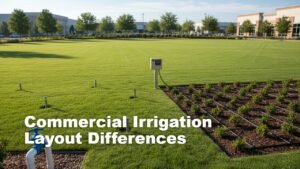
Large property irrigation design strategy determines how well expansive landscapes receive consistent water. Bigger properties demand careful planning and strong infrastructure. Poor design leads to pressure loss, uneven coverage, and wasted water.
Homeowners and property managers overseeing large landscapes face unique challenges. Distance, elevation, and water demand increase system complexity. A strategic plan ensures reliable irrigation across all zones.
This guide explains how to design scalable systems for large properties. You will learn zoning, pressure management, equipment selection, and long-term maintenance planning.

Why Large Properties Need a Strategic Irrigation Plan
Small lawns can rely on simple systems. Large landscapes require advanced planning. Water must travel longer distances and maintain pressure across many zones.
Without a structured approach, problems arise:
- Weak sprinkler pressure
- Uneven coverage
- High water bills
- System failures
- Increased maintenance costs
A strong large property irrigation design strategy ensures balanced flow and long-term efficiency.
Site Evaluation and Planning
Proper planning begins with a detailed site evaluation. Understanding the landscape helps determine system requirements.
Assess Property Size and Layout
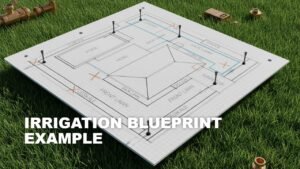
Measure the total irrigated area. Identify turf zones, planting beds, and open fields. Mapping the property helps determine pipe runs and valve locations.
Identify Elevation Changes
Slopes and elevation differences affect pressure. Water loses pressure when moving uphill. Large properties often require pressure adjustments.
Review Soil Conditions
Soil type affects water absorption. Sandy soil drains quickly. Clay soil retains moisture longer. System design must match soil characteristics.
Accurate evaluation supports an effective large property irrigation design strategy.
Zoning for Large Landscapes
Zoning divides the property into manageable irrigation sections. Each zone operates independently.
Separate Zones by Plant Type
Grass, shrubs, and trees require different watering schedules. Separate zones prevent overwatering and improve plant health.
Divide by Sun Exposure
Sunny areas dry faster than shaded areas. Separate zones ensure proper moisture levels across the property.
Limit Zone Size
Large zones reduce pressure and flow. Divide large areas into smaller sections. This ensures consistent coverage and efficient operation.
A structured zoning plan strengthens any large property irrigation design strategy.
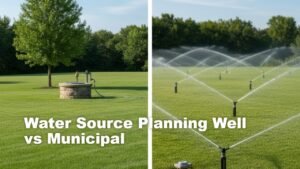
Water Source and Supply Planning
This YouTube video below from Goleta Water District explains the basics of water supply planning for reliable distribution. It covers demand, storage, and long-term management. The overview helps readers understand how to plan dependable water systems.
Water supply must meet demand across the entire property. Large landscapes often require higher flow rates.
Municipal Supply Considerations
Municipal water provides consistent pressure. Large properties may require booster pumps. Check flow capacity before installation.
Well Water Systems
Well systems support large landscapes effectively. Pump capacity must match irrigation demand. Proper filtration protects equipment.
Storage Tanks and Reservoirs
Some properties use storage tanks to maintain supply. Tanks provide backup during peak usage. They also stabilize pressure across zones.
Water source planning forms a critical part of large property irrigation design strategy.
Pump and Pressure Management
Pressure management ensures water reaches all areas evenly. Large properties often require advanced pump systems.
Booster Pumps
Booster pumps maintain pressure across long distances. They support multiple zones operating at different times.
Pressure Regulators
Pressure regulators protect pipes and sprinklers. Balanced pressure improves system longevity and performance.
Mainline Sizing
Larger mainlines reduce friction loss. Proper pipe sizing ensures steady flow across the property.
Effective pressure control strengthens large property irrigation design strategy.
Pipe Network Layout
Pipe layout determines water distribution efficiency.
Mainline and Lateral Lines
Mainlines carry water across the property. Lateral lines distribute water to sprinklers. Proper sizing prevents pressure loss.
Looping the System
Looped mainlines improve pressure stability. Water can flow from multiple directions. This reduces weak zones.
Valve Placement
Place valves close to irrigation zones. This reduces pressure loss and simplifies maintenance.
Careful pipe planning supports a reliable large property irrigation design strategy.
Sprinkler and Emitter Selection
This YouTube video below from Green Acres Nursery & Supply explains how to choose the right emitter for Drip Irrigation. It covers flow rates, plant needs, and spacing. The guidance helps readers design efficient and targeted watering systems.
Choosing the right equipment ensures consistent coverage.
Rotor Sprinklers
Rotors work well for large turf areas. They cover wide distances and apply water slowly.
Spray Heads
Spray heads suit smaller zones near buildings. They provide precise coverage for tight areas.
Drip Irrigation
Drip systems work well for planting beds and trees. They conserve water and reduce runoff.
Matching equipment to landscape needs strengthens large property irrigation design strategy.
Smart Controllers and Automation
Automation improves efficiency on large properties.
Smart Irrigation Controllers
Smart controllers adjust watering based on weather conditions. They reduce water waste and improve efficiency.
Flow Sensors
Flow sensors detect leaks and abnormal usage. Early detection prevents water loss.
Remote Monitoring
Remote monitoring allows property managers to control systems from anywhere. This improves response time and system oversight.
Technology enhances large property irrigation design strategy and simplifies management.
Drainage and Runoff Control
Large landscapes often include slopes and varied terrain. Proper drainage prevents water pooling.
Install Drain Valves
Drain valves remove excess water from pipes. This prevents damage during cold weather.
Manage Runoff
Use cycle-and-soak watering schedules. This prevents runoff on slopes and compacted soil.
Improve Soil Absorption
Aeration and organic matter improve soil absorption. Better soil reduces water waste.
Drainage planning supports efficient large property irrigation design strategy.
Maintenance Planning
Regular maintenance keeps large systems running smoothly.
Maintenance tasks include:
- Inspect valves and wiring
- Check pump pressure
- Clean filters
- Adjust seasonal schedules
- Test zones regularly
Scheduled maintenance prevents costly repairs and system downtime.
Budgeting and Cost Planning
Large irrigation systems require significant investment. Proper planning reduces long-term expenses.
Installation Costs
Costs include pipes, pumps, valves, and controllers. Larger properties require more materials and labor.
Operating Costs
Water usage and energy costs add up over time. Efficient design reduces ongoing expenses.
Long-Term Savings
Proper design reduces repairs and water waste. Investing in quality equipment lowers lifetime costs.
Budget planning forms an essential part of large property irrigation design strategy.
Sustainability and Water Conservation
Efficient irrigation protects water resources. Large properties must prioritize conservation.
Conservation strategies include:
- Smart controllers
- Drip irrigation
- Rain sensors
- Proper zoning
- Soil improvement
Sustainable practices support long-term landscape health and environmental responsibility.
Practical Tips for Property Managers
Follow these steps to improve irrigation performance:
- Map the entire property before design
- Divide zones carefully
- Use high-capacity mainlines
- Install pressure regulators
- Monitor system performance regularly
These actions help maintain consistent coverage and efficiency.
FAQs
How many zones should a large property have?
The number depends on size and plant types. Large properties often require multiple zones for proper coverage.
Do large properties need booster pumps?
Many do. Booster pumps maintain pressure across long pipe runs.
What is the best irrigation system for large lawns?
Rotor sprinklers work well for large turf areas. Drip systems suit planting beds.
How often should large systems be inspected?
Inspect systems at least twice per year. Seasonal checks prevent failures.
Can smart controllers help large properties?
Yes. Smart controllers improve efficiency and reduce water waste.
Conclusion
Large landscapes require thoughtful irrigation planning. A strong large property irrigation design strategy ensures consistent coverage and reliable performance. Proper zoning, pressure management, and equipment selection create efficient systems.
Investing in careful design reduces maintenance costs and improves landscape health. Strategic planning ensures long-term performance and water efficiency. Review your property layout and system needs carefully to build an irrigation strategy that delivers reliable results and lasting value.