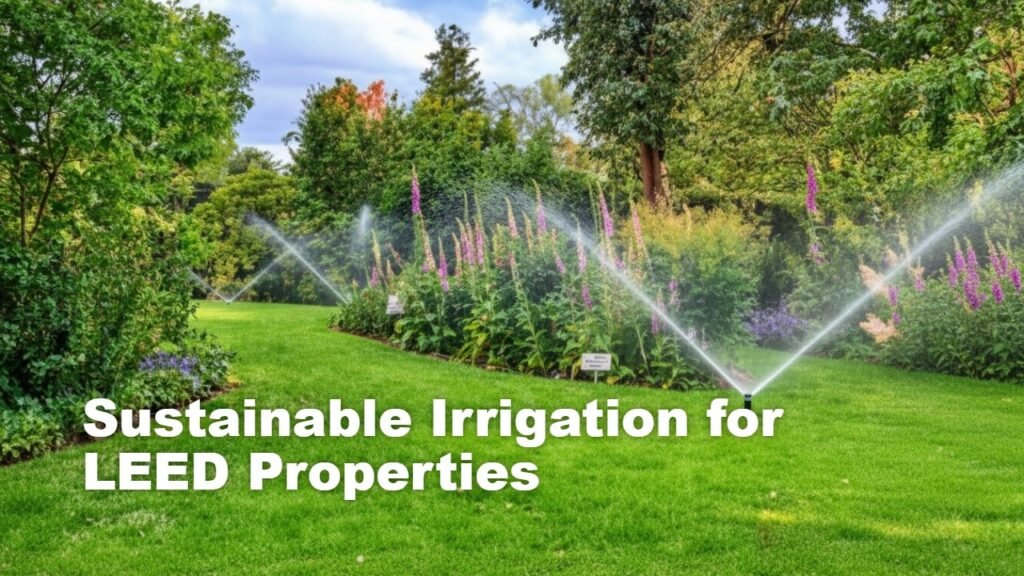
Sustainable Irrigation for LEED Properties supports water efficiency, landscape health, and long-term environmental performance. LEED-certified buildings require responsible resource management across all systems. Irrigation plays a major role in meeting sustainability benchmarks and maintaining certification standards.
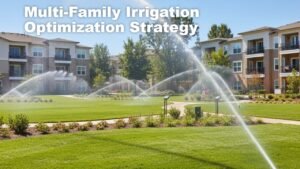
Large commercial sites, campuses, and residential communities often maintain extensive landscapes. Without efficient irrigation practices, water waste increases and certification goals become harder to maintain. A strategic irrigation approach aligns landscape care with sustainability targets.
Property managers who implement sustainable irrigation systems reduce operating costs and strengthen environmental performance across the property.
Why Irrigation Matters for LEED Certification
This YouTube video below from Wahaso – Water Harvesting Solutions explains LEED water metering and LEED certification. It outlines how monitoring water use supports sustainable building standards. The video serves as a quick reference for understanding green building compliance and water efficiency goals.
Water efficiency is a core requirement in green building standards. Outdoor water use often represents a large portion of total consumption.
Sustainable Irrigation for LEED Properties helps:
- Reduce potable water usage
- Meet Water Efficiency credits
- Support long-term certification
- Improve environmental reporting
- Lower operating expenses
LEED guidelines encourage reduced irrigation demand and efficient system design. Meeting these standards requires consistent monitoring and planning.
Core Principles of Sustainable Irrigation
Effective sustainable irrigation focuses on efficiency and responsible water use.
Key principles include:
- Matching water supply to plant needs
- Reducing runoff and overspray
- Monitoring usage data
- Using climate-responsive technology
- Maintaining system efficiency
Sustainable Irrigation for LEED Properties requires integration between landscape design and irrigation management.
Landscape Design Strategies for LEED Properties
Landscape planning influences irrigation demand. Proper design reduces water requirements before systems even operate.
Native and Adaptive Plants
Native plants require less supplemental watering. They adapt to local climate conditions and soil types.
Benefits include:
- Lower water demand
- Reduced maintenance
- Improved resilience
- Enhanced biodiversity
Grouping plants by water needs improves irrigation efficiency.
Soil Health and Mulching
Healthy soil retains moisture more effectively. Organic matter improves water absorption and root growth.
Mulching reduces evaporation and stabilizes soil temperature. These practices reduce irrigation frequency and support sustainable outcomes.
Hydro-Zoning
Hydro-zoning groups plants with similar water needs into the same irrigation zone. This prevents overwatering in low-demand areas.
Sustainable Irrigation for LEED Properties depends on accurate zoning and plant grouping.
Efficient Irrigation Technologies
This YouTube video below from the UF Center for Land Use Efficiency introduces efficient irrigation practices. It explains how proper design and scheduling reduce water waste and improve plant health. The video serves as a quick reference for smarter irrigation planning.
Modern systems provide tools for precise water management.
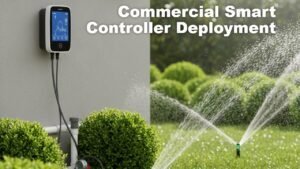
Smart Controllers
Weather-based controllers adjust watering schedules based on climate data.
Advantages include:
- Automatic seasonal adjustments
- Reduced manual oversight
- Improved water efficiency
- Lower utility costs
Smart controllers help properties maintain LEED water efficiency standards.
Drip Irrigation Systems
Drip systems deliver water directly to plant roots. This method minimizes evaporation and runoff.
Drip irrigation works well for:
- Shrub beds
- Trees
- Planters
- Perimeter landscaping
Efficient water delivery supports sustainability goals.
Soil Moisture Sensors
Sensors measure soil moisture levels and prevent unnecessary watering. Systems activate only when plants require water.
Sustainable Irrigation for LEED Properties improves significantly when sensors guide watering decisions.
Maintenance Practices That Support Sustainability
Efficient systems still require maintenance.
Recommended practices include:
- Monthly inspections
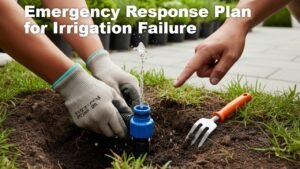
- Leak detection checks
- Pressure calibration
- Seasonal adjustments
- Equipment upgrades
Preventive maintenance prevents water waste and supports LEED performance metrics.
Water Budgeting for LEED Properties
Water budgeting aligns irrigation with sustainability targets.
Steps include:
- Measuring irrigated areas
- Calculating plant water needs
- Tracking monthly usage
- Adjusting schedules seasonally
- Comparing projected versus actual consumption
Sustainable Irrigation for LEED Properties depends on accurate water budgeting and monitoring.
Tracking consumption helps property managers maintain compliance with certification requirements.
Monitoring and Reporting for LEED Compliance
LEED properties often require documentation for water efficiency performance.
Managers should track:
- Monthly water usage
- Irrigation system efficiency
- Leak repair records
- Equipment upgrades
- Landscape changes
Digital dashboards simplify reporting and support certification renewals.
Data transparency strengthens sustainability programs.
Financial Benefits of Sustainable Irrigation
Efficient irrigation delivers measurable savings.
Cost benefits include:
- Lower water bills
- Reduced repair costs
- Fewer plant replacements
- Improved system lifespan
- Reduced energy use
Sustainable Irrigation for LEED Properties supports both environmental and financial goals.
Lower consumption reduces long-term operational expenses.
Risk Management and Compliance
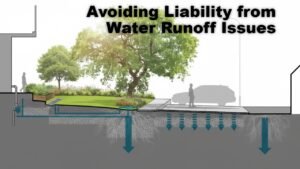
Improper irrigation can damage property and increase liability.
Risks include:
- Water runoff on walkways
- Soil erosion
- Foundation saturation
- Landscape decline
Sustainable irrigation reduces these risks by improving control and monitoring.
Compliance with local water regulations also supports certification goals.
Steps to Implement Sustainable Irrigation for LEED Properties
Step 1: Conduct Irrigation Audit
Evaluate system performance, equipment condition, and water usage.
Step 2: Upgrade Technology
Install smart controllers, sensors, and efficient spray heads.
Step 3: Improve Landscape Design
Replace high-water plants with drought-tolerant species.
Step 4: Implement Monitoring Systems
Track water usage and system performance regularly.
Step 5: Train Maintenance Teams
Ensure staff understand sustainability standards and system operation.
Sustainable Irrigation for LEED Properties requires continuous oversight and improvement.
Common Mistakes to Avoid
Avoid these common errors:
- Using outdated controllers
- Ignoring leaks
- Overwatering turf
- Skipping inspections
- Failing to document performance
Small inefficiencies undermine sustainability goals.
Consistent monitoring ensures long-term success.
Practical Tips for Property Managers
- Review irrigation schedules quarterly
- Conduct annual system audits
- Standardize equipment across sites
- Monitor water bills monthly
- Partner with experienced irrigation professionals
Structured management improves performance.
Frequently Asked Questions
What is Sustainable Irrigation for LEED Properties?
It is an irrigation approach designed to reduce water use and support green building certification standards.
How does irrigation affect LEED certification?
Efficient irrigation helps earn Water Efficiency credits and supports ongoing certification.
Are smart controllers required?
They are not mandatory but significantly improve water efficiency and monitoring.
Can older systems be upgraded?
Yes. Many systems can be retrofitted with efficient components and sensors.
How often should irrigation systems be audited?
Annual audits with seasonal adjustments are recommended.
Conclusion
Sustainable Irrigation for LEED Properties supports water efficiency, environmental responsibility, and long-term cost control. Property managers who implement efficient technology, thoughtful landscape design, and consistent monitoring improve sustainability performance and maintain certification standards. Structured irrigation management reduces waste and protects landscape investments.
Efficient irrigation strengthens both environmental and financial outcomes. Discover how a sustainable irrigation strategy can enhance your property’s performance while supporting long-term LEED goals.