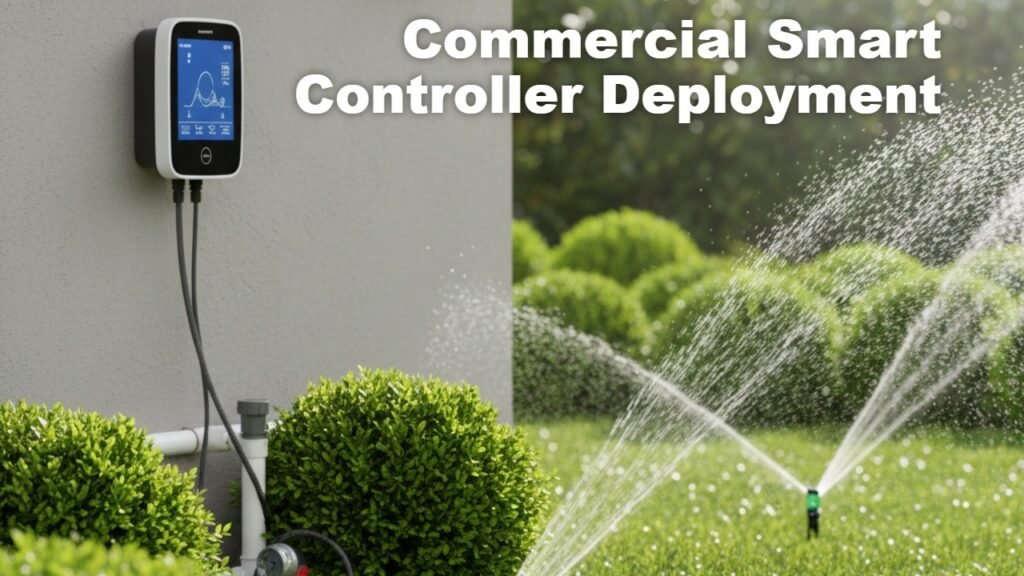
Commercial Smart Controller Deployment improves irrigation efficiency, reduces water waste, and strengthens operational control across commercial properties. Large landscapes require precise scheduling and monitoring. Traditional irrigation timers often rely on fixed schedules that ignore weather changes and soil conditions.
Smart controllers use weather data, sensors, and remote monitoring to automate watering decisions. Property managers who deploy these systems gain better cost control and improved landscape performance. A structured deployment plan ensures the technology delivers measurable results.
This guide explains how to plan, install, and manage smart irrigation controllers across commercial properties.
Why Smart Controller Deployment Matters
This YouTube video below from Tom’s Tech Time reviews the DJI Smart Controller in detail. It covers features, performance, and real-world usability for drone pilots. The video serves as a quick reference for understanding the controller’s capabilities and value.
Commercial landscapes consume significant water volumes. Parking lots, medians, turf areas, and planting beds all require regular irrigation.
Commercial Smart Controller Deployment helps:
- Reduce water consumption
- Lower utility costs
- Improve system reliability
- Simplify maintenance
- Support sustainability goals
Smart systems respond to weather conditions and soil moisture levels. They adjust watering automatically and prevent unnecessary irrigation.
Automation reduces human error and improves efficiency.
How Smart Controllers Work
Smart irrigation controllers use data to make watering decisions. They connect to weather stations, sensors, and cloud-based platforms.
Key functions include:
- Weather-based scheduling
- Soil moisture monitoring
- Remote access
- Flow monitoring
- Automated alerts
These features allow property managers to monitor irrigation performance in real time.
Commercial Smart Controller Deployment transforms irrigation from manual scheduling into data-driven management.
Key Benefits of Smart Controller Systems
Water Savings
Weather-based adjustments reduce unnecessary watering. Many properties reduce water usage by 15–30% after deployment.
Cost Control
Lower water consumption reduces monthly utility bills. Predictable usage improves budget planning.
Improved Landscape Health
Plants receive water based on actual need rather than fixed schedules. This supports stronger root growth and healthier turf.
Remote Monitoring
Managers can monitor multiple properties from one dashboard. Remote access allows quick adjustments.
Leak Detection
Flow sensors alert managers to abnormal usage. Early detection prevents major damage.
Commercial Smart Controller Deployment provides both operational and financial benefits.
Planning a Smart Controller Deployment
This YouTube video below from JAIN by Rivulis explains five key steps for programming smart irrigation controllers. It highlights setup basics, scheduling logic, and water efficiency adjustments. The video serves as a quick reference for optimizing controller performance.
Proper planning ensures a successful rollout.
Step 1: Conduct System Audit
Evaluate existing irrigation infrastructure. Identify controller locations, wiring conditions, and valve compatibility.
Document:
- System age
- Zone count
- Water pressure
- Current programming
An audit reveals upgrade requirements.
Step 2: Select Compatible Equipment
Choose controllers that match system size and property needs.
Consider:
- Number of zones
- Remote monitoring capability
- Sensor compatibility
- Cloud platform features
Standardizing equipment across sites simplifies maintenance.
Commercial Smart Controller Deployment works best when systems use consistent technology.
Step 3: Install Sensors and Monitoring Tools
Smart systems rely on accurate data.
Install:
- Rain sensors
- Soil moisture sensors
- Flow meters
- Pressure sensors
Sensors improve decision-making and reduce water waste.
Step 4: Configure Controller Programming
Initial programming should reflect plant needs and climate conditions.
Adjust:
- Run times
- Start times
- Seasonal schedules
- Zone priorities
Professional setup improves long-term performance.
Sample Deployment Framework
| Deployment Stage | Action Item | Timeline | Priority |
|---|---|---|---|
| System Audit | Inspect existing infrastructure | Week 1 | High |
| Equipment Selection | Choose controller models | Week 2 | High |
| Installation | Install controllers and sensors | Weeks 3–4 | High |
| Programming | Configure schedules | Week 5 | Medium |
| Monitoring | Review performance data | Ongoing | High |
This structured approach ensures consistent deployment. Commercial Smart Controller Deployment requires coordination between property managers and vendors.
Maintenance After Deployment
Smart systems still require regular maintenance.
Recommended tasks include:
- Monthly system inspections
- Quarterly sensor testing
- Annual controller updates
- Immediate leak repairs
- Seasonal schedule adjustments
Routine maintenance ensures systems operate efficiently.
Integrating Smart Controllers With Property Management
Smart irrigation platforms integrate with broader property management systems.
Integration allows:
- Centralized dashboards
- Usage tracking
- Maintenance reporting
- Vendor coordination
Managers can oversee multiple properties from one platform.
Commercial Smart Controller Deployment improves operational visibility across portfolios.
Cost Considerations and ROI
Initial installation costs vary based on property size and system complexity. However, long-term savings often justify the investment.
Cost factors include:
- Controller hardware
- Sensor installation
- Labor
- Software subscriptions
Savings come from reduced water usage and fewer emergency repairs.
Many properties achieve payback within two to three years.
Common Mistakes to Avoid
Avoid these errors during deployment:
- Skipping system audits
- Ignoring sensor calibration
- Using inconsistent controller models
- Failing to train staff
- Delaying maintenance
Poor setup reduces efficiency gains.
Proper planning ensures successful implementation.
Best Practices for Long-Term Success
Follow these best practices:
- Standardize equipment across sites
- Monitor usage monthly
- Train staff on system operation
- Conduct annual performance reviews
- Update schedules seasonally
Consistency improves performance.
Commercial Smart Controller Deployment delivers the best results when supported by ongoing oversight.
Environmental and Compliance Benefits
Many municipalities enforce water conservation measures. Smart controllers help properties meet regulatory requirements.
Benefits include:
- Reduced water consumption
- Improved sustainability reporting
- Compliance with local restrictions
- Support for green building certifications
Efficient irrigation supports environmental responsibility.
Practical Tips for Property Managers
- Review water bills regularly
- Set usage benchmarks
- Monitor alerts daily
- Maintain service contracts
- Document system updates
Active management ensures systems perform as expected.
Frequently Asked Questions
What is Commercial Smart Controller Deployment?
It is the installation and integration of smart irrigation controllers that automate watering schedules based on environmental data.
How much water can smart controllers save?
Most properties reduce water use by 15–30% after deployment.
Are smart controllers difficult to maintain?
They require routine checks but simplify overall irrigation management.
Can older systems be upgraded?
Many existing systems can be retrofitted with smart controllers and sensors.
Who should manage smart controller systems?
Property managers, irrigation contractors, or maintenance teams typically oversee operation.
Conclusion
Commercial Smart Controller Deployment transforms irrigation systems into efficient, data-driven assets. Smart technology reduces water waste, lowers operating costs, and improves landscape health across commercial properties. Property managers who implement structured deployment strategies gain better control over irrigation performance and long-term expenses.
Efficient irrigation begins with smart technology and consistent oversight. Discover how a well-planned controller deployment can improve efficiency and strengthen performance across your entire property portfolio.