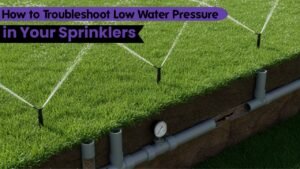
If your sprinkler system isn’t behaving, you’re not alone. Most people land here because something feels off. Dry brown patches. Heads spitting air. A zone that hums but never turns on. It’s annoying, and sometimes a little stressful, especially when water keeps running. The good news is this. Most common sprinkler problems have very specific symptoms, and very predictable fixes. You don’t need to guess. You just need to diagnose in the right order. Surface parts first. Underground next. Controller last. One more thing that matters. Doing basic troubleshooting yourself can save real money. Identifying a failed solenoid or clogged nozzle on your own can save a $75–$150 diagnostic service call, plus the markup many professionals add to basic irrigation parts. That alone makes learning this worth it. Let’s break it down clearly.
Quick Diagnostic Table: Symptom vs Likely Fix
| What You See | Most Likely Cause | Typical Fix |
|---|---|---|
| Weak or sputtering spray | Clogged nozzle or mineral scale | Clean nozzle + filter |
| Head won’t pop up | Sand in riser or worn seal | Flush or replace head |
| Geyser shooting water | Broken head or pressure surge | Replace head |
| Zone won’t turn on | Bad solenoid or wiring | Test with multimeter |
| Zone won’t shut off | Diaphragm stuck open | Clean or replace diaphragm |
| Dry spots everywhere | Poor head-to-head coverage | Adjust arc and radius |
This table answers most “what’s wrong” questions fast. Now let’s go step by step.
How to Fix a Clogged Sprinkler Nozzle
This is the most searched sprinkler fix for a reason. It happens all the time, especially with sediment buildup and hard water.
Step-by-step fix for clogged nozzles:
- Turn off the irrigation water supply
- Pull up the sprinkler riser and hold it
- Remove the nozzle using a nozzle tool
- Extract the internal filter screen
- Scrub the screen with an orifice cleaner or toothbrush
- Flush the head briefly with the nozzle removed
- Reinstall the filter and nozzle
- Restore water to verify the spray pattern and head-to-head coverage
Hard water causes mineral scale inside spray nozzles. This is common in many homes and leads to distorted spray patterns and dry spots.
Sprinkler Heads That Won’t Pop Up or Retract
What’s happening:
The head stays buried in the grass or doesn’t retract after watering. That’s usually sand in the riser or a worn wiper seal.
How to fix it:
Remove the nozzle and flush the head by running the zone for 10–15 seconds. If it still sticks, replacing the entire head is faster and more reliable than rebuilding. This problem shows up more after seasonal startups or pipe repairs.
Broken or Leaking Sprinkler Heads
Symptom:
A vertical fountain of water when the zone runs. Yes, the head is broken. But often there’s a deeper reason. Pressure surges, also called water hammer, can crack heads repeatedly. This happens when static PSI is high and there’s no pressure regulating valve.
Static vs Dynamic PSI explained:
- Static PSI is pressure when water is off
- Dynamic PSI is pressure while heads are running
If dynamic PSI drops below 30, spray heads will weep instead of spray. If static PSI is too high, parts fail early.
Fix:
Dig carefully, unscrew the broken head, and replace it with a matching GPM model.
👉 Always call 811 before digging, even for residential sprinkler repairs.
Zones That Won’t Turn On
Symptom:
You press “manual start” on the smart irrigation controller (ET-based), and nothing happens. Start at the controller. Check the common wire on the C-terminal. Loose or corroded wire nuts are common. Move to the valve box.
Solenoid Testing (AC vs DC)
Most wired systems use AC solenoids. Battery-operated valves use DC latching solenoids. Use a multimeter set to Ohms:
- Disconnect solenoid wires
- Measure resistance
Normal reading: 20–60 ohms
Bad solenoid: infinite or “open” reading
This simple test alone answers many “why won’t my zone run” questions.
Mechanical vs Electrical Decision Logic
Use this logic to isolate the problem fast:
- Zone won’t turn off + controller OFF → Mechanical failure (diaphragm)
- Zone won’t turn on + solenoid hums → Mechanical jam (debris)
- Zone won’t turn on + no hum → Electrical failure
If the solenoid hums but there’s no water flow, the electrical signal is reaching the valve. The plunger inside is likely stuck from mineral scale or a rusted spring.
How to Manually Bleed a Sprinkler Valve
Manual bleeding tells you if the hydraulic system works.
- Turn the external bleed screw counter-clockwise ½ turn
- If the zone activates, water supply and piping are fine
- That isolates the fault to the solenoid or controller wiring
If nothing happens, the valve body itself is blocked or damaged.
Low Water Pressure in One Zone (Leaks vs Friction Loss)
Symptom: All heads in one zone spray weakly, but other zones look fine. This is not always a leak. Friction loss is common. Too many heads on one zone can drop dynamic PSI below operating requirements.
Typical requirements:
- Spray heads: 30 PSI minimum
- Rotor heads: 40–45 PSI
Pipe type matters too:
- Poly pipe (polyethylene) with cinch clamps is common in colder regions because it flexes during freeze-thaw cycles
- PVC Schedule 40 is common in warmer climates and handles pressure well
A lateral line leak only loses water when the zone runs. A mainline leak stays under constant pressure and can flood a yard nonstop.
Sprinkler Won’t Shut Off
Symptom:
Zone keeps running even when the controller is unplugged. This is mechanical. Debris is stuck under the diaphragm.
Fix:
Shut off water, open the valve bonnet, remove the diaphragm, clean or replace it. Freeze-thaw cycles speed up diaphragm wear and cause hairline PVC cracks.
Coverage Issues and Dry Spots
Symptom: System runs, lawn still struggles. This is usually poor head-to-head coverage. Proper design requires 100% overlap, meaning the spray from Head A should physically hit the base of Head B. Adjust arc and radius on rotor heads like Hunter PGP or Rain Bird 5000. Don’t shrink radius too much or friction loss increases.
Smart Controllers and Flow Monitoring
Modern smart systems now use flow sensors. These detect:
- High flow → possible leak
- Low flow → clog or failed head
Some controllers automatically shut zones down before damage spreads. This is now a baseline feature, not a luxury.
How do I know if my sprinkler solenoid is bad?
A solenoid is bad if it reads infinite ohms on a multimeter or fails to click when the valve is manually bled.
Why are my sprinklers spitting air?
This usually means air trapped after startup or a mainline break; run the furthest zone to purge the lines.
Why do sprinkler heads keep breaking in the same spot?
Repeated failures usually mean high static PSI, missing pressure regulation, or pressure surges.
Final Thoughts
Sprinkler systems aren’t mysterious. They run on pressure, flow, and control. When you diagnose using PSI, GPM, and Ohms, problems stop feeling random. Fix surface issues early—respect underground pressure. Trust the numbers. That’s how sprinkler problems stay small.