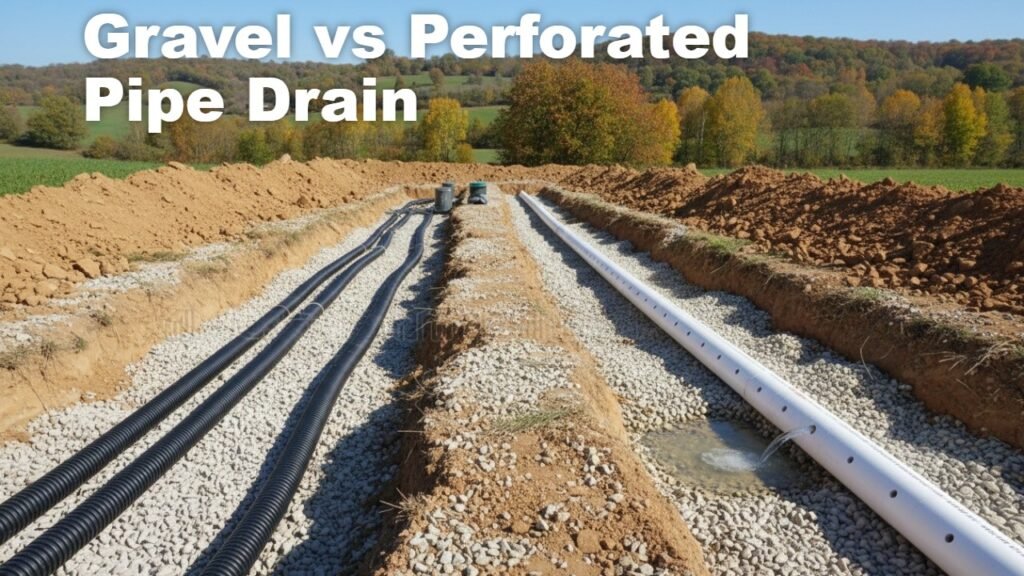
Gravel vs perforated pipe drain systems is a common comparison for homeowners and property managers dealing with standing water, soggy lawns, or basement moisture. Both systems aim to redirect excess water, but they function differently and suit different site conditions.
Choosing the wrong drainage system can lead to continued flooding, soil erosion, and wasted investment. Understanding how each option performs helps ensure long-term effectiveness and property protection.
This guide explains how gravel-only drains and perforated pipe systems work, their cost differences, installation requirements, maintenance needs, and ideal applications.
Why Drainage System Selection Matters
Poor drainage affects foundations, landscaping, and outdoor usability. Water that sits too long weakens soil structure and creates hydrostatic pressure against basement walls.
A properly designed drainage system:
- Reduces surface runoff
- Relieves groundwater pressure
- Prevents soil erosion
- Protects hardscape
- Maintains plant health
Comparing gravel vs perforated pipe drain systems helps property owners match the solution to the problem.
What Is a Gravel Drain System?
A gravel drain system uses a trench filled with coarse gravel to allow water to filter through and disperse into surrounding soil. It does not always include piping.
How Gravel Drains Work
Water enters the gravel-filled trench. The open spaces between stones allow water to flow downward and outward. The system relies on natural soil absorption.
Common Applications
Gravel drains are often used for:
- Small pooling areas
- Decorative landscape borders
- Low-impact drainage needs
- Garden bed edges
Gravel systems work best where soil drains well and water volume remains moderate.
What Is a Perforated Pipe Drain System?
This YouTube video below from FRENCH DRAIN MAN explains how perforated drainage pipe works in a French drain system. It shows how holes in the pipe collect groundwater and move it away from problem areas. The creator also explains proper placement, gravel use, and slope for steady flow. The video serves as a helpful reference for understanding effective subsurface drainage design.
A perforated pipe drain system includes a perforated pipe placed inside a gravel-filled trench. The pipe collects water and carries it away to a designated outlet.
How Perforated Pipe Systems Work
Water seeps into the gravel trench. It enters the perforated pipe through small holes. The pipe then directs water away from the problem area.
Common Applications
Perforated pipe systems are commonly used for:
- French drains
- Foundation perimeter drains
- Yard drainage
- Sloped properties
- Persistent wet areas
This system provides active water redirection rather than passive dispersion.
Comparing gravel vs perforated pipe drain systems reveals important functional differences.
Performance Comparison
| Feature | Gravel Drain | Perforated Pipe Drain |
|---|---|---|
| Water Movement | Passive absorption | Active redirection |
| Best For | Minor pooling | Persistent saturation |
| Installation Depth | Shallow | Shallow to deep |
| Cost | Lower | Moderate to high |
| Maintenance | Minimal | Requires inspection |
| Effectiveness | Moderate | High |
| Lifespan | Shorter in heavy use | Longer with proper care |
This table helps homeowners understand gravel vs perforated pipe drain systems at a glance.
Installation Complexity
Installation requirements differ significantly.
Gravel-Only Installation
Gravel drains require:
- Excavating a trench
- Lining with landscape fabric
- Filling with gravel
Installation is straightforward and less labor-intensive.
Perforated Pipe Installation
Pipe systems require:
- Excavation
- Proper slope grading
- Pipe placement
- Gravel backfill
- Outlet routing
Correct slope ensures proper water flow. Improper installation reduces performance.
Gravel vs perforated pipe drain systems vary in technical requirements.
Cost Comparison
Budget plays a key role in drainage decisions.
Gravel Drain Costs
Gravel-only systems cost less because they require fewer materials. Labor costs also remain lower due to simpler installation.
Perforated Pipe Costs
Perforated pipe systems cost more due to:
- Pipe materials
- Deeper excavation
- Additional fittings
- Outlet routing
However, pipe systems often prevent costly structural damage.
Long-term value often favors perforated pipe solutions for serious drainage issues.
Soil and Site Considerations
This YouTube video below from Central West Local Land Services explains how to test your soil for proper site selection. It shows simple methods to check soil texture, drainage, and structure before starting a project. The guidance helps viewers choose suitable locations for planting or construction. The video serves as a useful reference for making informed landscape and drainage decisions.
Soil type influences system performance.
Sandy Soil
Sandy soil drains well. Gravel drains may perform adequately.
Clay Soil
Clay retains water. Gravel drains alone may not resolve saturation. Perforated pipe systems work better.
Sloped Properties
Slope directs water movement. Pipe systems help control flow and prevent erosion.
Analyzing soil conditions is essential when comparing gravel vs perforated pipe drain systems.
Maintenance Requirements
Both systems require maintenance, though at different levels.
Gravel Drain Maintenance:
- Remove debris
- Check for sediment buildup
- Inspect for erosion
Perforated Pipe Maintenance:
- Inspect outlet discharge
- Flush pipe if clogged
- Monitor for root intrusion
Regular inspection ensures long-term effectiveness.
Advantages and Disadvantages
Gravel Drain Advantages
- Lower cost
- Simple installation
- Minimal disruption
Gravel Drain Disadvantages
- Limited water movement
- Less effective for heavy runoff
- May clog over time
Perforated Pipe Advantages
- Active water redirection
- Effective for foundation protection
- Handles higher water volume
Perforated Pipe Disadvantages
- Higher installation cost
- Requires proper slope
- More complex installation
Understanding gravel vs perforated pipe drain systems helps property owners weigh these factors carefully.
When to Choose Each System
Choose gravel drains when:
- Water pooling is minor
- Soil drains well
- Budget is limited
- Decorative drainage is needed
Choose perforated pipe systems when:
- Water saturation persists
- Basement moisture occurs
- Soil drains poorly
- Long-term structural protection is needed
Matching the system to site conditions ensures effective drainage.
Practical Installation Tips
Follow these best practices:
- Ensure proper trench slope
- Use filter fabric to prevent clogging
- Install discharge outlets away from structures
- Avoid directing water onto neighboring properties
- Inspect systems after heavy rain
These steps improve performance and longevity.
FAQs
Which is better, gravel or perforated pipe drains?
Perforated pipe systems handle larger water volumes more effectively. Gravel works for minor drainage needs.
Are gravel drains cheaper?
Yes. Gravel drains generally cost less to install.
Do perforated pipe drains clog?
They can clog if not installed with filter fabric or maintained properly.
Can both systems be combined?
Yes. Many French drains combine gravel and perforated pipe for maximum effectiveness.
How long do these systems last?
Properly installed pipe systems can last decades. Gravel-only systems may require earlier maintenance.
Conclusion
Effective drainage protects property value and structural integrity. Gravel vs perforated pipe drain systems offer different levels of performance and cost. Gravel drains provide a simple, low-cost solution for minor issues. Perforated pipe systems deliver stronger water control for serious drainage concerns.
Careful evaluation of soil conditions, water volume, and foundation risk ensures the right choice. Property owners who invest in proper drainage planning reduce long-term repair costs and maintain healthier landscapes. Assess your yard’s drainage challenges and select a system that delivers reliable protection and lasting results.