Lawn Science and Turf Health shape the foundation of every thick, green, and resilient yard. Most homeowners chase quick fixes like fertilizer spikes or random watering schedules. Those methods rarely solve root problems.
Healthy turf requires understanding soil biology, grass physiology, water management, and nutrient balance. Property managers who treat lawns like living ecosystems see better long-term results.
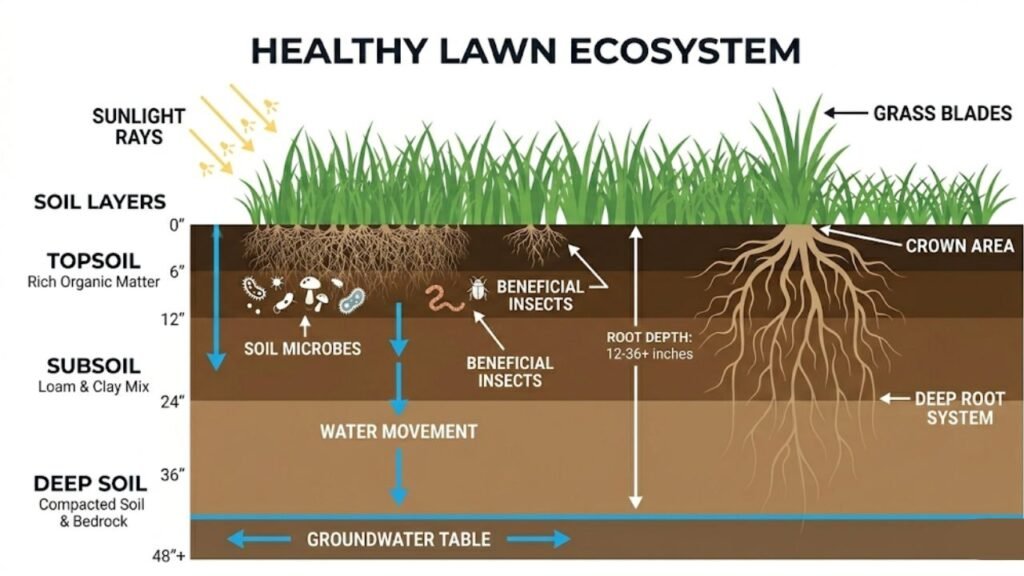
This guide breaks down the science behind turf performance and turns it into practical action steps. You will learn how soil, nutrients, mowing, irrigation, and seasonal care work together.
Understanding Lawn Science and Turf Health Basics
This YouTube video below from UMDHGIC explains lawn care basics and how to troubleshoot common turf problems. It covers watering, soil health, and seasonal maintenance. The overview helps readers maintain stronger, healthier lawns.
Lawn science studies how grass plants grow and interact with soil, microbes, climate, and management practices. Turf health measures how strong, dense, and stress-resistant that grass becomes.
Grass is not just surface greenery. It is a living system with:
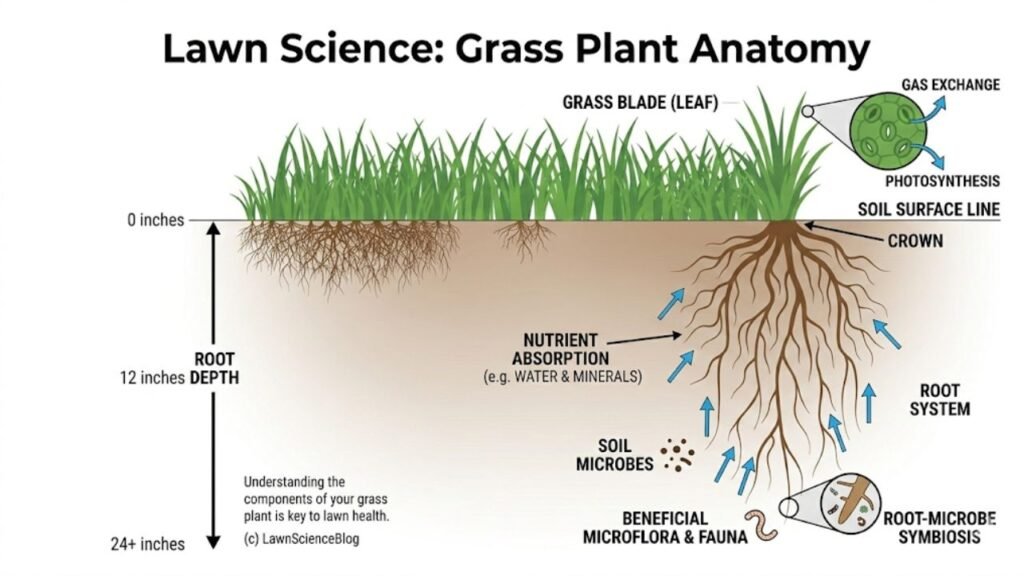
- Roots that absorb nutrients and water
- Leaves that photosynthesize
- Crowns that generate new growth
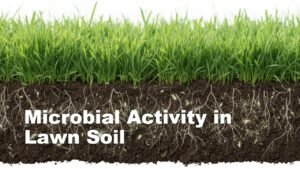
- Soil microbes that recycle organic matter
When these systems function properly, lawns resist weeds, disease, and drought.
Grass Growth and Photosynthesis
Grass blades convert sunlight into energy through photosynthesis. Short cutting weakens this process. Deep roots depend on leaf surface area.
Healthy turf keeps enough blade length to:
- Capture sunlight efficiently
- Protect soil from heat stress
- Encourage deeper root development
Soil: The Core of Lawn Science and Turf Health
Soil drives everything in Lawn Science and Turf Health. Fertilizer cannot fix compacted or imbalanced soil.
Healthy soil includes:
- Balanced pH (usually 6.0–7.0 for most turf types)
- Organic matter content
- Active microbial population
- Proper drainage and aeration
Soil Testing: The First Smart Move
This YouTube video below from Gardener Scott explains how to test soil using accurate methods. It shows why testing matters for plant health and lawn care. The overview helps readers make better soil and fertilizer decisions.
Professional soil testing reveals nutrient deficiencies and pH imbalance. Guesswork leads to over-fertilization.
A soil test measures:
- Nitrogen (N)
- Phosphorus (P)
- Potassium (K)
- Micronutrients like iron and magnesium
- Organic matter percentage
Correcting pH improves nutrient absorption instantly. Lime raises pH. Sulfur lowers it.
Choosing the Right Grass Type for Turf Health
Climate determines turf success. Warm-season and cool-season grasses perform differently.
Cool-Season Grasses
Cool-season grasses thrive in northern climates.
Examples include:
- Kentucky bluegrass
- Perennial ryegrass
- Tall fescue
- Fine fescue
These grasses grow actively in spring and fall.
Warm-Season Grasses
Warm-season grasses excel in southern regions.
Popular types include:
- Bermuda grass
- Zoysia grass
- St. Augustine grass
- Centipede grass
These varieties peak in summer heat.
Matching grass to climate strengthens Lawn Science and Turf Health naturally.
Nutrient Management and Fertility Planning
Balanced nutrition drives consistent turf performance. Nitrogen fuels blade growth. Phosphorus strengthens roots. Potassium improves stress resistance.
Over-fertilizing causes shallow roots and disease risk. Under-fertilizing weakens density.
Smart Fertilization Strategy
Follow these principles:
- Base applications on soil test results
- Apply nitrogen during active growth periods
- Use slow-release formulations
- Avoid fertilizing before heavy rain
Organic options like compost improve soil structure while feeding microbes.
Water Management in Lawn Science and Turf Health
Watering habits often damage turf more than drought itself.
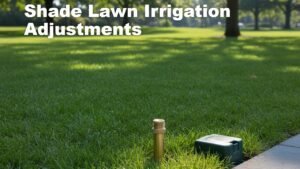
Deep, infrequent watering encourages roots to grow downward. Light, daily watering keeps roots shallow.
Ideal Irrigation Practices
- Water early in the morning
- Apply 1 to 1.5 inches per week
- Adjust for rainfall
- Check sprinkler uniformity
Overwatering promotes fungal diseases and compaction. Underwatering reduces density.
Balance protects long-term turf vitality.
Mowing Techniques That Support Turf Health
Mowing seems simple. Incorrect mowing destroys progress.
Cutting too short stresses grass. Dull blades tear tissue and increase disease risk.
Best Mowing Practices
- Follow the one-third rule
- Keep blades sharp
- Vary mowing direction
- Leave clippings when possible
Grass clippings recycle nitrogen back into soil. This practice supports Lawn Science and Turf Health naturally.
Aeration and Compaction Control
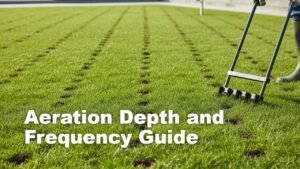
Foot traffic, pets, and equipment compress soil. Compaction restricts oxygen flow to roots.
Core aeration removes small soil plugs and improves:
- Air exchange
- Water penetration
- Root expansion
- Microbial activity
Fall and spring are ideal aeration windows.
Weed Management Through Turf Science
Dense turf crowds out weeds. Thin turf invites them.
Prevention always works better than chemical correction.
Integrated Weed Strategy
- Maintain proper mowing height
- Improve soil fertility
- Overseed thin areas
- Apply pre-emergent herbicide when needed
Healthy turf blocks sunlight from reaching weed seeds.
Disease and Pest Control in Lawn Science and Turf Health
Fungal diseases develop under excess moisture and poor airflow.
Common turf diseases include:
- Brown patch
- Dollar spot
- Powdery mildew
Healthy lawns resist infection.
Prevention Tactics
- Avoid nighttime watering
- Improve drainage
- Reduce excessive nitrogen
- Maintain airflow
Beneficial insects and natural predators reduce pest outbreaks without heavy chemical use.
Seasonal Lawn Science and Turf Health Calendar
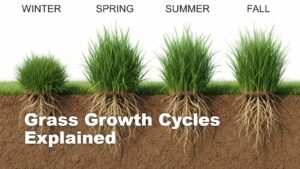
Seasonal adjustments maximize turf strength.
Spring
- Soil testing
- Light fertilization
- Pre-emergent weed control
Summer
- Deep watering
- Raise mowing height
- Monitor pests
Fall
- Core aeration
- Overseeding
- Fertilization for root growth
Winter
- Minimize traffic
- Remove debris
- Plan improvements
Consistent seasonal care stabilizes turf performance year-round.
Overseeding for Improved Turf Density
Overseeding thickens lawns without full renovation.
Choose compatible grass seed for your region. Spread seed evenly and keep soil moist during germination.
Dense lawns reduce weed pressure and improve curb appeal.
Organic vs Synthetic Lawn Programs
Organic programs build soil health gradually. Synthetic fertilizers deliver quick results.
Many property managers combine both approaches.
Hybrid programs may include:
- Compost topdressing
- Targeted synthetic feeding
- Biological soil amendments
- Reduced pesticide reliance
Balanced strategies strengthen Lawn Science and Turf Health without overdependence on chemicals.
Practical Turf Health Checklist
Use this simple action list:
- Test soil every 2–3 years
- Match grass type to climate
- Water deeply, not daily
- Aerate compacted areas
- Mow properly
- Feed according to growth cycles
Small corrections create major improvements over time.
FAQs About Lawn Science and Turf Health
How often should I fertilize my lawn?
Most lawns require two to four applications per year. Soil testing determines the correct schedule.
What causes yellow grass?
Yellowing often signals nitrogen deficiency, poor drainage, compaction, or disease.
Is daily watering bad?
Frequent shallow watering weakens roots. Deep weekly watering promotes stronger growth.
When is the best time to aerate?
Cool-season lawns respond best in fall. Warm-season lawns benefit from late spring aeration.
Can I improve turf health without chemicals?
Yes. Compost, proper mowing, soil correction, and irrigation management improve Lawn Science and Turf Health naturally.
Conclusion
Lawn Science and Turf Health depend on soil balance, correct grass selection, proper watering, and smart maintenance. Random treatments create temporary improvement. Science-driven strategies build lasting resilience.
Property managers and homeowners who follow these principles see thicker turf, fewer weeds, and stronger roots. Smart management always beats shortcuts.
Apply these proven Lawn Science and Turf Health methods consistently and watch your lawn transform into a durable, vibrant landscape worth showing off.