Pipe velocity and water hammer play a critical role in irrigation performance and plumbing safety. Water moving too fast through pipes creates pressure spikes that can damage valves, fittings, and sprinklers. Sudden valve closures can send shockwaves through the system. These shockwaves cause loud banging noises and long-term structural wear.
Homeowners often ignore early warning signs until leaks appear. Property managers may face expensive repairs from burst pipes or broken valves. Understanding pipe velocity and water hammer helps prevent failures and protect irrigation infrastructure. Proper design keeps water moving safely while maintaining stable pressure.
Understanding Pipe Velocity in Irrigation Systems
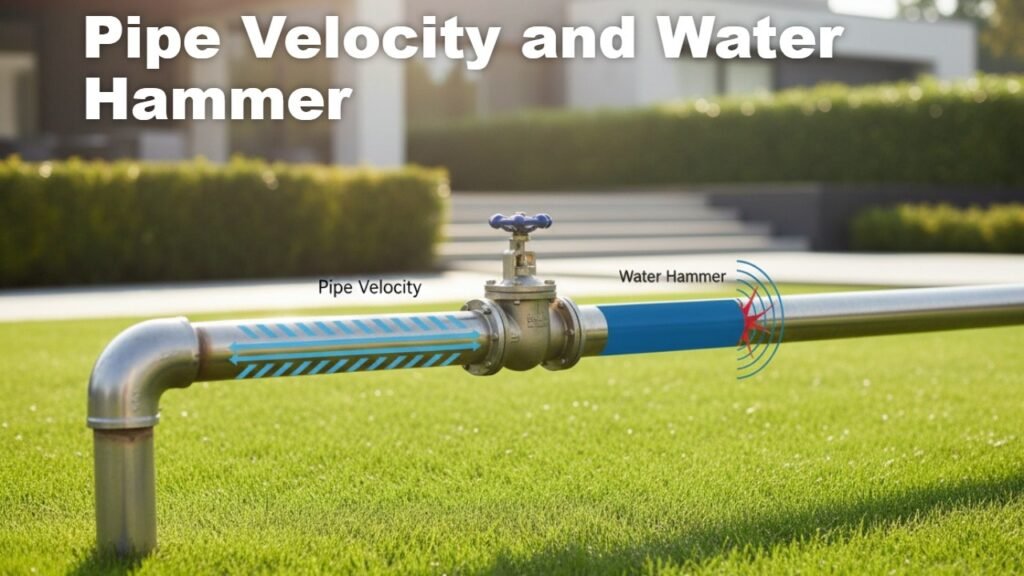
Pipe velocity measures how fast water travels through a pipe. Engineers calculate velocity using flow rate and pipe diameter. High velocity increases friction, pressure fluctuations, and stress on fittings.
Most irrigation systems perform best when velocity remains within recommended limits. Excessive speed leads to noise, vibration, and uneven pressure distribution. Controlled velocity ensures efficient water delivery.
Recommended Velocity Ranges
Designers typically follow these guidelines:
- Mainline pipes: 3–5 feet per second
- Lateral irrigation lines: 2–4 feet per second
- Drip irrigation tubing: 1–2 feet per second
Maintaining proper velocity reduces wear and prevents hydraulic shock.
What Is Water Hammer?
This YouTube video below from Practical Engineering explains what water hammer is and how pressure spikes form in pipelines. It shows how sudden flow changes create shock waves that can damage systems. The overview helps readers understand how engineers prevent and manage water hammer.
Water hammer occurs when moving water suddenly stops or changes direction. A rapid valve closure forces water to halt instantly. This abrupt stop creates a pressure surge inside the pipe.
The surge travels through the system as a shockwave. That shockwave can exceed normal operating pressure. Repeated events weaken pipes, joints, and sprinkler heads.
Common Signs of Water Hammer
- Loud banging noises after valves close
- Vibrating pipes
- Sudden pressure spikes
- Leaks at joints
- Damaged sprinkler components
Ignoring these symptoms often leads to costly repairs.
How Pipe Velocity Contributes to Water Hammer
Pipe velocity and water hammer share a direct relationship. Faster water movement generates stronger shockwaves when flow stops. Slower water movement produces smaller pressure surges.
When systems operate at high velocity, even minor valve closures can create damaging pressure spikes. Proper velocity control reduces the intensity of water hammer events.
Velocity and Pressure Interaction
Higher velocity increases momentum. Greater momentum produces stronger impact when water stops. Designers must balance flow demand with safe velocity limits.
Oversized zones often push velocity beyond safe levels. Correct pipe sizing keeps water speed manageable.
Causes of Excessive Pipe Velocity
Many irrigation systems experience high pipe velocity due to design errors. Overloading zones with too many sprinkler heads increases flow demand. Small pipes force water to travel faster to meet demand.
Undersized mainlines also raise velocity. Improper pressure regulation compounds the issue.
Common Design Mistakes
- Using small-diameter pipes
- Combining too many heads in one zone
- Ignoring flow capacity
- Poor valve placement
- Lack of pressure regulation
Correcting these mistakes stabilizes system performance.
The Mechanics of Water Hammer Shockwaves
Water hammer shockwaves travel rapidly through pipes. When a valve shuts quickly, water compresses and rebounds. This rebound sends a pressure wave back through the system.
Repeated shockwaves weaken pipe joints and fittings. Over time, microfractures develop. Eventually, pipes may burst under stress.
Factors That Increase Shockwave Intensity
- High pipe velocity
- Long pipe runs
- Sudden valve closure
- Rigid pipe materials
- Lack of air chambers
Managing these factors protects irrigation infrastructure.
Preventing Water Hammer Through Design
Pipe velocity and water hammer issues often start during design. Proper engineering prevents most problems before installation.
Design Strategies
- Use larger pipe diameters
- Limit zone flow rates
- Install pressure-regulating valves
- Avoid sharp pipe bends
- Position valves strategically
These measures reduce pressure spikes and maintain system balance.
Valve Selection and Placement
Slow-closing valves reduce shockwave intensity. Electric solenoid valves with controlled closure prevent abrupt flow stops. Placing valves near mainlines minimizes pressure surges.
Managing Pipe Velocity for Efficiency
This YouTube video below from Brilliant Metrics explains pipeline velocity and how it measures flow performance. It shows how tracking movement through stages improves efficiency. The overview helps readers understand why velocity matters in system management.
Controlling pipe velocity improves both safety and efficiency. Balanced velocity ensures stable pressure at sprinkler heads.
Velocity Control Techniques
- Calculate total flow per zone
- Match pipe size to demand
- Avoid oversizing pumps
- Use flow control valves
- Monitor pressure regularly
Proper velocity keeps systems quiet and reliable.
Equipment That Reduces Water Hammer
Several devices help manage pipe velocity and water hammer. Installing protective equipment safeguards system components.
Recommended Devices
- Water hammer arrestors
- Pressure-regulating valves
- Air release valves
- Slow-closing valves
- Surge tanks
These tools absorb shockwaves and stabilize pressure.
Diagnosing Pipe Velocity Problems
Homeowners and property managers can detect issues through observation. Performance changes often signal excessive velocity or water hammer.
Warning Indicators
- Frequent pipe noise
- Uneven sprinkler pressure
- Valve vibration
- Rising repair costs
- Reduced equipment lifespan
Early diagnosis prevents major failures.
Maintenance Practices for Long-Term Protection
Regular maintenance reduces the risk of pipe velocity and water hammer damage. Monitoring system pressure and flow ensures stable performance.
Maintenance Checklist
- Inspect valves seasonally
- Check pressure at key points
- Listen for unusual pipe noise
- Replace worn fittings
- Flush system annually
Routine checks preserve hydraulic stability.
Practical Tips for Property Managers
Professional oversight ensures consistent system performance.
- Request hydraulic calculations during installation
- Confirm pipe sizing meets demand
- Install pressure monitoring gauges
- Schedule annual inspections
- Upgrade aging components
Proactive management prevents emergency repairs.
FAQs
What causes water hammer in irrigation systems?
This YouTube video below from Nature’s Always Right explains how to fix water hammer in irrigation systems using simple DIY solutions. It shows common causes and practical ways to reduce pressure shock. The guidance helps readers protect pipes and improve system performance.
Water hammer occurs when water flow stops suddenly, creating a pressure surge inside pipes.
Why is pipe velocity important?
Proper velocity ensures stable pressure and prevents damaging shockwaves within the system.
Can water hammer damage pipes?
Yes. Repeated pressure surges weaken joints and can eventually cause pipe failure.
How do I reduce pipe velocity?
Increase pipe diameter, reduce flow demand, and install pressure-regulating valves.
Are water hammer arrestors necessary?
Arrestors help absorb shockwaves and protect pipes in systems prone to pressure surges.
Conclusion
Pipe velocity and water hammer directly influence irrigation reliability and infrastructure lifespan. Excessive water speed increases pressure surges and equipment wear. Proper design, balanced flow rates, and protective devices reduce hydraulic stress. Property owners who monitor velocity and pressure prevent costly system failures. Invest in smart hydraulic planning and discover how controlled water movement keeps your irrigation system efficient, quiet, and built to last.