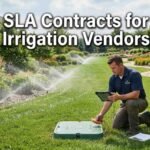
SLA Contracts for Irrigation Vendors define performance standards, response times, and service quality for landscape watering systems. Homeowners associations, commercial sites, and property managers depend on irrigation vendors to protect turf, plant health, and infrastructure. Without clear agreements, maintenance becomes inconsistent and costly.
A structured service level agreement creates accountability. Vendors know expectations. Property managers gain measurable performance benchmarks. Budget planning becomes more predictable.
This guide explains how to build effective contracts that reduce risk, prevent disputes, and maintain reliable irrigation performance across residential and commercial properties.

Why SLA Contracts Matter for Irrigation Services
Irrigation systems operate daily during peak seasons. Small failures can escalate quickly. Leaks waste water. Valve failures damage turf. Controller errors cause plant loss.
SLA Contracts for Irrigation Vendors establish service standards before problems occur. These agreements outline response times, inspection frequency, and repair obligations.
Property managers often assume routine maintenance is included in general service agreements. However, vague contracts create gaps. Service level agreements remove ambiguity and set measurable expectations.
A clear SLA ensures:
- Consistent inspections
- Fast emergency response
- Documented service visits
- Performance tracking
- Cost transparency
Strong contracts protect both parties.
Key Components of SLA Contracts for Irrigation Vendors
A complete agreement includes detailed technical and operational requirements.
Scope of Services
Define all covered services clearly. Avoid general wording.
Include:
- Seasonal activation and shutdown
- Routine inspections
- Leak detection
- Controller programming
- Head replacement
- Valve repair
- Backflow testing
Specify whether emergency repairs are included or billed separately.
Response Time Guarantees
Response time is critical. Irrigation failures can cause structural damage or landscape loss.
Define response tiers such as:
- Emergency response within 24 hours
- Urgent repair within 48 hours
- Routine service within 5 business days
SLA Contracts for Irrigation Vendors should include penalties or service credits if response standards are not met.
Preventive Maintenance Schedule
Preventive care reduces system failure rates.
Service intervals may include:
- Monthly inspections during peak season
- Quarterly system audits
- Annual pressure testing
- Seasonal adjustments
A defined schedule ensures vendors perform consistent maintenance rather than reactive repairs.
Performance Metrics
Contracts should include measurable benchmarks.
Examples:
- System uptime percentage
- Inspection completion rate
- Repair turnaround time
- Water usage efficiency targets
Tracking performance improves accountability.
Documentation and Reporting
Require detailed service reports after each visit.
Reports should include:
- Completed tasks
- Identified issues
- Parts replaced
- Recommended repairs
- Photos when needed
Clear reporting protects both vendor and client.
Sample SLA Framework for Irrigation Vendors
| Contract Element | Standard Requirement | Notes |
|---|---|---|
| Inspection Frequency | Monthly during active season | Adjust by climate |
| Emergency Response | 24 hours | Faster for large sites |
| Routine Repair Completion | 3–5 days | Based on severity |
| System Performance Reports | Monthly | Include photos |
| Seasonal Startup and Shutdown | Included in annual contract | Required in cold climates |
This structure provides a baseline for most residential and commercial properties.
SLA Contracts for Irrigation Vendors should be tailored to property size and complexity.
Common Risks Without a Strong SLA
Many properties operate without formal service standards.
Risks include:
- Delayed leak repairs
- Inconsistent inspections
- Overwatering and water waste
- Plant loss
- Higher utility bills
- Vendor disputes
Unclear expectations lead to inconsistent results.
Service level agreements create a shared understanding of responsibilities.
How to Build Effective SLA Contracts for Irrigation Vendors
Step 1: Evaluate Property Needs
Assess system size, zone count, and landscape type. Larger properties require more detailed agreements.
Step 2: Define Service Scope
List all required tasks clearly. Avoid general phrases like “routine maintenance.”
Step 3: Set Measurable Standards
Establish response times and inspection intervals. Include performance metrics.
Step 4: Align Costs With Service Levels
Higher service levels increase cost. Ensure the budget matches expectations.
Step 5: Review Annually
Update agreements based on system changes and vendor performance.
Regular review keeps contracts relevant.
Pricing Models for Irrigation Service Agreements
Contracts may use different pricing structures.
Common options include:
- Flat annual maintenance fee
- Per-visit service pricing
- Time-and-material billing
- Hybrid models
Flat-fee agreements work best when service scope is clearly defined. Variable pricing may create budget uncertainty.
SLA Contracts for Irrigation Vendors should match financial planning strategies.
Technology Integration in Modern SLAs
Modern irrigation systems use smart controllers and sensors. Contracts should reflect these tools.
Include requirements for:
- Remote monitoring
- Flow sensor alerts
- Weather-based adjustments
- Data reporting
Technology improves efficiency but requires vendor expertise.
Service agreements should specify who manages system software updates and monitoring.
Performance Review and Vendor Accountability
Monitoring vendor performance ensures contract compliance.
Use quarterly reviews to assess:
- Response times
- Inspection quality
- Repair accuracy
- Water usage trends
Document performance issues and address them promptly.
Strong SLA Contracts for Irrigation Vendors include clear termination clauses if standards are not met.
Practical Tips for Property Managers
- Keep all service reports organized
- Track response times
- Document recurring issues
- Review invoices against contract scope
- Conduct annual vendor evaluations
Active oversight ensures the agreement delivers value.
Common Mistakes to Avoid
Property managers often overlook key contract details.
Avoid:
- Vague service descriptions
- Missing response time guarantees
- Lack of reporting requirements
- No performance metrics
- Ignoring renewal reviews
Clear language prevents misunderstandings.
Long-Term Benefits of Structured SLAs
Well-designed agreements improve property operations.
Benefits include:
- Predictable maintenance costs
- Reduced emergency repairs
- Improved landscape health
- Lower water usage
- Stronger vendor relationships
SLA Contracts for Irrigation Vendors support long-term asset protection.
Frequently Asked Questions
What are SLA Contracts for Irrigation Vendors?
They are service agreements that define performance standards, response times, and maintenance responsibilities for irrigation providers.
Why are SLAs important for irrigation systems?
They ensure consistent maintenance, faster repairs, and clear accountability for vendors.
How often should SLA contracts be reviewed?
Annual reviews are recommended. Update contracts when systems change or performance issues arise.
Do SLAs increase maintenance costs?
They may increase upfront costs but reduce long-term repair expenses and water waste.
Can small properties use SLA agreements?
Yes. Even small residential communities benefit from defined service standards.
Conclusion
SLA Contracts for Irrigation Vendors create structure, accountability, and performance clarity for irrigation maintenance. Property managers who implement detailed service agreements reduce risk, control costs, and protect landscape investments. Clear expectations lead to better service outcomes and stronger vendor relationships.
Reliable irrigation performance starts with strong contracts and measurable standards. Explore how a well-crafted service level agreement can improve efficiency and safeguard your property assets.