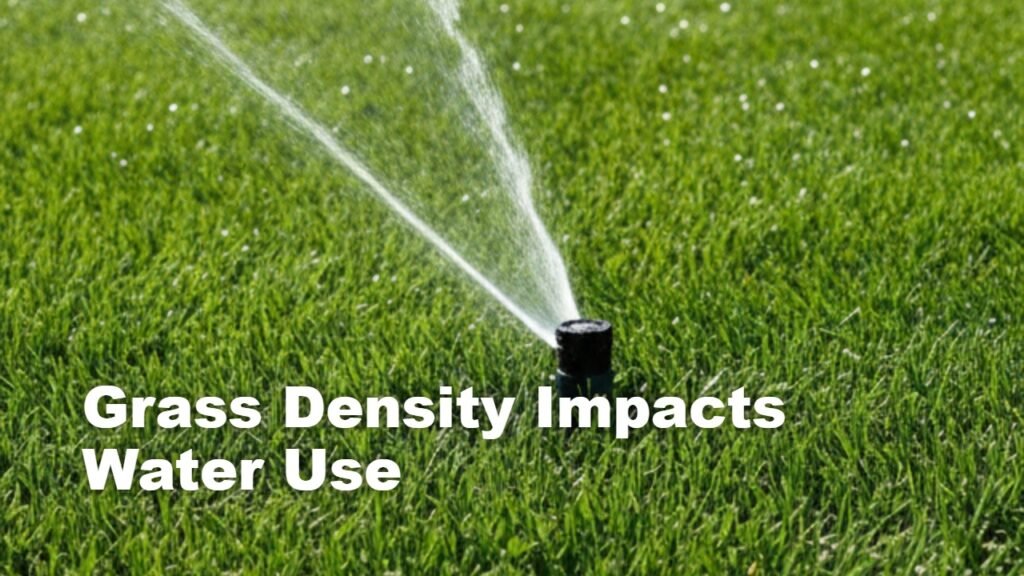
Grass Density Impacts Water Use
Grass Density Impacts Water Use more than most property owners realize. Many homeowners believe watering frequency alone determines lawn health, yet the thickness of turf plays an equally important role. A dense lawn behaves very differently from a thin lawn when it comes to moisture retention, evaporation, and irrigation efficiency.
Turfgrass is not simply decoration. It functions as a living system that regulates soil temperature, controls evaporation, and manages how water enters the ground. When density declines, soil becomes exposed, moisture escapes quickly, and watering requirements increase. Property managers often respond by adding more irrigation time, which rarely solves the real problem.
Understanding how density affects water consumption helps you maintain healthier landscapes while reducing long-term irrigation costs.
What Is Grass Density?
This YouTube video from CodeLikeMe explains how to use a smart grass generator in Unreal Engine 5. It shows how distance affects grass density and performance. The walkthrough helps viewers create more realistic and optimized environments.
Grass density refers to the number of grass shoots growing within a specific area. Healthy turf contains thousands of tightly spaced blades that form a continuous canopy over the soil surface.
A dense lawn:
- Covers the soil completely
- Protects moisture in the root zone
- Prevents rapid evaporation
- Improves infiltration
A thin lawn leaves soil exposed to sun and air. This exposure dramatically changes how water behaves in the landscape.
Why Density Changes Water Behavior
Water does not interact directly with grass blades; it interacts with soil. Grass density controls how much soil is protected.
When turf is dense, the canopy shades the soil. When turf is thin, sunlight hits bare ground directly. The difference significantly alters water loss rates.
Soil Temperature Regulation
Dense turf lowers soil temperature by shading the ground. Cooler soil slows evaporation and keeps moisture available to roots longer.
Thin turf allows soil temperatures to rise. Warm soil accelerates evaporation and dries faster between watering cycles.
Grass Density Impacts Water Use Through Evaporation Control
Evaporation is one of the largest sources of irrigation waste. A sparse lawn increases water loss before roots can absorb moisture.
Dense grass reduces direct solar exposure. As a result:
- Water stays in the soil longer
- Irrigation cycles become more effective
- Root absorption improves
- Watering frequency decreases
This relationship explains why two lawns receiving identical watering schedules can perform very differently.
How Thin Lawns Waste Water
This YouTube video below from Lawn Tips explains how to water your lawn properly for healthier grass. It covers timing, depth, and frequency of watering. The tips help readers improve irrigation habits and avoid common lawn care mistakes.
Many irrigation problems originate from poor turf density rather than sprinkler performance. Property owners often increase watering time when grass appears dry. The real issue is exposed soil.
Thin turf leads to:
- Rapid surface drying
- Runoff during irrigation
- Uneven moisture distribution
- Compaction in bare areas
Adding more water cannot compensate for missing plant coverage. It only increases waste.
Root Systems and Water Retention
Dense grass develops deeper, stronger root systems. Roots create pathways in soil that allow water to penetrate effectively.
Deep Root Benefits
- Improved water infiltration
- Reduced runoff
- Higher drought tolerance
- Greater nutrient uptake
Sparse grass has shallow roots. Water remains near the surface and evaporates quickly.
Grass Density Impacts Water Use because root depth determines how efficiently moisture is stored.
The Canopy Effect
The upper layer of turf is called the canopy. This layer functions like natural mulch.
The canopy:
- Blocks sunlight
- Reduces wind exposure
- Maintains humidity near soil
- Protects soil structure
When density decreases, the canopy disappears. Soil becomes exposed and loses moisture rapidly.
Compaction and Density
Soil compaction and turf density are closely connected. Compacted soil restricts root growth and prevents water infiltration. Weak roots produce thin grass, which further worsens water loss.
Compaction causes:
- Poor absorption
- Standing water
- Shallow roots
- Increased irrigation demand
Improving density often improves drainage and watering efficiency simultaneously.
Grass Types and Density Performance
Different grass species naturally grow at different densities.
High-Density Turf
- Bermuda grass
- Zoysia
- Kentucky bluegrass
These grasses create tight coverage and use water efficiently.
Lower-Density Turf
- Some tall fescue varieties
- Coarse pasture grasses
These types may require more frequent irrigation due to wider spacing.
Selecting the right turf species directly affects long-term water consumption.
Fertility and Turf Thickness
Nutrient availability influences density. Grass lacking nitrogen or organic matter struggles to produce new shoots. Fewer shoots mean thinner coverage.
Balanced fertilization supports:
- Tillering (new shoot formation)
- Faster recovery
- Better soil structure
- Improved water retention
Healthy soil biology promotes dense turf and reduces irrigation demand.
Mowing Practices Affect Density
Improper mowing is one of the most common causes of thin lawns.
Correct Mowing Practices
- Never remove more than one-third of blade height
- Maintain proper mowing height
- Use sharp mower blades
Short mowing weakens roots. Weak roots reduce density and increase watering needs.
Traffic Damage and Water Use
Foot traffic compresses soil and damages turf crowns. High-traffic zones often show dry patches despite heavy watering.
Common problem areas:
- Walkways
- Play areas
- Pet paths
- Entry points
Reducing traffic or rotating use areas helps restore density and improve water efficiency.
Overseeding to Improve Efficiency
Overseeding fills gaps in turf coverage. Increasing plant population reduces exposed soil and improves moisture retention.
Benefits of overseeding:
- Better water conservation
- Reduced weed growth
- Faster recovery
- Improved appearance
Property managers often find overseeding lowers irrigation requirements the following season.
Irrigation Scheduling and Dense Turf
Dense lawns require different watering strategies than thin lawns.
Dense Turf
- Deep, infrequent watering
- Longer moisture retention
- Lower overall water use
Thin Turf
- Frequent watering
- Rapid drying
- Higher consumption
Grass Density Impacts Water Use because irrigation efficiency depends on soil coverage.
Environmental Benefits
Improving turf density does more than reduce water bills.
Dense grass also:
- Reduces runoff pollution
- Filters rainwater
- Prevents erosion
- Stabilizes soil
Healthy turf acts as a natural environmental protection system.
Practical Steps to Increase Grass Density
Homeowners and property managers can improve turf coverage with consistent care.
Action Plan
- Aerate compacted soil annually
- Apply organic matter
- Follow proper mowing height
- Overseed thin areas
- Adjust irrigation depth, not frequency
Small improvements in density can produce large reductions in water use.
Common Mistakes That Reduce Density
Avoid these practices:
- Cutting grass too short
- Overwatering daily
- Ignoring soil compaction
- Using dull mower blades
- Skipping seasonal maintenance
Correcting these habits quickly improves lawn performance.
FAQs
Does thicker grass really use less water?
Yes. Dense turf shades soil and reduces evaporation, lowering watering requirements.
Why does my lawn dry out quickly?
Exposed soil and shallow roots cause rapid moisture loss.
Can fertilizers improve water efficiency?
Balanced nutrients encourage dense growth, which improves moisture retention.
Should I water thin lawns more?
No. You should improve density rather than increase irrigation.
How long does it take to improve turf density?
Noticeable improvement often occurs within one growing season.
Conclusion
Grass Density Impacts Water Use by controlling evaporation, soil temperature, and root development. A thick lawn conserves moisture naturally, while a thin lawn wastes irrigation regardless of watering frequency.
Homeowners and property managers who focus on improving turf density often reduce water consumption significantly without changing irrigation systems. By strengthening roots, protecting soil, and promoting consistent coverage, landscapes become both healthier and more efficient.
A dense lawn is not just visually appealing — it is one of the most effective water-management tools available in landscape care.