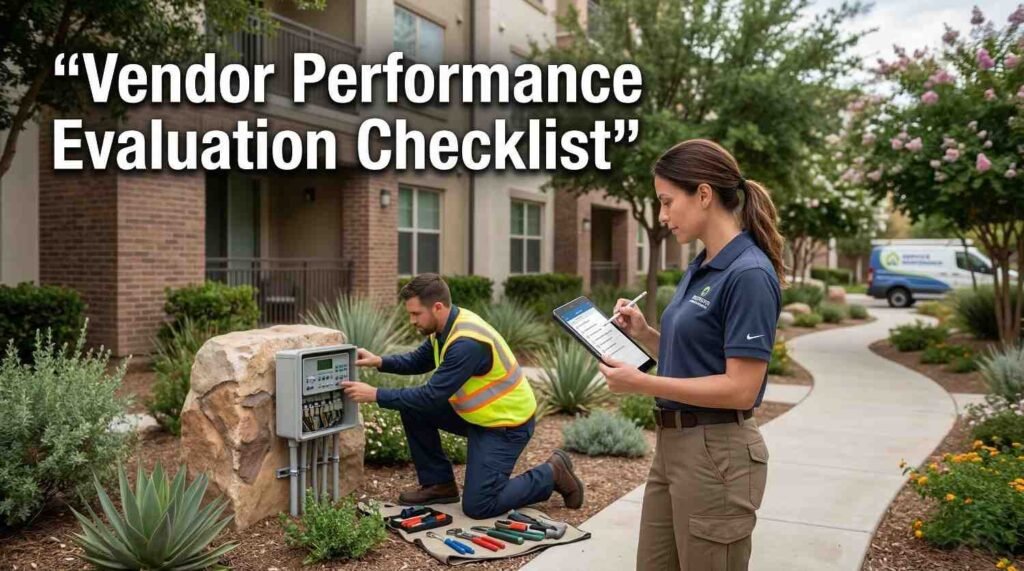
Vendor Performance Evaluation Checklist systems help homeowners and property managers measure service quality, track reliability, and control long-term maintenance costs. Vendors play a major role in property operations. Landscaping, irrigation, maintenance, roofing, cleaning, and repair services all depend on outside contractors.
Without a structured review process, vendor quality can decline. Missed visits, delayed repairs, and unclear billing often follow. A formal evaluation checklist brings consistency and accountability to vendor relationships.
Property managers who track performance data make stronger decisions. They renew contracts confidently, correct service gaps early, and avoid costly disputes.
Why Vendor Evaluation Matters for Property Operations
Vendors influence property value, resident satisfaction, and maintenance costs. Strong oversight ensures service consistency and protects budgets.
A Vendor Performance Evaluation Checklist provides a standardized method to measure performance across different service categories. It removes guesswork and replaces assumptions with measurable data.
Key benefits include:
- Improved service reliability
- Clear accountability
- Reduced contract disputes
- Better budgeting accuracy
- Stronger vendor relationships
Routine evaluations also reveal trends. Managers can identify recurring issues before they become major problems.
When to Use a Vendor Performance Evaluation Checklist
Property managers should evaluate vendors at regular intervals. Waiting until contract renewal often leads to rushed decisions.
Recommended review timing includes:
- Quarterly performance reviews
- Annual contract acknowledging
- After major projects
- Following service complaints
- During budget planning cycles
Frequent reviews create continuous improvement rather than reactive corrections.
Core Categories in a Vendor Performance Evaluation Checklist
A structured checklist should cover multiple performance areas.
Service Quality
Service quality remains the most visible factor. Evaluate whether vendors meet contract expectations and industry standards.
Review:
- Work accuracy
- Attention to detail
- Completion rates
- Rework frequency
- Resident feedback
Consistent quality indicates strong operational control.
Communication and Responsiveness
Communication affects project outcomes. Delays often occur due to poor coordination.
Assess:
- Response time to emails and calls
- Clarity of service reports
- Availability during emergencies
- Willingness to resolve issues
Clear communication reduces misunderstandings.
Timeliness and Scheduling
Reliable scheduling ensures property operations run smoothly.
Measure:
- On-time arrival
- Adherence to maintenance schedules
- Project completion timelines
- Emergency response speed
A Vendor Performance Evaluation Checklist should track missed visits and late completions.
Cost Control and Billing Accuracy
Accurate billing builds trust. Overcharges and unclear invoices create conflict.
Evaluate:
- Invoice clarity
- Adherence to contract pricing
- Change order transparency
- Cost predictability
Cost consistency helps maintain budget stability.
Safety and Compliance
Vendors must follow safety regulations and property guidelines.
Check:
- Insurance coverage
- Worker safety practices
- Licensing compliance
- Use of proper equipment
- Incident reporting
Safety compliance protects property owners from liability.
Sample Vendor Performance Evaluation Checklist Table
| Evaluation Category | Key Metrics | Rating Scale | Notes |
|---|---|---|---|
| Service Quality | Work accuracy, completion rate | 1–5 | Add comments |
| Communication | Response time, clarity | 1–5 | Track delays |
| Timeliness | On-time visits, deadlines met | 1–5 | Review trends |
| Billing Accuracy | Invoice correctness | 1–5 | Verify pricing |
| Safety Compliance | Insurance, safety practices | 1–5 | Annual check |
Using a table ensures consistency across vendor reviews. A Vendor Performance Evaluation Checklist should use the same scoring method for all contractors.
How to Score Vendor Performance
This YouTube video below from eWorkplace Apps explains vendor performance rating and how it measures service quality. It outlines key metrics like reliability, response time, and cost control. The video serves as a quick reference for evaluating supplier performance.
Create a standardized scoring scale.
Example scale:
- 5 – Excellent
- 4 – Above average
- 3 – Meets expectations
- 2 – Needs improvement
- 1 – Unsatisfactory
Add written comments for clarity. Scores alone do not explain context.
Combine quarterly scores to calculate annual averages. Use these results during contract renewal decisions.
Tracking Vendor Performance Over Time
Consistent tracking reveals performance trends. One poor visit does not define a vendor. Patterns matter.
Track:
- Monthly service reports
- Complaint frequency
- Emergency response times
- Repair quality
A Vendor Performance Evaluation Checklist works best when supported by documentation and data logs.
Digital property management platforms help centralize records.
Practical Tips for Implementing Vendor Evaluations
Property managers can simplify the process with structured routines.
- Assign one team member to manage evaluations
- Use digital forms for consistency
- Share feedback with vendors
- Set improvement goals
- Review results during contract renewals
Open communication improves vendor performance.
Red Flags That Require Immediate Review
Some issues require urgent evaluation.
Watch for:
- Repeated missed visits
- Frequent rework
- Safety violations
- Billing disputes
- Poor communication
Addressing problems early prevents long-term operational damage.
Benefits of Using a Vendor Performance Evaluation Checklist
Structured evaluation delivers measurable advantages.
Stronger Vendor Accountability
Clear expectations improve performance consistency.
Better Budget Management
Accurate billing and predictable service reduce financial surprises.
Improved Service Quality
Regular feedback helps vendors maintain standards.
Reduced Liability
Tracking safety compliance lowers risk exposure.
Smarter Contract Decisions
Performance data supports renewal or replacement choices.
Vendor oversight improves operational stability.
Technology Tools That Support Vendor Evaluation
Modern software platforms simplify tracking.
Common tools include:
- Work order management systems
- Vendor portals
- Maintenance tracking apps
- Budget management dashboards
Digital systems improve transparency and reduce manual tracking errors.
A Vendor Performance Evaluation Checklist becomes more effective when integrated with these tools.
How to Handle Underperforming Vendors
Not every vendor meets expectations.
Follow a structured process:
- Document issues clearly
- Share feedback promptly
- Set improvement deadlines
- Monitor progress
- Replace vendor if performance does not improve
Professional communication preserves relationships while protecting property interests.
Long-Term Vendor Relationship Strategy
Consistent evaluation strengthens long-term partnerships. Vendors appreciate clear expectations and constructive feedback.
High-performing vendors should be recognized. Consider contract extensions or preferred vendor status for reliable partners.
Strong relationships improve service reliability and cost stability.
Frequently Asked Questions
What is a Vendor Performance Evaluation Checklist?
It is a structured tool used to measure vendor quality, reliability, and compliance with service agreements.
How often should vendors be evaluated?
Quarterly reviews work well. Annual summaries support contract renewal decisions.
Who should complete the checklist?
Property managers, board members, or maintenance supervisors typically conduct evaluations.
Can small properties use evaluation checklists?
Yes. Even small communities benefit from structured vendor oversight.
Does evaluation improve vendor performance?
Yes. Clear feedback encourages improvement and strengthens accountability.
Conclusion
Vendor Performance Evaluation Checklist systems help property managers maintain service quality, control costs, and reduce operational risk. Structured evaluations provide measurable insights that support better contract decisions and stronger vendor relationships. Consistent oversight ensures vendors meet expectations and deliver reliable results.
Reliable property operations depend on accountable service partners. Explore how a structured evaluation checklist can strengthen vendor performance and improve long-term property management outcomes.