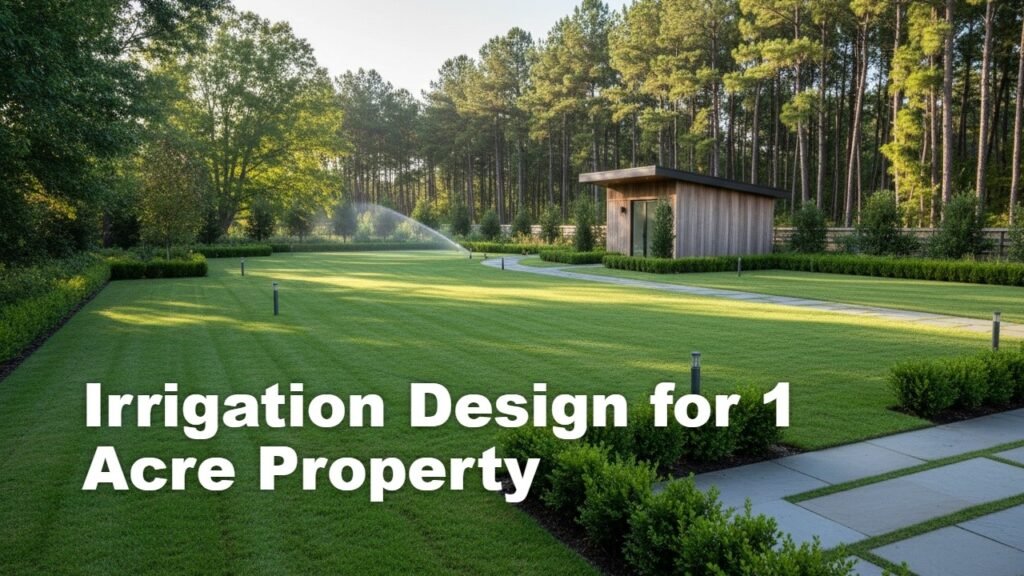
Irrigation design for 1 acre property requires careful planning, accurate hydraulic calculations, and strategic zoning. Larger landscapes cannot rely on simple sprinkler layouts. Water pressure, pipe sizing, and zone distribution must work together to maintain coverage.
Homeowners with expansive yards want efficient watering without constant adjustments. Property managers overseeing estates or commercial grounds need reliable systems that scale easily. Proper design prevents pressure loss, dry zones, and water waste. This guide explains how to plan and build a system that supports one-acre properties and beyond.
Why Large Properties Need Specialized Irrigation Design
This YouTube video below from OklahomaGardening explains how irrigation plans fit into landscape design. It covers layout, water efficiency, and plant needs. The overview helps readers understand smarter planning for healthy landscapes.
Small residential systems often operate on a single valve manifold and limited zones. One-acre landscapes demand more complex infrastructure. Longer pipe runs increase friction loss. More zones require better wiring and pressure management.
Without proper planning, large properties experience uneven coverage. Sprinklers far from the mainline may lose pressure. Overloaded zones create weak spray patterns. Professional design ensures consistent performance.
Challenges on 1+ Acre Landscapes
- Long pipe distances
- Pressure variation
- Complex zoning needs
- Elevation changes
- High water demand
Addressing these factors early prevents costly redesigns.
Step 1: Evaluate Water Supply and Pressure
Every irrigation design for 1 acre property begins with water supply analysis. Measure static and dynamic pressure at the main connection. Determine available gallons per minute.
These numbers define how many zones can operate efficiently. Large landscapes often require multiple valve manifolds or booster pumps.
Pressure and Flow Testing
- Use a pressure gauge
- Perform a bucket flow test
- Measure during peak usage
- Record pressure drop under load
Accurate measurements ensure proper system sizing.
Step 2: Divide the Property into Zones
Zoning remains the backbone of irrigation design for 1 acre property. Each zone should include plants with similar water needs. Group turf areas separately from planting beds.
Sun exposure also affects zoning. Sunny areas require more water than shaded sections. Slopes need shorter watering cycles to prevent runoff.
Typical Zone Categories
- Front lawn turf
- Backyard turf
- Tree zones
- Shrub beds
- Garden beds
- Drip irrigation zones
Well-planned zones improve efficiency and coverage.
Step 3: Choose the Right Sprinkler Types
This YouTube video below from Sprinkler Warehouse explains the different types of sprinklers used in irrigation systems. It compares spray heads, rotors, and specialty options. The overview helps readers choose the right sprinkler for efficient lawn watering.
Large properties benefit from multiple sprinkler types. Rotary sprinklers cover wide turf areas efficiently. Spray heads suit smaller sections. Drip irrigation works best for planting beds and trees.
Selecting the correct equipment improves water distribution and reduces waste.
Equipment Recommendations
- Rotors for open lawns
- Sprays for tight spaces
- Drip lines for beds
- Bubblers for trees
Matching equipment to landscape type ensures optimal results.
Step 4: Plan Pipe Layout and Sizing
Pipe sizing directly affects performance. Long runs require larger pipe diameters to prevent pressure loss. Undersized pipes create weak coverage and uneven watering.
Mainlines should support total system demand. Lateral lines must match zone flow requirements.
Pipe Sizing Tips
- Calculate total GPM per zone
- Increase pipe size for distance
- Reduce sharp bends
- Use sweep elbows
Balanced pipe sizing maintains consistent pressure.
Step 5: Install Multiple Valve Manifolds
One-acre properties often require more than one valve manifold. Splitting zones across manifolds shortens pipe runs and improves pressure stability.
Place manifolds strategically across the property. This approach reduces friction loss and simplifies maintenance.
Manifold Placement Guidelines
- Near main water supply
- Close to high-demand zones
- Accessible for repairs
- Protected from flooding
Multiple manifolds improve system efficiency.
Step 6: Consider Smart Controllers and Automation
Modern controllers simplify irrigation design for 1 acre property. Smart controllers adjust watering schedules based on weather data. Sensors prevent watering during rain or high moisture levels.
Automation reduces water waste and manual oversight.
Smart Features to Include
- Weather-based scheduling
- Soil moisture sensors
- Flow monitoring
- Remote access
Smart technology improves long-term efficiency.
Step 7: Manage Elevation Changes
Large properties often include slopes or uneven terrain. Elevation affects water pressure. Sprinklers at higher elevations receive less pressure.
Separate zones by elevation when possible. Install pressure-regulating valves where needed.
Elevation Solutions
- Divide high and low areas
- Use pressure-regulated heads
- Install check valves
- Adjust runtime by slope
Managing elevation ensures even coverage.
Step 8: Prevent Pressure Loss
Long pipe runs increase friction loss. Pressure loss reduces sprinkler performance. Proper design minimizes this issue.
Use larger mainlines and shorter lateral runs. Avoid unnecessary fittings.
Pressure Protection Strategies
- Increase pipe diameter
- Balance zone flow
- Limit zone size
- Install pressure regulators
Maintaining pressure ensures reliable watering.
Step 9: Plan for Future Expansion
Properties evolve over time. New landscaping may require additional zones. Designing for expansion saves future costs.
Leave space in valve boxes and wiring capacity. Install spare conduits for future zones.
Expansion Planning Tips
- Add extra wiring
- Leave manifold space
- Plan for extra valves
- Document system layout
Future-ready systems adapt easily.
Step 10: Maintenance Planning
Large systems require consistent maintenance. Regular inspections prevent leaks and pressure issues.
Maintenance Checklist
- Inspect valves annually
- Test pressure levels
- Clean nozzles
- Check wiring connections
- Monitor water usage
Routine care extends system lifespan.
Common Mistakes to Avoid
Avoid these errors during irrigation design for 1 acre property:
- Oversized zones
- Undersized pipes
- Poor zoning
- Ignoring pressure limits
- Lack of maintenance access
Careful planning prevents these problems.
Practical Tips for Homeowners and Property Managers
- Request a professional design plan
- Track water usage monthly
- Inspect system after installation
- Schedule seasonal adjustments
- Keep system diagrams on file
Active management improves reliability.
FAQs
How many zones does a one-acre property need?
Most one-acre properties require 10–20 zones depending on pressure and landscape complexity.
Do large properties need booster pumps?
Some properties need pumps if water pressure is insufficient for long pipe runs.
Should drip irrigation be used on large properties?
Yes. Drip systems conserve water and suit planting beds and trees.
How often should large systems be inspected?
Inspect at least twice per year and after major weather events.
Can I design a system myself?
Small systems may allow DIY design, but large properties benefit from professional planning.
Conclusion
Irrigation design for 1 acre property demands careful planning, accurate calculations, and strategic zoning. Large landscapes require balanced pressure, efficient pipe layouts, and scalable infrastructure. Proper design prevents water waste and ensures consistent coverage across all zones.
Property owners who invest in professional planning protect their landscape and infrastructure for years to come. Explore advanced irrigation solutions and discover how expert design transforms large-property watering efficiency.