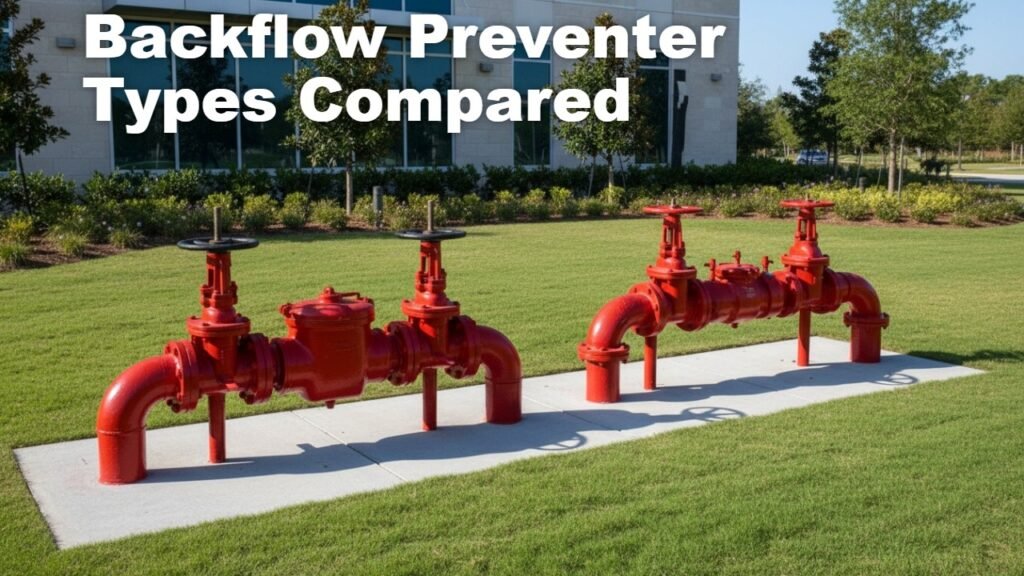
Backflow Preventer Types Compared helps homeowners and property managers choose the right device to protect drinking water. Irrigation systems connect directly to potable water lines. Without protection, contaminated water can reverse flow into clean supply lines.
Backflow occurs when pressure changes inside the system. A sudden drop in supply pressure can pull dirty water backward. Fertilizers, soil, and bacteria may enter the main line. Installing the correct backflow preventer stops this hazard and meets plumbing code requirements.
Understanding device differences prevents costly installation mistakes. Selecting the correct model ensures compliance, safety, and long-term system reliability.
Why Backflow Prevention Matters
This YouTube video below from Tualatin Valley Water District explains the importance of backflow prevention in water systems. It shows how backflow devices protect drinking water from contamination. The overview helps readers understand a key safety step in irrigation and plumbing design.
Backflow prevention protects public health and private water supplies. Irrigation systems contain fertilizers and organic matter. Without protection, contaminants may enter drinking water lines.
Local plumbing codes often require approved backflow devices. Many municipalities mandate annual testing for commercial properties. Choosing the correct type prevents violations and protects occupants.
Risks of Backflow Without Protection
- Contaminated drinking water
- Code violations and fines
- Property liability risks
- Health hazards
- System shutdown orders
Proper protection ensures safe and compliant operation.
Understanding Backflow and Cross-Connection
Backflow occurs when water flows in the wrong direction. Two main conditions cause this reversal. Back-siphonage happens when supply pressure drops. Backpressure occurs when downstream pressure exceeds supply pressure.
Cross-connections link potable and non-potable water sources. Irrigation systems create cross-connections by design. A backflow preventer stops reverse flow before contamination reaches the main line.
Overview of Common Backflow Preventer Types
Backflow Preventer Types Compared typically includes several common devices. Each type serves specific conditions and risk levels.
Understanding these differences helps determine the right installation choice.
Major Backflow Preventer Categories
- Atmospheric vacuum breaker (AVB)
- Pressure vacuum breaker (PVB)
- Double check valve assembly (DCVA)
- Reduced pressure zone device (RPZ)
- Anti-siphon valve
Each device provides varying levels of protection.
Atmospheric Vacuum Breaker (AVB)
This YouTube video below from The Plumbing Academy explains atmospheric vacuum breakers and how to use them properly. It shows how they prevent backflow and protect water supplies. The overview helps readers understand safe irrigation and plumbing practices.
AVBs protect against back-siphonage only. They install downstream of the control valve. When pressure drops, the device opens an air inlet. This action breaks the vacuum and stops reverse flow.
AVBs remain common in small irrigation systems. However, they cannot handle continuous pressure.
Advantages of AVBs
- Low cost
- Simple installation
- Effective for small systems
- Minimal maintenance
Limitations
- Cannot handle constant pressure
- Must install above all sprinklers
- Limited protection scope
AVBs suit basic residential setups.
Pressure Vacuum Breaker (PVB)
PVB devices provide stronger protection than AVBs. They protect against back-siphonage under continuous pressure. Many residential irrigation systems use this design.
A PVB includes a spring-loaded check valve and air inlet. If pressure drops, the air inlet opens and prevents reverse flow.
Benefits of PVB Devices
- Handles constant pressure
- Easy maintenance
- Widely accepted by codes
- Suitable for residential systems
Drawbacks
- Requires above-ground installation
- Must sit above highest sprinkler
- Limited backpressure protection
PVBs work well for most homes and small commercial sites.
Double Check Valve Assembly (DCVA)
DCVA units protect against back-siphonage and backpressure. They use two internal check valves for redundancy. These devices often install underground in valve boxes.
DCVAs suit low-hazard applications. They protect potable water where contamination risk is moderate.
Advantages
- Protects against backpressure
- Can install below grade
- Durable construction
- Less visible than above-ground units
Limitations
- Not approved for high-hazard conditions
- Requires annual testing
- Higher cost than PVB
Commercial properties often use DCVAs for moderate risk systems.
Reduced Pressure Zone (RPZ) Device
RPZ devices provide the highest level of protection. They protect against both back-siphonage and backpressure in high-hazard systems.
These devices include two check valves and a pressure relief chamber. If either check fails, the relief valve discharges water safely.
Benefits
- Maximum contamination protection
- Approved for high-hazard systems
- Required by many municipalities
- Highly reliable
Drawbacks
- Higher installation cost
- Requires professional testing
- Must install above ground
- Needs drainage for discharge
Large commercial landscapes often require RPZ devices.
Anti-Siphon Valves
Anti-siphon valves combine a sprinkler valve and vacuum breaker in one unit. These valves mount above ground near each zone. They protect against back-siphonage only.
Small residential systems sometimes use this design.
Pros
- Simple installation
- Lower cost
- Combines functions
- Suitable for small systems
Cons
- Must install above sprinklers
- Limited protection
- Not ideal for large properties
Anti-siphon valves suit simple irrigation setups.
Comparing Backflow Preventer Types
This YouTube video below from Pro Irrigation Training explains the different types of backflow preventers used in irrigation sprinkler systems. It compares their functions, installation needs, and protection levels. The overview helps readers choose the right device to safeguard water quality.
Backflow Preventer Types Compared reveals clear differences in performance, cost, and protection level.
Protection Level
- AVB: Back-siphonage only
- PVB: Back-siphonage under pressure
- DCVA: Moderate protection
- RPZ: Maximum protection
Installation Requirements
- AVB and PVB: Above ground
- DCVA: Below grade possible
- RPZ: Above ground with drainage
Cost Considerations
- AVB: Lowest cost
- PVB: Moderate cost
- DCVA: Higher cost
- RPZ: Highest cost
Property size and risk level influence selection.
How to Choose the Right Device
Selecting the right backflow preventer depends on hazard level and local code. High-risk systems require stronger protection.
Consult local plumbing regulations before installation. Municipal codes often dictate acceptable devices.
Decision Factors
- Property size
- System complexity
- Local regulations
- Budget
- Maintenance capacity
Professional guidance ensures compliance.
Installation Best Practices
Proper installation ensures reliable protection.
- Install after main shutoff valve
- Follow manufacturer guidelines
- Maintain required elevation
- Allow access for testing
- Protect from freezing
Incorrect installation can void device certification.
Maintenance and Testing
Backflow preventers require periodic inspection. Many regions mandate annual testing by certified professionals.
Maintenance Checklist
- Inspect for leaks
- Test pressure readings
- Clean internal components
- Verify relief valve operation
- Document inspection results
Regular testing ensures compliance and safety.
Practical Tips for Property Managers
- Keep testing records
- Schedule annual inspections
- Install protective enclosures
- Train maintenance staff
- Monitor water pressure
Proactive oversight reduces liability risks.
FAQs
What is the best backflow preventer for irrigation systems?
The best device depends on hazard level and local codes. RPZ devices offer the highest protection.
Do residential systems need backflow preventers?
Most municipalities require them to protect potable water supplies.
How often should backflow devices be tested?
Annual testing is required in many areas.
Can I install a backflow preventer myself?
Professional installation ensures compliance and proper function.
What happens if a backflow preventer fails?
A failed device may allow contaminated water into the supply line. Immediate repair is necessary.
Conclusion
Backflow Preventer Types Compared provides essential guidance for protecting water systems and meeting code requirements. Each device offers a different level of protection and installation complexity. Property owners must match the device to hazard level, system size, and local regulations. Proper installation and regular testing ensure long-term safety and compliance. Evaluate your system today and choose the right backflow protection to safeguard your property and water supply.